
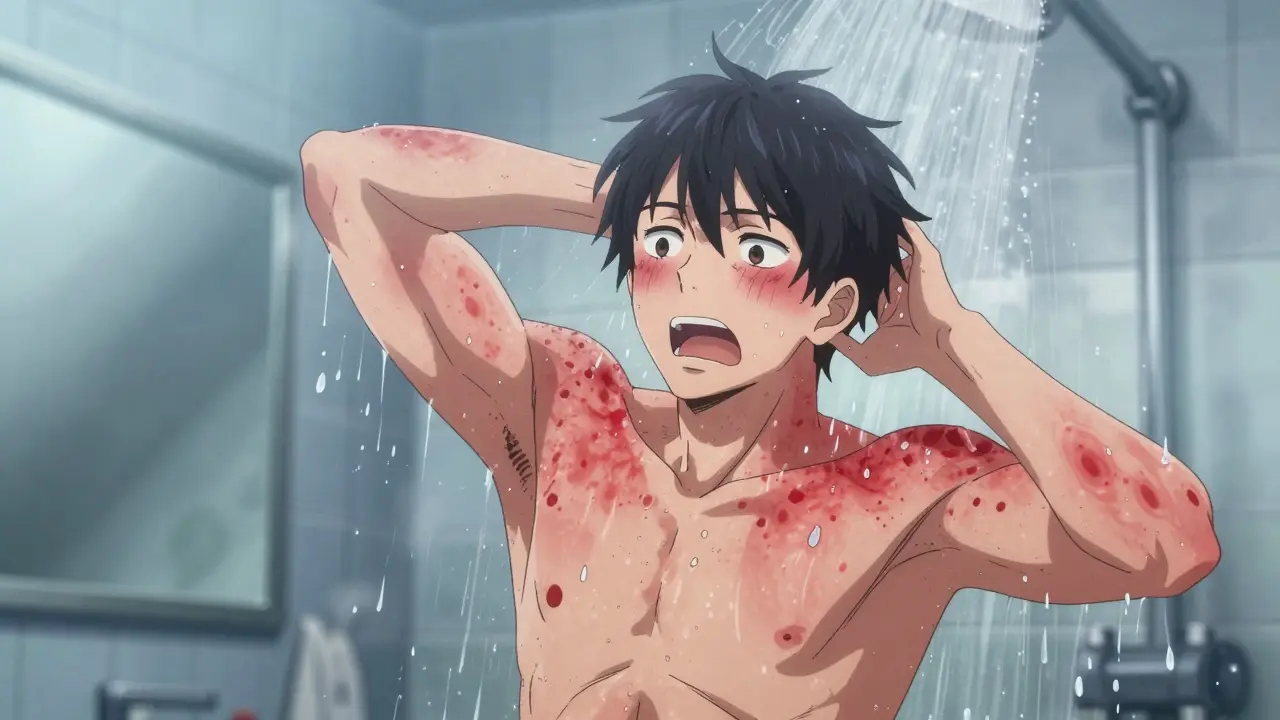
Imagine stepping into a cold shower and within minutes, your skin erupts in angry red welts. Or worse - swimming in a pool that feels just a little too chilly, and suddenly you can’t breathe. This isn’t just discomfort. It’s cold-induced urticaria, a real and sometimes dangerous allergy to cold temperatures.
Unlike regular allergies to pollen or peanuts, this one is triggered by something you can’t avoid: cold air, cold water, even a cold drink. It affects about 0.05% of people, but for those who have it, every winter, every swim, every ice cube in a glass becomes a potential threat. And it doesn’t just cause itching - it can lead to swelling, fainting, or even drowning.
What Exactly Happens in Your Body?
Cold-induced urticaria (CU) happens when your body’s mast cells - the same ones that react to allergens - go into overdrive when your skin cools down. Cold exposure causes them to dump histamine and other chemicals into your bloodstream. That’s what creates the hives, swelling, and sometimes full-body reactions.
The timing is weird: you don’t get the reaction while you’re still cold. It kicks in during the rewarming phase. So if you jump into icy water, you might feel fine until you get out - and then your skin erupts. That’s why many people don’t realize what’s happening until it’s too late.
Most cases are idiopathic, meaning no clear cause. But in 5% of cases, it’s linked to something else: infections like hepatitis or mononucleosis, blood cancers, or even rare inherited conditions like familial cold autoinflammatory syndrome (FCAS). Some people develop it after a ladybug bite - yes, really. There’s even a subtype where hives only appear where cold was applied locally, like after a ragweed injection.
How Do You Know If You Have It?
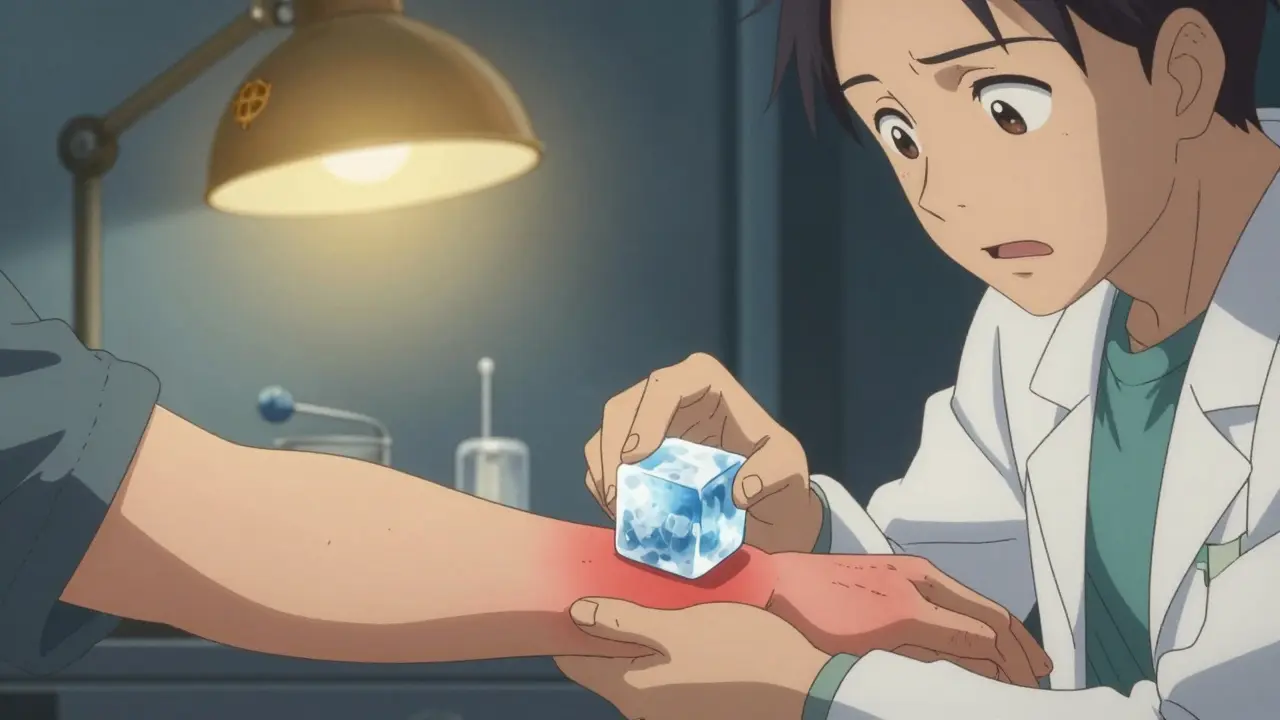
The ice cube test is the gold standard. A doctor places an ice cube on your forearm for 1 to 5 minutes. If you develop a raised, red, itchy welt within 10 minutes after the ice is removed - bingo. That’s a positive test. It’s simple, cheap, and 98% accurate for acquired cold urticaria.
But not everyone reacts the same way. Some people only get hives when the temperature drops below 4°C (39°F). Others react at 20°C (68°F) - that’s room temperature in winter. Your threshold is personal. That’s why keeping a symptom diary helps. Note what you were doing, the temperature, how long you were exposed, and how bad the reaction was.
Doctors may also run blood tests to rule out secondary causes. Cryoglobulinemia, for example, can mimic CU. If you have recurring symptoms without clear triggers, they’ll check for underlying conditions.
What Are the Symptoms?
The classic sign is raised, red, itchy welts on skin exposed to cold. But symptoms go beyond that:
- Swollen hands after holding a cold drink or shopping cart
- Lip swelling after eating ice cream or drinking a cold soda
- Headaches, dizziness, or lightheadedness
- Palpitations or chest tightness
- Wheezing or trouble breathing
- Fainting or loss of consciousness
Studies show 78% of people with CU get hand swelling. 65% have lip swelling. And 42% report headaches or dizziness. In severe cases, the whole body reacts - a condition called systemic cold urticaria. That’s when cold exposure triggers a massive histamine release, leading to anaphylaxis.
The scariest part? Swimming. Cold water immersion is the most common cause of life-threatening reactions. There are documented cases of people drowning because they went into a lake or pool and suddenly couldn’t move or breathe. That’s why experts say: never swim alone if you have CU.

How Is It Treated?
There’s no cure, but there are effective ways to manage it.
First-line treatment: antihistamines. Second-generation ones like cetirizine (Zyrtec), loratadine (Claritin), and desloratadine (Clarinex) are the go-to. But here’s the catch - standard doses often don’t work. Many people need 2x, 3x, or even 4x the normal dose. A 10mg tablet might become 40mg daily. That’s approved by international guidelines. If one doesn’t work, try another. Some people respond better to one than the other.
For severe cases: epinephrine. If you’ve ever had trouble breathing, swelling in your throat, or passed out after cold exposure, you need an EpiPen. Your doctor should prescribe one and train you on when to use it. Don’t wait until it’s an emergency. If you’re at risk, carry it always.
Second-line: omalizumab (Xolair). This injectable drug, originally for asthma, is now FDA-approved for chronic urticaria. Clinical trials show it works in 60-70% of CU patients who don’t respond to antihistamines. It’s expensive and requires monthly shots, but for some, it’s life-changing.
New hope: berotralstat (Orladeyo). This drug, approved for hereditary angioedema, showed 58% symptom reduction in a 2023 trial for CU patients who didn’t respond to omalizumab. It’s taken orally and could be a game-changer for tough cases.
How to Avoid Triggers
Prevention is everything.
- Wear layers. Moisture-wicking base layers under sweaters reduce skin exposure. Studies show this cuts reactions by 60-70%.
- Avoid cold drinks and frozen foods. Even ice cream can trigger throat swelling. Use a straw if you must have a cold beverage.
- Test water before swimming. Dip one hand in for 5 minutes. If no reaction, proceed. If you feel tingling or redness - don’t get in.
- Keep your home above 21°C (70°F). Cold rooms can trigger reactions even if you’re not outside.
- Inform all medical staff. If you’re having surgery, your IV fluids must be warmed. Anesthesiologists need to know. Operating rooms must be kept warm.
Since 2020, wearable sensors like the "Cold Alert" device have helped patients track their personal temperature thresholds. In a 2022 trial, it predicted reactions with 92% accuracy. And mobile apps like "Urticaria Tracker" let users log triggers - 78% of patients use them, and those who do report 30% better control.
What About Desensitization?
Some people try gradual exposure - taking cold showers daily to build tolerance. Sounds simple, but it’s not. Studies show 40% of people quit because it’s too uncomfortable. And it’s risky. One bad shower could trigger a full-body reaction.
Still, some clinics are testing structured protocols. Early results from a 2024 trial show 70% adherence over 12 weeks, with reduced sensitivity in many. It’s not for everyone, but it’s being studied.
What’s the Long-Term Outlook?
The good news? About 35% of people with CU see symptoms fade within five years. If it started suddenly (acute onset), the chance of remission jumps to 62%. But if it’s been going on for years, it’s more likely to stick around.
Genetic forms like FCAS are different. They’re caused by mutations in the PLCG2 gene and require different drugs - like anakinra (Kineret), which blocks inflammation at the source. These cases are rare, but they exist.
And there’s new research. Low-dose naltrexone is being tested (NCT04982190), with early results showing 45% symptom reduction after six months. It’s not approved yet, but it’s a promising direction.
When to See a Doctor
If you’ve had hives after cold exposure - even once - see an allergist. Don’t assume it’s just a rash. If you’ve ever felt dizzy, had trouble breathing, or passed out after cold exposure, you need a full evaluation. You may need an epinephrine autoinjector. You may need blood tests. You may need a personalized plan.
And if you’re a parent and your child gets hives after cold baths or winter walks - don’t wait. Early diagnosis can prevent serious accidents.
Final Thoughts
Cold-induced urticaria isn’t just "being sensitive to cold." It’s a real immune system glitch with real risks. But with the right tools - antihistamines, epinephrine, avoidance strategies, and tracking tools - most people can live normally. You don’t have to give up swimming forever. You just need to know your limits, prepare for them, and never go alone into cold water.
Can cold-induced urticaria go away on its own?
Yes, about 35% of people experience spontaneous remission within five years. If the condition started suddenly (acute onset), the chance of remission rises to 62%. But if symptoms have lasted more than six months, it’s considered chronic and less likely to resolve without treatment.
Is cold urticaria the same as frostbite?
No. Frostbite is tissue damage from freezing, causing numbness, blistering, and permanent skin injury. Cold urticaria is an allergic reaction - hives and swelling triggered by cold, not tissue death. You can get hives at temperatures that are perfectly safe for your skin.
Can you develop cold urticaria suddenly?
Yes. Many people report their first reaction after a cold shower, swimming in a lake, or even holding a cold drink. It often starts between ages 18 and 25. Sometimes it follows an infection like mononucleosis or hepatitis. In rare cases, it’s triggered by insect bites.
Are antihistamines safe to take long-term?
Second-generation antihistamines like cetirizine and loratadine are generally safe for long-term use. Many patients take them daily for years with minimal side effects. Higher doses (up to 40mg daily) are approved for chronic urticaria. Always follow your doctor’s guidance - don’t self-prescribe high doses.
Why is swimming so dangerous with cold urticaria?
Cold water causes rapid, widespread skin cooling, triggering a massive histamine release. This can lead to dizziness, muscle weakness, fainting, or airway swelling - all of which increase drowning risk. Many fatalities have occurred because the person collapsed underwater without anyone noticing. Always test water temperature first and never swim alone.
Can you outgrow cold urticaria?
Some people do, especially if it started recently. Remission rates are higher in younger adults and those with acute-onset cases. But for those with chronic symptoms lasting years, it’s less likely. Ongoing research into drugs like berotralstat and low-dose naltrexone may offer new hope for long-term control.
Do I need to avoid all cold foods?
Not necessarily. If you’ve never had lip swelling or throat tightness from cold foods, you may not need to avoid them. But if you have - yes. Ice cream, chilled soda, or even cold yogurt can trigger reactions. Test cautiously. Keep a log of what you eat and how you react.
Can cold urticaria be inherited?
Yes, but rarely. Familial cold autoinflammatory syndrome (FCAS) is a genetic disorder passed down in families. It’s different from typical CU - symptoms last longer (up to 24 hours), include fever and joint pain, and require different treatments like anakinra. Genetic testing can confirm it.
11 Comments
Deborah Dennis
3 March, 2026I mean, seriously? This is why I hate modern medicine. They turn every little thing into a 'condition' so they can sell you drugs. I had hives after a cold shower once. I stopped taking cold showers. Done. No need for 40mg of antihistamines or an EpiPen. People are just too scared of their own bodies now.
Donna Zurick
3 March, 2026This is actually super helpful. I’ve been getting weird reactions to AC and didn’t know why. I’m booking an appointment with my allergist tomorrow. I’ve been too scared to say anything but now I feel like I’m not alone. Thanks for laying it out so clearly.
Tobias Mösl
4 March, 2026Let’s be real. This isn’t 'allergy.' This is Big Pharma’s latest money machine. They invented cold urticaria to sell you $500/month drugs. Did you know the ice cube test was originally used to diagnose 'hysteria' in women? Now it’s 'allergy.' Same test. Same profit. Wake up. The government and pharma are using this to normalize surveillance - 'track your cold exposure' with apps? That’s not health. That’s control.
tatiana verdesoto
5 March, 2026I have a friend with this and it’s been life-changing for her to have a name for it. She used to avoid the gym, wouldn’t go out in winter, and was terrified of ice in drinks. Now she uses Zyrtec daily, carries her EpiPen, and even swims in a heated pool. It’s not perfect, but she’s living again. If you’re reading this and have symptoms - don’t brush it off. Talk to someone. You don’t have to suffer in silence.
RacRac Rachel
6 March, 2026I got diagnosed last year after a frozen yogurt incident 😅 Turns out my lips swelled up like a balloon and I thought I was having an allergic reaction to dairy. Nope. Just cold. Now I use a straw for everything. Also, I started using the Urticaria Tracker app and it’s been a game-changer 📊❤️ If you’re struggling, try it. You’re not crazy. This is real.
Jane Ryan Ryder
7 March, 2026Oh good. Another reason for Americans to be paranoid. You can’t even have a soda without a doctor’s note. Next they’ll ban snow. I’m just waiting for the mandatory 'Cold Exposure License' to be mailed to my house. Seriously. This is why we’re broke. Medical industrial complex strikes again.
Callum Duffy
8 March, 2026Thank you for this exceptionally well-researched and clearly articulated overview. The clinical distinctions between idiopathic CU and FCAS are particularly valuable. I have encountered several patients in my practice with similar presentations, and the emphasis on avoidance strategies - especially moisture-wicking layers - is both practical and evidence-based. A commendable contribution to patient education.
Chris Beckman
10 March, 2026I read this and thought 'this is just a thing people make up' but then I remembered my cousin had a reaction after a snowball fight. He passed out. Like, for real. But he didn’t go to the doctor. He just said 'I’m just cold.' Idiots. You need to take this seriously. I told him to stop being a wimp. He still doesn’t get it. I’m not even mad. Just disappointed.
Stephen Vassilev
11 March, 2026I’ve been monitoring this. There is a pattern. Every time the CDC releases a new guideline on cold urticaria, the price of antihistamines spikes. Coincidence? I don’t think so. The 'Cold Alert' wearable? It’s a surveillance device. It logs your location, body temp, and exposure duration. Who owns that data? Who’s selling it? I’ve filed FOIA requests. You’re being tracked. Don’t trust the apps. Don’t trust the doctors. Don’t trust the ice cube test. It’s all part of the plan.
Mike Dubes
12 March, 2026I’m a paramedic. We had a guy come in last month after swimming in a lake. He went under. No one saw. He was blue. We revived him. Turned out he had CU. He didn’t even know. We gave him epinephrine on scene. He’s alive because we knew what to do. If you think this isn’t real - you’re lucky. But don’t bet your life on luck. Get tested. Carry the pen. Tell your friends. This isn’t hype. It’s survival.
Helen Brown
13 March, 2026I think this is all fake. Cold can't make you break out. That's not how the body works. I tried it. I held ice on my arm. Nothing happened. So it's all made up to scare people. I don't believe in hives from cold. I think the doctors are lying. I told my sister. She said I'm dumb. I'm not dumb. I'm just not scared of ice.