
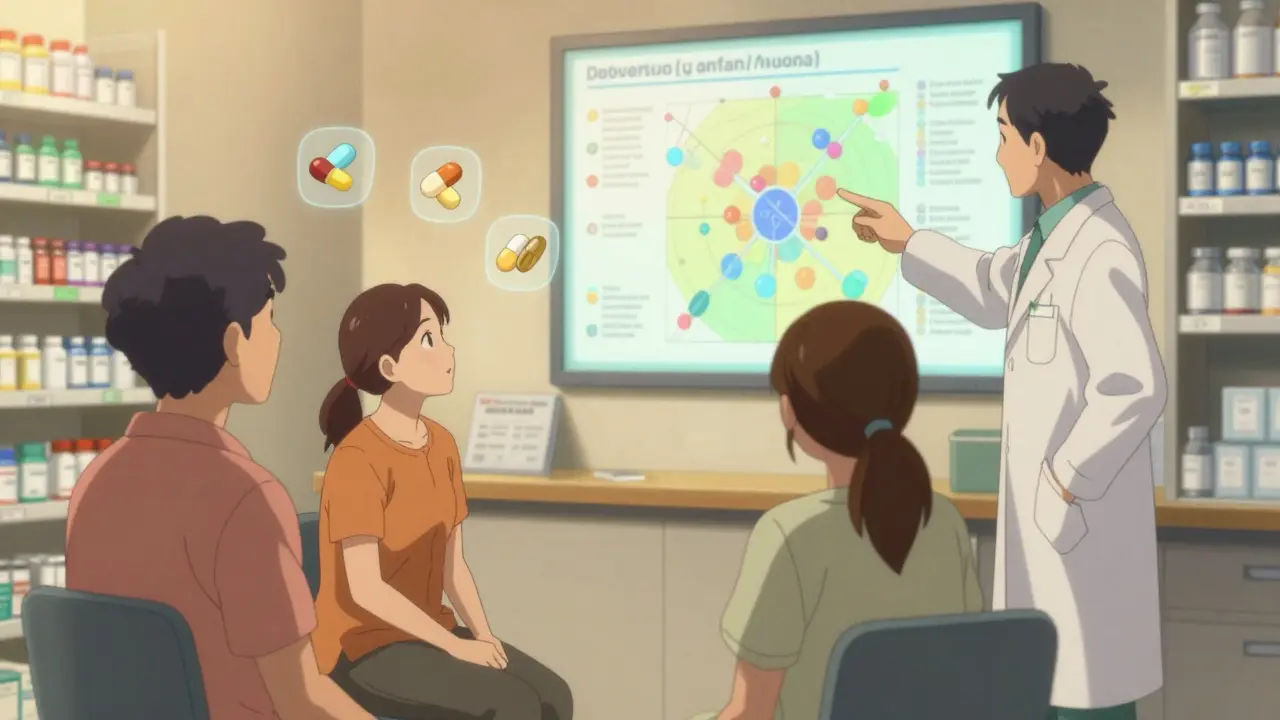
Most people think of their pharmacy as a place to pick up prescriptions. But if you’re taking more than a few medications - especially for chronic conditions like diabetes, high blood pressure, or heart disease - your pharmacist can be one of your most important health allies. Pharmacy consultation services aren’t just a nice extra. They’re a proven way to catch dangerous drug interactions, lower your costs, and avoid hospital visits. And you don’t need a referral. You just need to ask.
What Happens During a Pharmacy Consultation?
A consultation isn’t a quick chat while you wait for your pills. It’s a focused, private conversation - usually 15 to 20 minutes - where your pharmacist reviews every medication you take, including over-the-counter drugs, vitamins, and supplements. They’ll check for:- Drug interactions - like when blood thinners mix dangerously with certain painkillers
- Duplicate prescriptions - two different doctors prescribing the same drug
- Incorrect dosages - especially for seniors or people with kidney or liver issues
- Medications you no longer need
- Cost-saving alternatives - brand-name drugs that have cheaper generic versions
In 2023, VA medical centers reported that pharmacist-led consultations prevented over 1,200 serious adverse drug events in just one year. One case involved a diabetic patient on high-dose insulin. The pharmacist spotted the risk of severe low blood sugar and worked with the doctor to adjust the dose - preventing a potential emergency.
Who Benefits the Most?
You don’t have to be elderly or have a complex condition to benefit. But if you fit any of these profiles, a consultation is especially valuable:- You take three or more prescription medications daily
- You manage two or more chronic conditions (like diabetes and arthritis)
- You’ve been recently hospitalized or moved between care settings
- You’ve had a medication error in the past - even a small one
- You’re confused about when or how to take your pills
According to the Centers for Medicare & Medicaid Services, over 14 million Medicare Part D beneficiaries qualify for free comprehensive medication reviews. But even if you’re not on Medicare, many private insurers now cover these services. Check your plan - or just ask your pharmacist. Most will do a basic review for free, no insurance needed.
How to Get Started
You don’t need to schedule months in advance. Here’s how to make it happen:- Ask at the counter - When you pick up your prescription, say, “I’d like to speak with the pharmacist about all my medications.”
- Call ahead - Many pharmacies now offer dedicated consultation hours. Ask if they have a set time each week for these appointments.
- Bring your list - Write down every pill, patch, inhaler, and supplement you take. Include dosages and how often you take them. Don’t forget herbal teas or CBD oils - they can interact too.
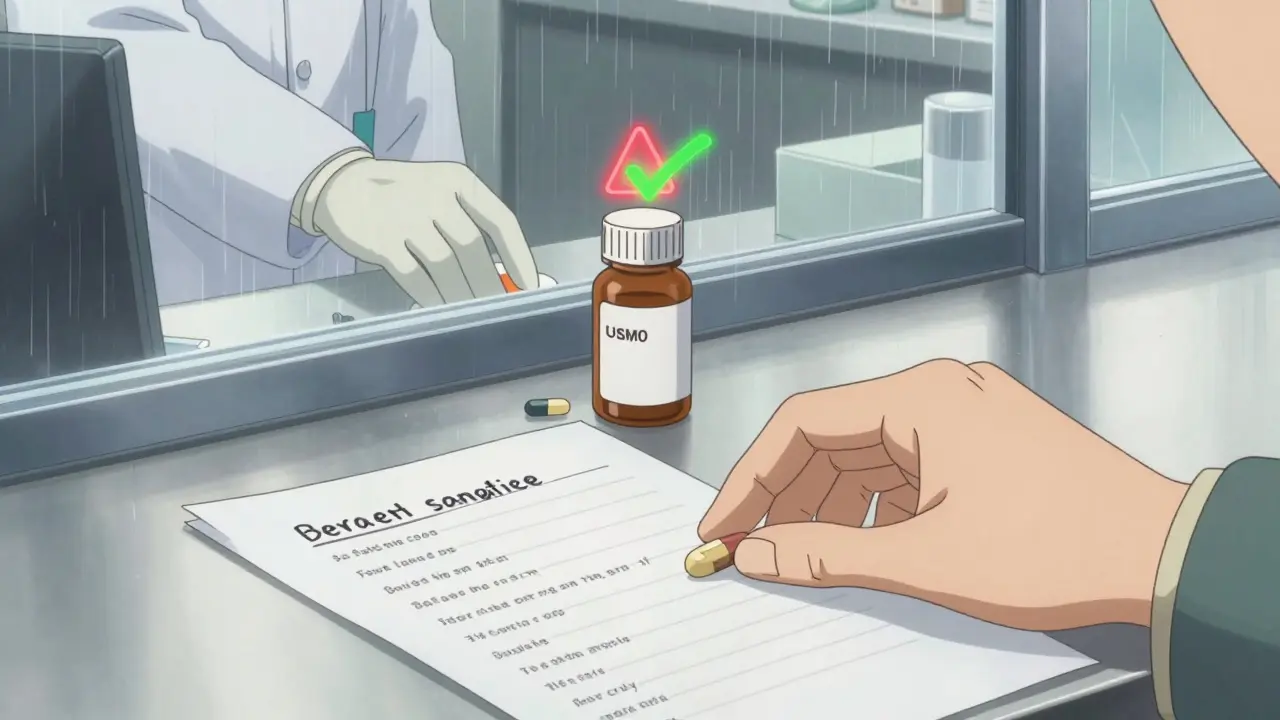
- Ask for a written plan - A good consultation ends with a clear, printed summary: what to keep, what to stop, what to change, and why.
Pharmacists are trained to use standardized tools like the Pharmacists Patient Care Process. That means they follow a consistent method to assess your needs, create a plan, and track results. You’re not just getting advice - you’re getting a structured safety check.
What You Can Expect to Save
Beyond safety, consultations often save money. A 2023 study found that pharmacist interventions in VA clinics avoided an average of $1,250 in costs per patient by preventing hospitalizations and switching to lower-cost alternatives. One patient in Sydney told their pharmacist they were spending $300 a month on a brand-name blood pressure pill. The pharmacist found a generic equivalent with the same active ingredient - costing $45. That’s $3,000 saved a year.Another common fix: spotting duplicate prescriptions. One man was taking two different drugs for the same condition - prescribed by two different doctors. The pharmacist caught it, contacted both physicians, and got one discontinued. No side effects. No extra cost. Just better care.
Why This Works Better Than You Think
You see your doctor maybe twice a year. But you visit your pharmacy an average of 17 times a year. That’s nearly nine times more contact points. Pharmacists see your medications in real time - every refill, every change. They notice when you haven’t picked up a prescription in months. They see if you’re taking the wrong dose. They catch errors your doctor might miss because they’re juggling 30 patients in an hour.A 2022 meta-analysis showed pharmacist-led interventions reduced medication errors by 37% and cut emergency room visits by 22%. That’s not a small number. That’s lives saved. And it’s happening in your local pharmacy right now.
Barriers - and How to Overcome Them
Not every pharmacy does this well. Here are the common problems - and how to get around them:- “I never have time.” - Many pharmacists are overwhelmed. If the pharmacy is busy, ask to come back during slower hours - usually mid-morning or early afternoon. Or schedule an appointment.
- “They don’t have a private space.” - By 2023, 68% of community pharmacies in Australia and the U.S. had dedicated consultation rooms. If yours doesn’t, ask if they can move to the back or use a quiet corner. Your health deserves privacy.
- “I don’t know what to ask.” - Bring this list: “Are any of these drugs interacting? Am I taking anything I don’t need? Is there a cheaper version? What should I do if I miss a dose?”
Don’t be shy. Pharmacists are trained to help. The American Society of Health-System Pharmacists says pharmacists are the “last line of defense” against medication errors. That means they’re counting on you to speak up.
What’s Changing in 2025
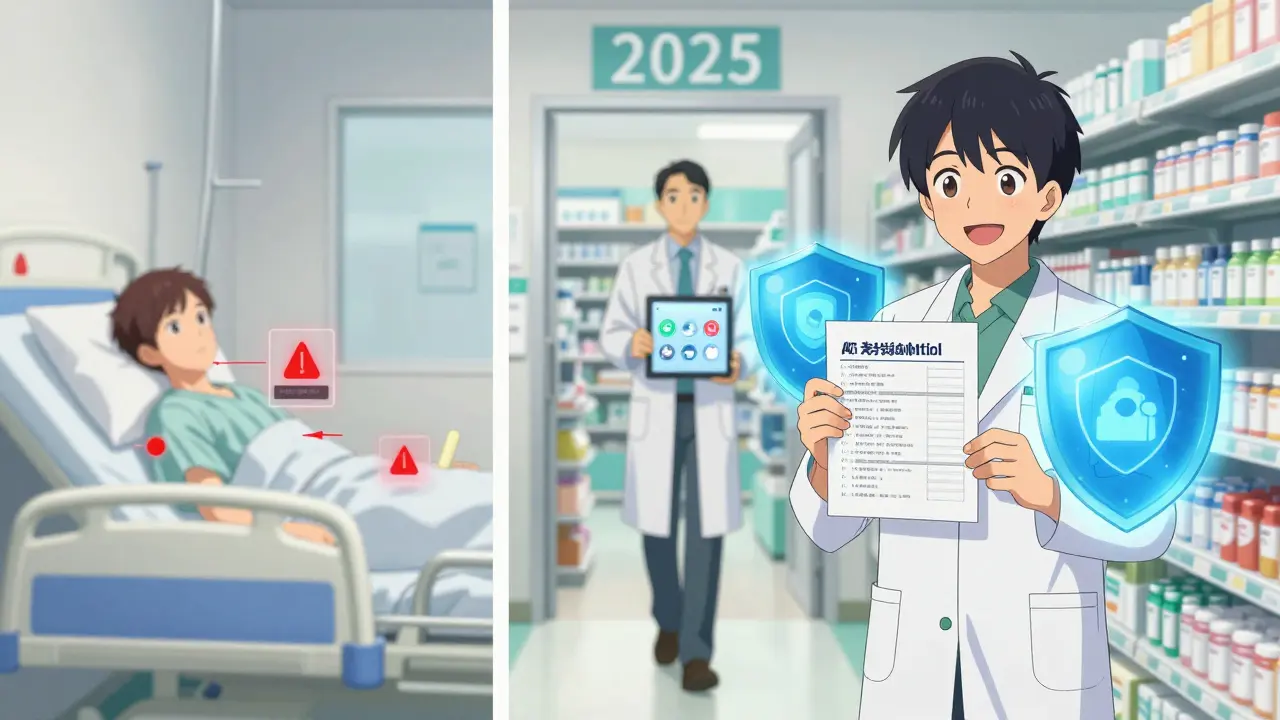
The rules are shifting to make this easier. In 2023, Medicare expanded eligibility for free medication reviews to include people taking just three chronic condition medications - not eight pills. That added millions more people to the program. In Australia, state laws are expanding pharmacists’ authority to adjust certain prescriptions - like for high blood pressure or asthma - without waiting for a doctor’s note.Telehealth consultations are now common. If you’re homebound or live far from your pharmacy, many offer video or phone reviews. Just ask. And if your pharmacy doesn’t offer it yet, ask them to start. Demand drives change.
Your Next Step
Don’t wait for a crisis. Don’t assume your doctor caught everything. Medication errors happen every day - often quietly, without symptoms until it’s too late.Go to your pharmacy this week. Ask for a consultation. Bring your list. Ask the questions. Say, “I want to make sure I’m taking my medications safely.” That’s all it takes.
Pharmacists don’t get enough credit. They’re not just dispensers. They’re safety experts. And they’re right there - open late, no appointment needed, ready to help. Use them.
Is a pharmacy consultation free?
Many consultations are free, especially if you’re on Medicare Part D or have a private insurance plan that covers Medication Therapy Management (MTM). Even if you’re not covered, most pharmacies offer a basic medication review at no cost. Ask before you schedule - some places may charge $25 to $75 for a full review, but many waive the fee if you’re a regular customer.
Do I need to make an appointment?
Not always. You can often walk in and ask. But for a full review, it’s better to call ahead. Many pharmacies now have set consultation hours - like Tuesday and Thursday afternoons - to give pharmacists time to prepare. Booking ahead ensures you’ll get the full 15-20 minutes instead of a rushed chat.
What should I bring to my consultation?
Bring a complete list of everything you take: prescription drugs, over-the-counter pills, vitamins, supplements, herbal remedies, and even topical creams or patches. Include dosages and how often you take them. If you have old pill bottles, bring those too. The more accurate your list, the better the advice you’ll get.
Can my pharmacist change my prescription?
In most cases, no - but they can recommend changes. Pharmacists can’t legally alter your prescription without your doctor’s approval. But they can call your doctor on your behalf to suggest a safer alternative, a lower dose, or a cheaper generic. Many doctors welcome this input. In 22 U.S. states and some Australian regions, pharmacists now have limited authority to adjust certain medications like blood pressure or asthma drugs without a new prescription.
Are virtual consultations as good as in-person ones?
Yes - if done properly. Since the pandemic, 62% of pharmacies now offer video or phone consultations. They work well for medication reviews, adherence checks, and cost-saving advice. But if you have complex needs - like multiple new prescriptions or recent hospital discharge - an in-person visit is better. You can show your pills, ask questions face-to-face, and get printed materials right away.
How often should I get a consultation?
At least once a year - but more often if your medications change. If you start or stop a drug, get hospitalized, or see a new doctor, schedule a review. Some pharmacists recommend quarterly check-ins for people on five or more medications. Think of it like a tune-up for your meds - not a one-time fix.
What if I’m embarrassed to ask questions?
You’re not alone. Many people feel awkward asking about their meds - especially if they’ve been taking them for years. But pharmacists hear the same questions every day. They’ve seen people forget doses, mix pills with alcohol, or take expired drugs. There’s no judgment. Your safety is their job. The more you ask, the better care you’ll get.
Can a pharmacist help with side effects?
Absolutely. If you’re feeling dizzy, nauseous, or unusually tired, your pharmacist can tell you whether it’s a known side effect, how long it might last, and what to do about it. They can also suggest ways to reduce side effects - like taking a pill with food or splitting the dose. If it’s serious, they’ll tell you to call your doctor - or go to the ER.
Do I need to tell my doctor about the consultation?
It’s not required, but it’s smart. Many pharmacies now send a summary of your consultation to your doctor, especially if you’re on Medicare or have an integrated health system. If yours doesn’t, ask for a printed copy to give to your doctor. This helps everyone on your care team stay on the same page.
Is this service only for seniors?
No. While Medicare Part D targets seniors, anyone taking multiple medications can benefit - including young adults on mental health drugs, pregnant women on prenatal vitamins, or people with autoimmune diseases. Pharmacists help all ages. The key factor isn’t your age - it’s how many drugs you take and how complex your health needs are.
13 Comments
Frank SSS
30 December, 2025This is the kind of thing that should be advertised on TV like car insurance.
Hanna Spittel
1 January, 2026Pharmacists? 😏 I bet they’re just trying to upsell you on probiotics and CBD gummies. My cousin got a "consultation" and walked out with 3 new supplements and a $90 bill. 🤡
Paul Huppert
3 January, 2026I did this last month after my grandma had a bad reaction to her meds. The pharmacist caught a duplicate and a dangerous interaction with her fish oil. Saved her from a hospital trip. Honestly? Worth 15 minutes of my time.
Branden Temew
5 January, 2026So we’re treating pharmacists like the last line of defense against medical incompetence? That’s not a system. That’s a dumpster fire with a white coat. If your doctor can’t keep track of your meds, why are you trusting them with your life in the first place?
And yet, here we are - paying $200 for a 7-minute visit while the pharmacist, who actually knows what’s in your pills, is stuck behind the counter yelling "Do you need a flu shot?"
It’s not about asking. It’s about demanding. The system’s broken. We’re just patching it with goodwill and free consultations.
But hey, at least we’re not letting the robots take over yet. I guess that’s something.
Brady K.
7 January, 2026Let’s be real - this isn’t "consultation." It’s Medication Therapy Management (MTM) - a federally reimbursed, evidence-based clinical service that’s been proven to reduce ADEs by 37%. But no one calls it that because it sounds like corporate jargon. Meanwhile, your doctor’s EHR still can’t talk to your pharmacy’s system. Classic.
And yes, pharmacists in 22 states now have collaborative practice agreements. They can adjust antihypertensives, anticoagulants, even diabetes meds. But unless you ask, they’re legally barred from initiating. So yeah - speak up. Or keep playing Russian roulette with your pill bottle.
Marilyn Ferrera
7 January, 2026Bring your list. Always. I once forgot my CBD oil... and the pharmacist caught it. Said it was interacting with my blood thinner. I almost cried. She was right. Don’t be lazy. Your life isn’t a memo.
Harriet Hollingsworth
7 January, 2026They’re not heroes. They’re employees. And they’re not paid enough to care. I went in last week and the pharmacist was on her third break of the day. She barely looked at my list. This isn’t care - it’s a checklist.
Bennett Ryynanen
9 January, 2026Bro. I take 8 meds. I go to the pharmacy every other day. I ask every time. They always say "We’ll do a review." But they never do. I’m done waiting. I’m taking my list to my doctor next week. Let him deal with it.
Chandreson Chandreas
9 January, 2026Man, I live in India and we don’t have this. Pharmacies here just hand you the bottle and say "Take twice a day." No questions. No checks. I wish we had this. My uncle died because no one checked his meds. 😔
Y’all are lucky. Use it. Please.
Deepika D
11 January, 2026Let me tell you something - if you’re on more than three medications, you’re not just managing health - you’re managing a full-time job. And guess who’s usually the only one who actually knows what’s in that pillbox? The pharmacist. Not your doctor. Not your family. Not your app. THEM.
And if you think they’re just counting pills, you’re wrong. They’re looking at your liver enzymes, your kidney function, your age, your diet, your other conditions - all while juggling 12 people in line and a screaming kid in the back. They’re not just experts - they’re miracle workers in scrubs.
So next time you walk in, say "Thank you" - not just "Here’s my script." They’re not getting paid enough to hear that. But they’ll remember it. And they’ll remember you.
And if you’re on Medicare? You’re getting a free, comprehensive review. Don’t waste it. Book it. Bring your list. Ask the questions. And then - tell everyone you know. This isn’t a perk. It’s a right.
We need to stop treating pharmacies like convenience stores. They’re clinics. Quiet ones. But clinics, nonetheless.
Robb Rice
12 January, 2026the pharmacist i spoke to last week was super helpful. he found a cheaper generic for my blood pressure med and even called my doctor to switch it. i didn’t even have to do anything. just asked. it’s so easy. why don’t more people do this?
Kayla Kliphardt
12 January, 2026I’ve been meaning to do this for months. I just… don’t know how to start. I don’t want to seem like I’m accusing anyone of messing up. But I’m scared I’m taking something wrong.
anggit marga
14 January, 2026USA always makes everything complicated. In Nigeria we just take pills and pray. You spend 20 minutes talking to a pharmacist while your blood pressure keeps rising? Why not just go to the doctor? This is waste of time. You people have too many pills and too many questions.