
Antibiotics don’t cure colds. They don’t help with the flu. And they won’t make your sore throat go away faster if it’s caused by a virus. But when you have a real bacterial infection-like strep throat, a urinary tract infection, or a severe skin abscess-antibiotics can be life-saving. The key is knowing which antibiotic to use and why it works. Not all antibiotics are the same. They don’t just kill bacteria randomly. Each class attacks bacteria in a very specific way, targeting structures or processes that human cells don’t even have.
How Antibiotics Actually Work
Antibiotics work by hitting bacterial weak spots. Bacteria are single-celled organisms with structures humans don’t have. That’s the whole point: antibiotics exploit those differences. There are four main ways they do this.
First, they stop bacteria from building their cell walls. Think of a bacterial cell like a water balloon. Without a strong outer wall, it swells and bursts from internal pressure. Second, they mess with protein production inside the cell. Bacteria need to make proteins to survive and multiply. If you block that, they can’t grow. Third, they damage the cell membrane, leaking out essential contents. And fourth, they shut down DNA and RNA replication-so the bacteria can’t copy themselves.
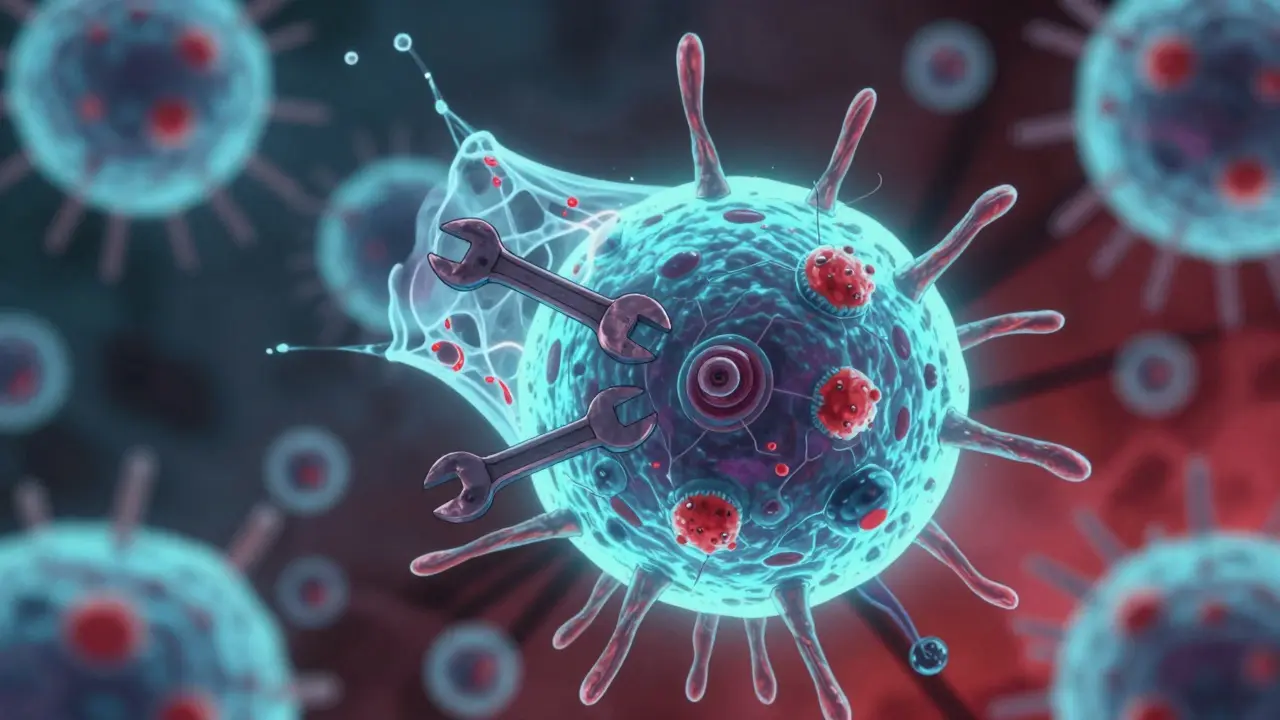
These aren’t guesses. They’re precise, scientifically proven targets. A penicillin molecule looks almost exactly like a piece of the bacterial cell wall. It tricks the bacteria into grabbing it, then jams the machinery that builds the wall. It’s like slipping a wrench into a gear system.
Beta-Lactams: Penicillins and Cephalosporins
This is the most common class of antibiotics you’ll hear about. Penicillin, amoxicillin, cephalexin, ceftriaxone-all belong here. Their secret weapon? The beta-lactam ring. That tiny four-sided chemical structure mimics part of the bacterial cell wall. When bacteria try to build their outer shell, they grab onto this fake piece instead of the real one. The result? The wall stays weak. The bacteria swell, then burst.
Penicillins like amoxicillin are often the first choice for ear infections, sinus infections, and strep throat. But bacteria have fought back. Many now make enzymes called beta-lactamases that chop up the beta-lactam ring, rendering the drug useless. That’s why doctors sometimes pair penicillin with clavulanic acid-a molecule that blocks those enzymes. Amoxicillin-clavulanate (Augmentin) is a common combo for stubborn infections.
Cephalosporins are grouped into generations. First-gen (like cefazolin) are great against common skin and soft tissue infections. Second-gen (cefaclor) add some coverage for lung infections. Third-gen (ceftriaxone) are used for serious infections like meningitis or gonorrhea-they penetrate deeper and work against more Gram-negative bacteria. Fourth-gen (cefepime) are reserved for hospital-acquired infections, especially when resistance is suspected.
Macrolides, Tetracyclines, and Aminoglycosides: Stopping Protein Production
These antibiotics don’t burst cells. They silence them. They bind to the bacterial ribosome-the tiny factory that builds proteins. Without new proteins, bacteria can’t grow, repair themselves, or reproduce.
Macrolides like azithromycin and erythromycin bind to the 50S part of the ribosome. They’re often used for pneumonia, whooping cough, and some STIs. Azithromycin’s long half-life means you can take it as a 5-day course-or even a single big dose for chlamydia. That’s why it’s popular in clinics.
Tetracyclines, including doxycycline, bind to the 30S ribosome. They’re broad-spectrum and work against weird bugs like Lyme disease, acne, and Rocky Mountain spotted fever. But they come with trade-offs. They stain developing teeth, so kids under 8 can’t take them. They make your skin super sensitive to sunlight. And they shouldn’t be taken with dairy or antacids-they bind to calcium and won’t absorb.
Aminoglycosides like gentamicin are powerful but risky. They bind to the 30S subunit and cause the ribosome to misread genetic code, making broken proteins. They’re bactericidal and fast-acting, often used in hospitals for severe infections like sepsis. But they can damage kidneys and hearing. That’s why doctors monitor blood levels closely. And they don’t work on anaerobic bacteria-like the ones in deep abscesses-because they need oxygen to get inside the cell.
Fluoroquinolones: Hitting DNA Directly
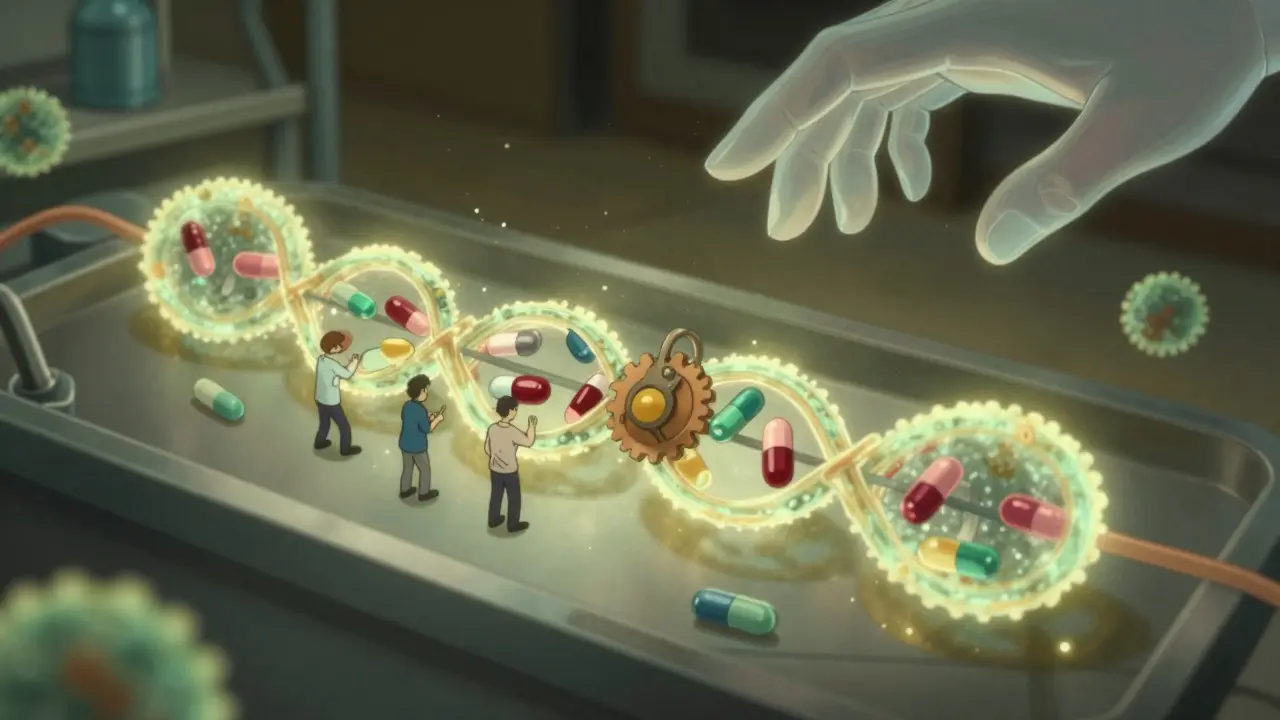
Ciprofloxacin and levofloxacin are fluoroquinolones. They target two enzymes bacteria need to untangle and copy their DNA: DNA gyrase and topoisomerase IV. Block those, and the bacteria can’t replicate. These drugs are broad-spectrum and penetrate tissues well-bones, lungs, prostate. That’s why they’re used for complicated UTIs, pneumonia, and even anthrax.
But they come with serious warnings. The FDA added black box warnings for tendon rupture, nerve damage, and even mental health side effects like anxiety and hallucinations. These aren’t rare. They’re rare enough that doctors avoid them unless absolutely necessary. For a simple bladder infection? Amoxicillin or nitrofurantoin are safer. Fluoroquinolones are for when other options fail.
Other Key Classes: Vancomycin, Linezolid, Metronidazole
Vancomycin is the old-school last-resort antibiotic for MRSA. It binds to the building blocks of the cell wall, preventing them from linking up. It’s given intravenously because it doesn’t absorb well in the gut. That’s why it’s used in hospitals for resistant infections. It can cause kidney damage and a rare reaction called “red man syndrome”-flushing and itching from too-fast infusion.
Linezolid is a newer drug, one of the first fully synthetic antibiotics. It blocks protein synthesis at the very start, stopping the ribosome from assembling. It’s used for resistant skin infections and pneumonia. It’s especially useful because it works against vancomycin-resistant strains. But it can cause bone marrow suppression and nerve damage with long-term use.
Metronidazole is the go-to for anaerobic infections-those deep, oxygen-free pockets like abscesses in the abdomen or brain. It’s also used for C. diff diarrhea and certain STIs like trichomoniasis. How it works is wild: inside anaerobic bacteria, it gets chemically activated and shreds their DNA. But if you drink alcohol while taking it, you get a nasty reaction-nausea, vomiting, racing heart. That’s because it blocks alcohol breakdown in the liver.
Why Resistance Is Growing-and Why It Matters
Every time we use an antibiotic, we’re putting pressure on bacteria to evolve. The ones that survive pass on resistance genes. Now, over 50% of E. coli infections in 72 countries are resistant to fluoroquinolones. MRSA used to be rare. Now it’s common in hospitals and even gyms and locker rooms.
Doctors aren’t to blame alone. Patients demand antibiotics for viral infections. Pharmacies sell them without prescriptions in some countries. Farmers use them to make livestock grow faster. All of it adds up.
And it’s not just about one drug failing. Resistance can spread between bacteria. A gene that blocks penicillin can jump to a bug that normally responds to vancomycin. That’s why stewardship matters. Use the right drug, at the right dose, for the right time. Don’t stop early because you feel better. Don’t save leftover pills for next time.
What You Can Do
Don’t ask for antibiotics for a cold. If your doctor says you don’t need one, trust them. Most sore throats, coughs, and earaches are viral. Antibiotics won’t help-and they might hurt.
Take antibiotics exactly as prescribed. Even if you feel fine after two days, finish the full course. You’re not just treating yourself-you’re preventing the next resistant strain from emerging.
Wash your hands. Get vaccinated. Vaccines like pneumococcal and flu shots reduce the chance of secondary bacterial infections. Fewer infections mean fewer antibiotics needed.
And if you’re ever unsure? Ask your doctor: "Is this infection bacterial? What’s the evidence? Are there safer options?" Knowledge is your best defense-not just against infection, but against the rise of untreatable superbugs.
Can antibiotics treat viral infections like the flu or COVID-19?
No. Antibiotics only work against bacteria. Viruses like the flu, common cold, or COVID-19 have completely different structures and replication methods. Taking antibiotics for a viral infection won’t speed up recovery, reduce symptoms, or prevent complications. Instead, it increases your risk of side effects and contributes to antibiotic resistance. Doctors use tests like rapid strep tests or procalcitonin levels to confirm bacterial infection before prescribing antibiotics.
Why do some antibiotics cause diarrhea?
Antibiotics don’t just kill harmful bacteria-they also wipe out the good bacteria in your gut. This imbalance can let harmful microbes like Clostridioides difficile (C. diff) overgrow, causing severe diarrhea, fever, and abdominal pain. Broad-spectrum antibiotics like clindamycin, fluoroquinolones, and cephalosporins are most likely to trigger this. In fact, C. diff infection risk increases 17-fold after broad-spectrum antibiotic use. Probiotics may help reduce the risk, but the best defense is using antibiotics only when necessary and choosing narrow-spectrum options when possible.
Are natural remedies like honey or garlic as effective as antibiotics?
Honey and garlic have some antibacterial properties in lab studies, but they’re not replacements for prescription antibiotics in serious infections. Medical-grade honey is used in wound dressings for minor skin infections, and garlic contains allicin, which can slow bacterial growth. But these don’t reach high enough concentrations in the bloodstream to treat systemic infections like pneumonia, UTIs, or sepsis. Relying on them instead of antibiotics can delay proper treatment and lead to life-threatening complications. They may support healing, but they don’t replace proven drug therapies.
Why are some antibiotics only given in the hospital?
Some antibiotics, like vancomycin, colistin, or cefiderocol, are too toxic or complex to use at home. They may require IV infusion, blood level monitoring, or special handling. Others are reserved for the most resistant infections-like MRSA or carbapenem-resistant bacteria-so they’re kept effective for when they’re truly needed. Hospitals have the resources to monitor side effects and adjust doses. Using these drugs outside a controlled setting increases the risk of harm and accelerates resistance.
What happens if I stop taking my antibiotics early?
Stopping early doesn’t just mean your infection might come back-it means you’re more likely to breed resistant bacteria. The strongest, toughest bacteria survive when you don’t finish the full course. These survivors multiply and pass on their resistance genes. That’s how superbugs like MRSA and VRE spread. Even if you feel better, up to 10% of bacteria may still be alive. Completing the full course ensures you kill every last one. It’s not about being extra cautious-it’s about stopping the next pandemic before it starts.
14 Comments
Hilary Miller
22 January, 2026Antibiotics aren't magic pills. They're precision tools. Use them right or we all lose.
Jasmine Bryant
24 January, 2026I always forget which ones are safe with dairy... is it tetracyclines or macrolides? Anyone know for sure?
Kenji Gaerlan
24 January, 2026why do we even have these if we cant even use them right lol
Keith Helm
26 January, 2026The assertion that antibiotics target structures absent in human cells is scientifically accurate, yet oversimplified. The microbiome's collateral damage is rarely addressed in public discourse.
Daphne Mallari - Tolentino
28 January, 2026It is profoundly disconcerting that laypersons equate antimicrobial efficacy with general wellness. The biochemical specificity of beta-lactams is not a matter of opinion-it is structural biology. One cannot substitute intuition for pharmacology.
Brenda King
29 January, 2026I've had C. diff twice after antibiotics... it's not worth the risk if you don't absolutely need them. Wash your hands, eat probiotics, and don't panic over every sniffle
Liberty C
30 January, 2026Oh please. Another sanctimonious lecture on 'antibiotic stewardship.' Meanwhile, Big Pharma is selling you antibiotics like candy and then charging $500 for the antidote to the side effects they caused. Wake up.
Chiraghuddin Qureshi
31 January, 2026In India, we see this every day. Kids get antibiotics for fever, even if it's dengue. No tests. No doctors. Just the local pharmacy with a bottle. It's a disaster waiting to happen 🌍💊
Sarvesh CK
31 January, 2026There is a philosophical tension here: individual health versus collective survival. When we take antibiotics unnecessarily, we are not merely treating ourselves-we are participating in the erosion of medical possibility for future generations. The responsibility is not just clinical; it is ethical.
shivani acharya
1 February, 2026Let’s be real-antibiotics were never meant for humans. They were meant for factory farms. The whole ‘you need this for your sore throat’ thing is a scam cooked up by pharma to keep the cash flowing. You think they care if you get C. diff? Nah. They sell the cure too. 🤡
Oren Prettyman
2 February, 2026The article presents a reductive, almost textbook view of antibiotic mechanisms that ignores the emergent complexity of biofilm-mediated resistance, horizontal gene transfer dynamics, and the role of quorum sensing in persistence. To categorize antibiotics into four neat mechanisms is to misrepresent the battlefield. Bacteria are not passive targets; they are adaptive, intelligent systems that evolve in response to selective pressure. The notion that we can outmaneuver them with ever-newer drugs is a dangerous illusion. We are losing this war not because we lack antibiotics, but because we misunderstand the nature of microbial life. The real solution lies not in more drugs, but in rethinking our relationship with the microbial world-perhaps even embracing symbiosis over eradication.
arun mehta
3 February, 2026This is one of the clearest explanations I've ever read 🙏 I work in a clinic in Delhi and see people begging for antibiotics every day. This post should be shared in every village. Thank you for writing this. 🌿💊
Malik Ronquillo
5 February, 2026I stopped my antibiotics after 3 days because I felt fine and now I got it back worse and my doctor yelled at me and I cried and now I feel guilty and also my stomach is ruined
Margaret Khaemba
6 February, 2026I just read this to my 10-year-old and she asked if we can use honey instead. I told her no, but I still feel weird about giving her pills. Like... is there a better way?