
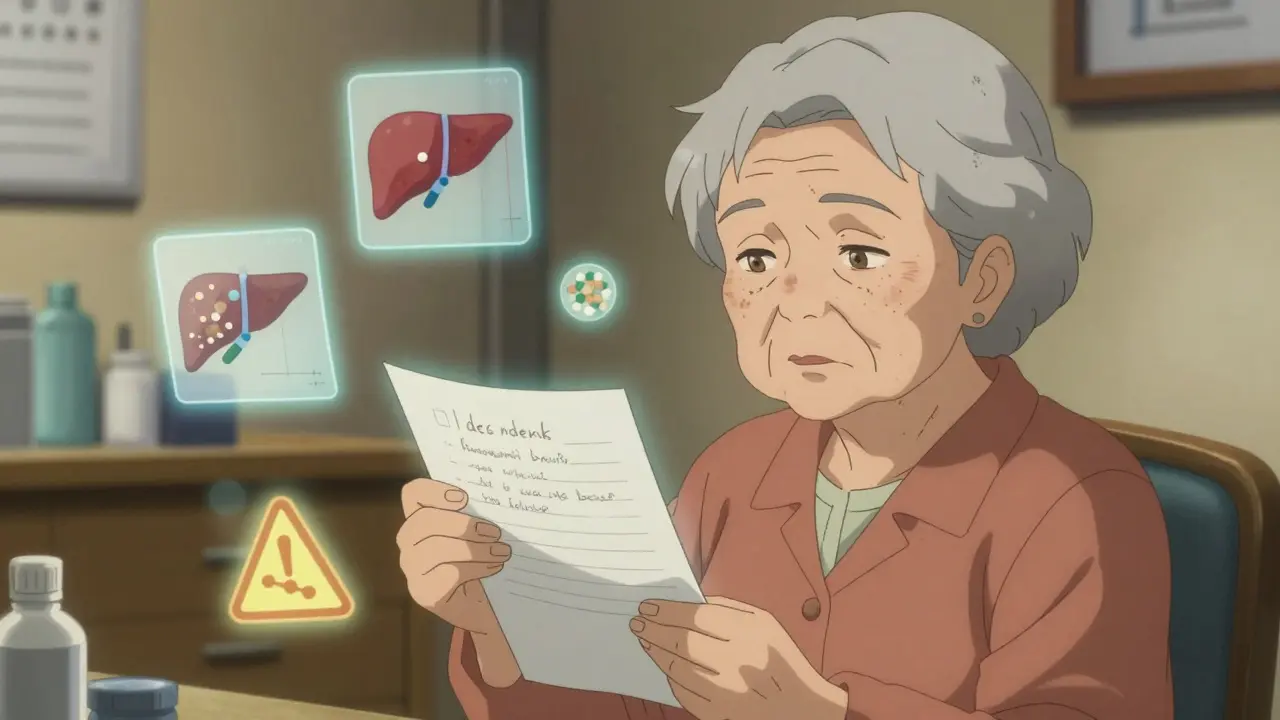
Medication Safety Risk Calculator
Your Health Factors
Risk Assessment
Based on your medical history, you may experience side effects in approximately 10% of your medications.
Recommended actions:
- Schedule a medication review with your doctor
When you take a new medication, your doctor doesn’t just look at your symptoms. They’re also reading your past. Every hospital visit, every chronic condition, every drug you’ve taken before - it all adds up. And that history isn’t just background noise. It directly shapes whether you’ll feel fine or end up in the emergency room from a side effect you never saw coming.
Why Your Past Medications Matter More Than You Think
Let’s say you took penicillin ten years ago and had a rash. That might seem like a one-time thing. But here’s the truth: if you’ve had a bad reaction to one drug, you’re 30-40% more likely to react to another in the same family. It’s not guesswork. It’s biology. Your body remembers. A 2009 study found patients with a history of penicillin allergy had an 8-times higher risk of reacting to cephalosporins - even though doctors often assume they’re safe alternatives. That’s not rare. It’s predictable. And if your medical record doesn’t clearly say you had that reaction, your next doctor might not know.
It’s not just allergies. It’s how your body processes drugs. Some people inherit genes that make their liver break down medications too slowly. Others have genes that burn through drugs way too fast. These differences aren’t random. They’re measurable. The Merck Manual says genetic variations in CYP450 enzymes can change drug levels in your blood by 30% to 500%. That’s not a small shift. That’s the difference between a pill working and a pill poisoning you.
Polypharmacy: The Silent Killer in Your Medicine Cabinet
Most people think taking more pills means better care. But the data says otherwise. If you’re on five to nine medications, your risk of a bad reaction doubles. If you’re on ten or more? It triples. That’s not opinion. It’s from the British Heart Foundation’s 2023 analysis of over 120,000 patients. Each extra pill adds 7-10% more risk. It’s like stacking dominoes. One might be fine. Ten? You’re asking for a fall.
And here’s the scary part: most of those pills aren’t even necessary. A 2023 Cochrane Review looked at 14 clinical trials and found that structured medication reviews - where doctors go through every pill you’re taking and cut what you don’t need - reduce side effects by 22%. Yet only 18% of eligible patients get this simple checkup. Why? Because most systems don’t make it easy. Electronic health records often don’t flag duplicate drugs, overlapping effects, or outdated prescriptions. A Johns Hopkins study showed only 35% of digital records even highlight high-risk combinations like warfarin and NSAIDs - a combo that sends 34,000 Americans to the ER every year.
Age, Gender, and the Hidden Bias in Prescribing
Older adults don’t just get more side effects - they get them at a rate 3 to 5 times higher than younger people. Why? Because kidneys and liver slow down. Blood flow changes. Body fat increases. These aren’t guesses. They’re measurable. The American Geriatrics Society confirms that by age 65, your body handles drugs differently. That’s why 40% of common medications need dose adjustments for kidney disease, and 25% need changes for liver issues. But here’s the breakdown: a 2021 audit found that 45% of the time, doctors miss these adjustments entirely.
And then there’s gender. Women over 65 experience side effects at least 50% more often than men. Why? Because most drug trials were done on men. Between 2010 and 2020, only 22% of participants in cardiovascular drug studies were women. That means dosing guidelines were built on male biology. Women metabolize some drugs slower. They have less body water. Their hormone cycles affect absorption. But if your doctor doesn’t know your history includes being a woman in a male-dominated trial pool, they might give you the same dose as a 200-pound man. That’s not care. That’s luck.
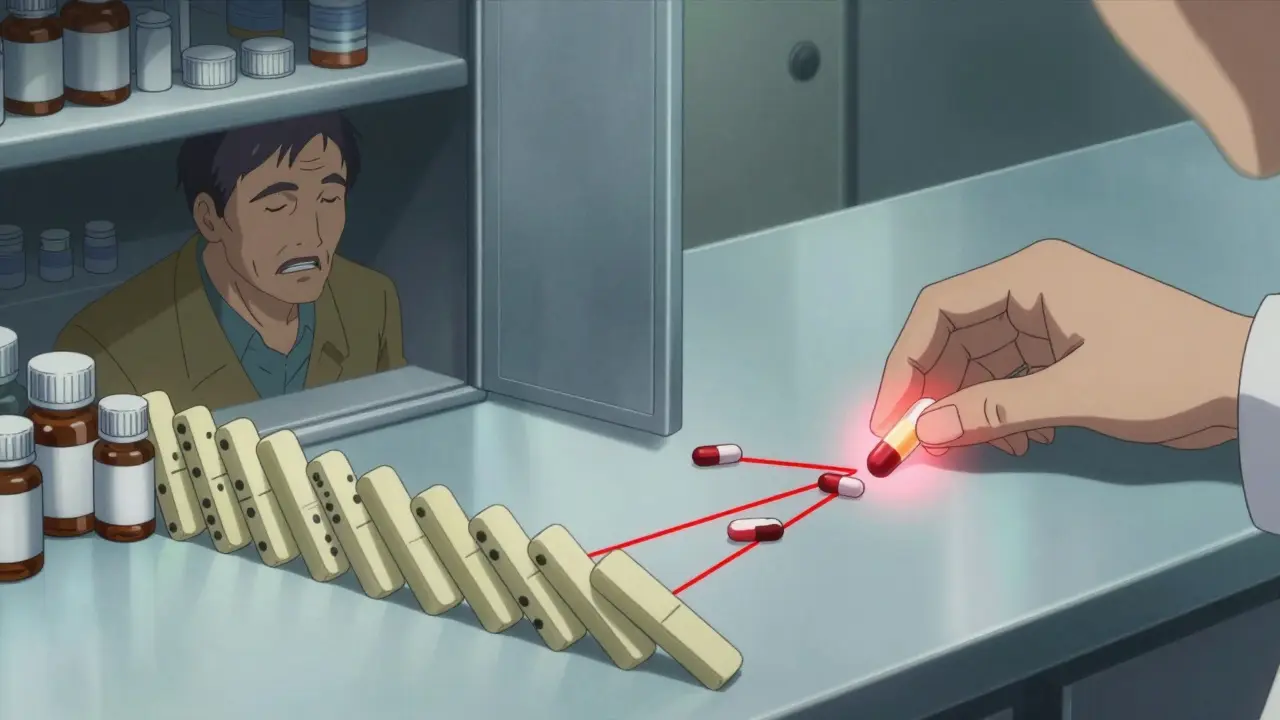
Chronic Conditions: The Domino Effect
Having one chronic disease doesn’t just mean one medication. It means many. And each one interacts with the others. The Charlson Comorbidity Index - a tool used in hospitals worldwide - shows that every additional condition you have increases your risk of a bad drug reaction by 31%. Diabetes? That changes how your kidneys filter drugs. Heart failure? That changes how your body absorbs pills. COPD? That changes how your liver breaks them down.
And it’s not just the diseases. It’s how you’ve treated them. If you’ve ever skipped doses because the pills were too expensive, you’re at 28% higher risk of side effects when you restart. Why? Because your body isn’t used to the dose anymore. A 2022 study of over 12,000 Medicare patients found that people who stopped and restarted medications without a gradual reintroduction had more side effects than those who never stopped. Cost isn’t just a financial problem - it’s a safety problem.
What Your Doctor Might Not See
Medications can mimic diseases. Beta-blockers can hide the fast heartbeat of internal bleeding. Steroids can mask the pain of a ruptured ulcer. Antidepressants can cause dizziness that looks like vertigo. A 2023 Merck Manual update says drug effects should always be on the differential diagnosis list - meaning, before you assume a new symptom is a new illness, check if it’s just a pill doing its thing.
And yet, 62% of patients with three or more chronic conditions say their side effects were dismissed as part of their disease. One woman in Sydney told her doctor her leg swelling was just from being on her feet. It turned out to be a reaction to her blood pressure pill. She’d been taking it for five years. No one asked about the timing. No one connected the dots. That’s the gap.
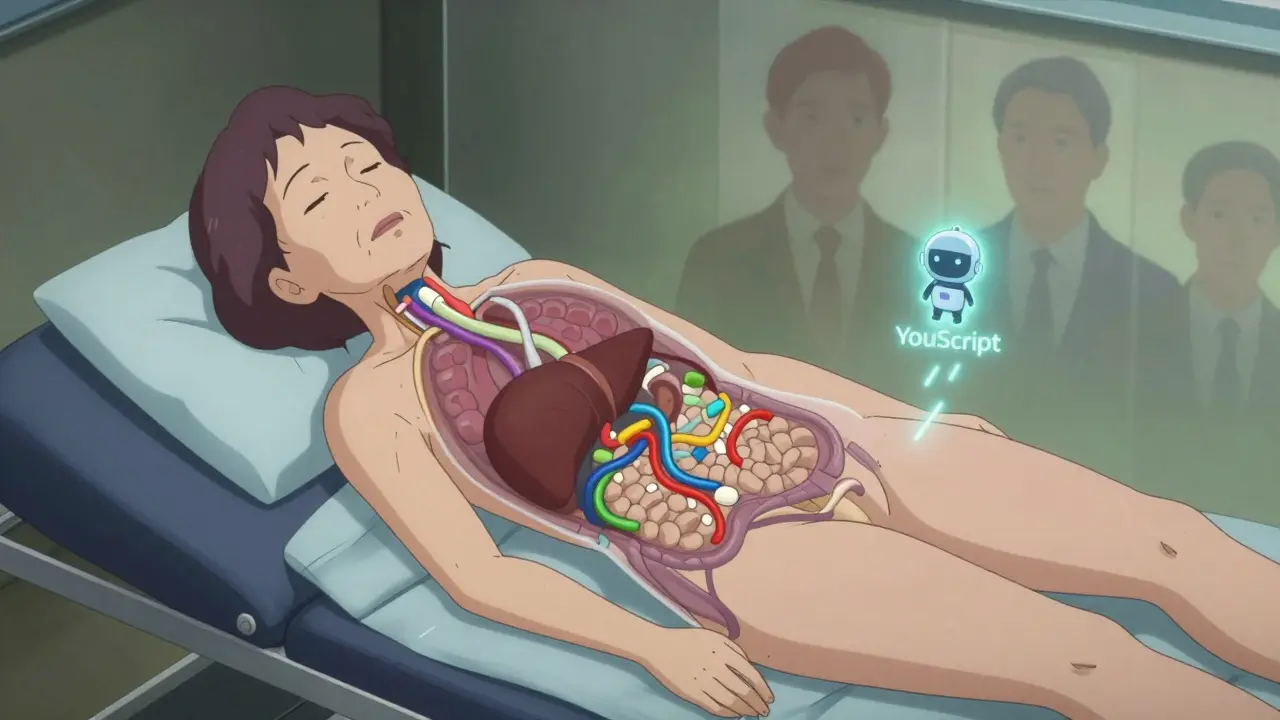
What You Can Do - Right Now
You don’t need to wait for your doctor to fix this. Start with your own history.
- Keep a written list of every medication you’ve ever taken - including doses, dates, and side effects.
- Bring it to every appointment. Even if you think it’s old. Even if you stopped it.
- Ask: “Could this symptom be from a drug I’m already taking?”
- Ask: “Is this pill still necessary? Can we try cutting one?”
- If you’ve had a reaction before, say it out loud: “I had a rash with penicillin.” Don’t assume they’ll find it in the record.
There’s new tech coming. The FDA approved YouScript in 2023 - a tool that checks 27 gene-drug interactions to predict who’s at risk. But only 5.7% of U.S. clinics use it. In Australia, adoption is even lower. So you can’t rely on the system. You have to be the system.
The Bottom Line
Your medical history isn’t just a file. It’s a map. And if you don’t know how to read it - or if your doctor doesn’t - you’re walking blind into a minefield of side effects. The numbers don’t lie: polypharmacy, past reactions, age, gender, and chronic disease all stack up. But you’re not powerless. You have more control than you think. Your history matters. Use it. Speak it. Protect it. Because in medicine, the best predictor of your future side effects isn’t your current symptoms - it’s your past.
Can my past allergic reaction to one drug affect how I react to another?
Yes. If you’ve had an allergic reaction to one drug, especially in the same class, your risk of reacting to a similar one increases significantly. For example, a penicillin allergy raises your chance of reacting to cephalosporins by up to 8 times. This isn’t rare - it’s well-documented. Always tell your doctor about any past reaction, even if it happened years ago.
Why do older adults have more medication side effects?
As we age, our liver and kidneys don’t work as efficiently, so drugs stay in our system longer. Body composition changes too - less water, more fat - which alters how drugs are absorbed and distributed. Studies show people over 65 experience 3 to 5 times more adverse reactions than younger adults. That’s why many medications require lower doses for older patients, but those adjustments are often missed.
Is taking five or more medications really that risky?
Yes. Taking five to nine medications doubles your risk of an adverse drug reaction. With ten or more, the risk triples. Each additional pill adds 7-10% more risk. This isn’t about how many you need - it’s about how many you’re actually taking. Many older adults are on drugs that no longer serve a purpose, or that interact dangerously with others. A simple medication review can cut side effects by over 20%.
Do women really have more side effects than men?
Yes. Women over 65 experience adverse drug reactions at least 50% more often than men. This is partly because most drug trials historically used mostly male participants - only 22% of cardiovascular trials between 2010 and 2020 included women. That means dosing guidelines often don’t account for differences in body size, metabolism, or hormone cycles. Women may need lower doses for the same drug.
What should I do if I think a side effect is from my medication?
Don’t ignore it. Don’t assume it’s just aging or your condition. Write down when the symptom started, what you were taking, and how it changed over time. Bring this to your doctor and ask: “Could this be caused by one of my medications?” Many side effects are mistaken for new illnesses - like dizziness from a blood pressure pill being called vertigo. Your history is your best tool to spot the real cause.
13 Comments
Rex Regum
17 March, 2026Look, I get the fear-mongering, but let’s be real - most of these "risks" are just statistical noise dressed up like gospel. I’ve been on 12 meds for 8 years and I’m fine. Your body isn’t a fragile snowglobe. Stop treating it like one. Doctors don’t prescribe blindly - they weigh risk vs. benefit. If you’re scared of side effects, maybe don’t take pills. Simple.
Also, "your history is a map"? That’s not insight. That’s a TED Talk cliché.
Kelsey Vonk
18 March, 2026I cried reading this. 🥹
My mom had a reaction to a blood pressure med she’d been on for 7 years - they thought it was just "aging" until she collapsed. Turns out it was the NSAID she started taking for arthritis. No one connected it. No one asked. I’m so glad someone finally said it out loud. This isn’t fear. It’s love. Keep speaking.
Thank you.
Emma Nicolls
19 March, 2026i literally just started keeping a list after reading this and holy crap it changed everything
i had no idea i was on 2 drugs that do the same thing and my doc never said anything
also i never told them about that rash from penicillin in 2010 because i thought it was "just a rash"
now im printing this and bringing it to every appt
thank you for writing this
Jimmy V
20 March, 2026Stop romanticizing patient self-advocacy. The system is broken. You can’t "be the system" when your EHR doesn’t flag warfarin + ibuprofen. When your pharmacist can’t see your full med list. When your doctor has 8 minutes per visit.
This isn’t about you being diligent. It’s about healthcare being designed to fail.
And yes - women’s dosing is a scandal. 22% female trial participation? That’s not negligence. That’s misogyny wrapped in white coats.
Tim Schulz
22 March, 2026Ah yes, the classic "your body remembers" narrative. As if your liver is some mystical oracle that holds grudges like a Shakespearean villain.
"Penicillin allergy raises cephalosporin risk 8x?" - statistically significant, sure. But clinically? Most of those "reactions" were hives from a virus. Your immune system isn’t a barcode scanner. Stop anthropomorphizing your hepatocytes.
Also, "only 5.7% of clinics use YouScript"? Of course. Because it’s overpriced snake oil. Real medicine doesn’t need gene tests to tell you not to mix drugs. Basic pharmacology exists, you know.
Jinesh Jain
23 March, 2026Interesting read. I’m from India and here, most people don’t even have access to full medical records. Many take whatever the pharmacy suggests. The idea of tracking side effects or gene interactions? That’s a luxury. But I see the point - if we had better systems, even in low-resource settings, lives could be saved. Simple things like a printed med list could go a long way.
douglas martinez
25 March, 2026This is an exceptionally well-researched and thoughtfully presented piece. The data is not only compelling but actionable. The integration of clinical guidelines, epidemiological studies, and real-world outcomes creates a comprehensive framework for patient safety. I commend the author for synthesizing complex information into a digestible format without sacrificing scientific rigor. This should be required reading for all primary care providers.
Sabrina Sanches
26 March, 2026I had no idea... I mean like... I didn’t even think about how my thyroid med and my anxiety med might be fighting each other... and then I got dizzy for 3 months and thought I was just tired... I’m going to call my doctor tomorrow... I’m so glad I read this... I’m going to print it out and highlight everything... I’m crying... again...
Shruti Chaturvedi
27 March, 2026this is so important especially for people who dont have access to good healthcare
in india we dont even get to know what the medicine is called sometimes
but if you write down what you take and what happened you can help someone else too
share this with your family
your history matters
Devin Ersoy
27 March, 2026You know what’s wild? The FDA approved YouScript in 2023 - but only 5.7% of clinics use it. Why? Because Big Pharma doesn’t want you to know which drugs interact. They want you to keep taking them. The same companies that made the original trials 78% male? Still in charge. The system isn’t broken - it’s designed to profit from your ignorance. And now you’re supposed to be your own pharmacist? Cute. Meanwhile, they’re patenting gene-based exclusivity for $12,000/month drugs. Wake up.
Scott Smith
29 March, 2026This is exactly why we need better training for frontline clinicians. Not more apps. Not more patient burden. Better systems. Better EHR integration. Better communication between pharmacies, clinics, and labs. The data is here. The tools exist. We just need to prioritize safety over speed. I’ve seen too many patients fall through the cracks because no one asked, "What else are you taking?" It’s not rocket science. It’s basic.
Sally Lloyd
29 March, 2026I knew it. I KNEW IT. This is all part of the Great Pharma Control Agenda. They don’t want you to know your history matters because then you’d realize they’ve been poisoning people for decades. The CYP450 enzyme thing? That’s just the tip. They’ve been suppressing data on gender differences since the 70s. The 22% female trial stat? That’s not a coincidence. That’s a cover-up. And the "medication reviews"? They’re just a distraction. Real change would require transparency. And they’ll never give that up.
Ali Hughey
31 March, 2026I’ve been waiting for someone to say this... The system is a death trap... The FDA... the AMA... the EHR vendors... they’re all in cahoots... Every time you take a pill, you’re rolling the dice... And they know it... But they’ll never admit it... Because if they did... the whole house of cards would collapse... This isn’t medicine... It’s a casino... And we’re all just pawns... I’m done... I’m going off all meds... I’m going to live on turmeric and prayer... God help us...