
When the first generic version of a brand-name drug hits the market, it doesn’t mean the race is over-it just means the real competition begins. The first generic gets a 180-day window of exclusive rights under the Hatch-Waxman Act, where it can charge up to 90% of the brand’s price and capture 70-80% of the market. But that window isn’t a finish line. It’s a starting gun for everyone else.
Why the First Generic Gets a Head Start
The first generic company doesn’t just roll out a copy of the brand drug. They file a legal challenge against the patent, often spending $5-10 million in litigation. If they win, the FDA grants them 180 days of market exclusivity. During that time, no other generic can legally sell the same drug. This isn’t just a reward-it’s a financial lifeline. Without it, most companies couldn’t recover their costs. Prices during this period stay high, often between 70% and 90% of the brand’s original price. For a drug like Crestor, which once sold for $320 a month, the first generic might charge $250-280. That’s still a huge profit margin.What Happens When Others Enter
As soon as that 180-day clock runs out, or if the patent is invalidated earlier, other companies jump in. And when they do, prices don’t just drop-they collapse. The FDA found that with just one generic, prices average 83% of the brand’s cost. With two, they fall to 66%. By the time there are five or more generics on the market, prices stabilize at just 17% of the original. The biggest plunge? Between the second and third entrants. That’s when prices drop another 25-30% in a matter of months. Take Januvia, a diabetes drug worth $2.4 billion at its peak. When the first generic launched in December 2019, Merck didn’t wait. They immediately released their own authorized generic-a version made by the brand company but sold under a generic label. Within six months, that authorized generic grabbed 32% of the market. The first generic’s share dropped from 80% to under 50%. The brand didn’t lose revenue-they just changed how they collected it.Authorized Generics: The Brand’s Secret Weapon
Authorized generics are not loopholes. They’re legal, FDA-approved, and often manufactured on the same lines as the brand drug. But they’re sold under a generic name and price. Between 2010 and 2019, over 850 were launched in the U.S. About 70% of them entered during the first generic’s exclusivity period. That’s not coincidence. It’s strategy. Brand companies use authorized generics to protect their revenue without breaking the law. If they didn’t, they’d lose nearly everything once the exclusivity ended. In markets where an authorized generic enters early, the first generic’s profits can shrink by 30-40%. For a company that spent millions to challenge the patent, that’s devastating.
Who’s Entering After the First?
The second, third, and fourth generics aren’t just copycats. They’re smarter. They don’t need to re-prove bioequivalence-the first generic already did that. They can piggyback on the existing data, cutting development costs by 30-40%. But that doesn’t mean it’s easy. Most later entrants rely on contract manufacturing organizations (CMOs). While the first generic might own its own factory, later ones rent space. That’s cheaper, but riskier. The FDA found that 78% of second-and-later generics use CMOs, compared to just 45% of the first. And when one CMO has a quality issue, it can trigger a shortage across multiple drugs. In 2022, 62% of generic shortages involved products with three or more manufacturers.The Real Battle: PBMs and Formularies
Getting FDA approval is only half the battle. The real fight is with pharmacy benefit managers (PBMs)-the middlemen who decide which drugs insurers cover. In 2023, 68% of generic drug contracts used a “winner-take-all” model. That means if a PBM picks one generic to be the sole provider, they get 80-90% of the prescriptions, no matter who got FDA approval first. So even if you’re the third generic to get approved, if you sign a deal with a major PBM like CVS Caremark or UnitedHealth’s OptumRx, you can dominate the market. The first generic? If they didn’t lock in a PBM deal early, they’re already losing. This has created a new kind of first-mover advantage-not in time of approval, but in contract negotiation. Companies that move fast on deals, not just on manufacturing, win.Patent Settlements and Staggered Entry
Sometimes, the competition isn’t chaotic. It’s carefully planned. In 2022, 65% of patent settlement agreements included staggered entry dates. That means brand companies and generic manufacturers agree on when each competitor will launch-not to delay the market, but to avoid total price collapse. The Humira biosimilar market is a perfect example. Six companies agreed to enter between 2023 and 2025, one after another. That kept prices from dropping too fast, protecting revenue for both brand and generic players. It’s not anti-competitive-it’s market management.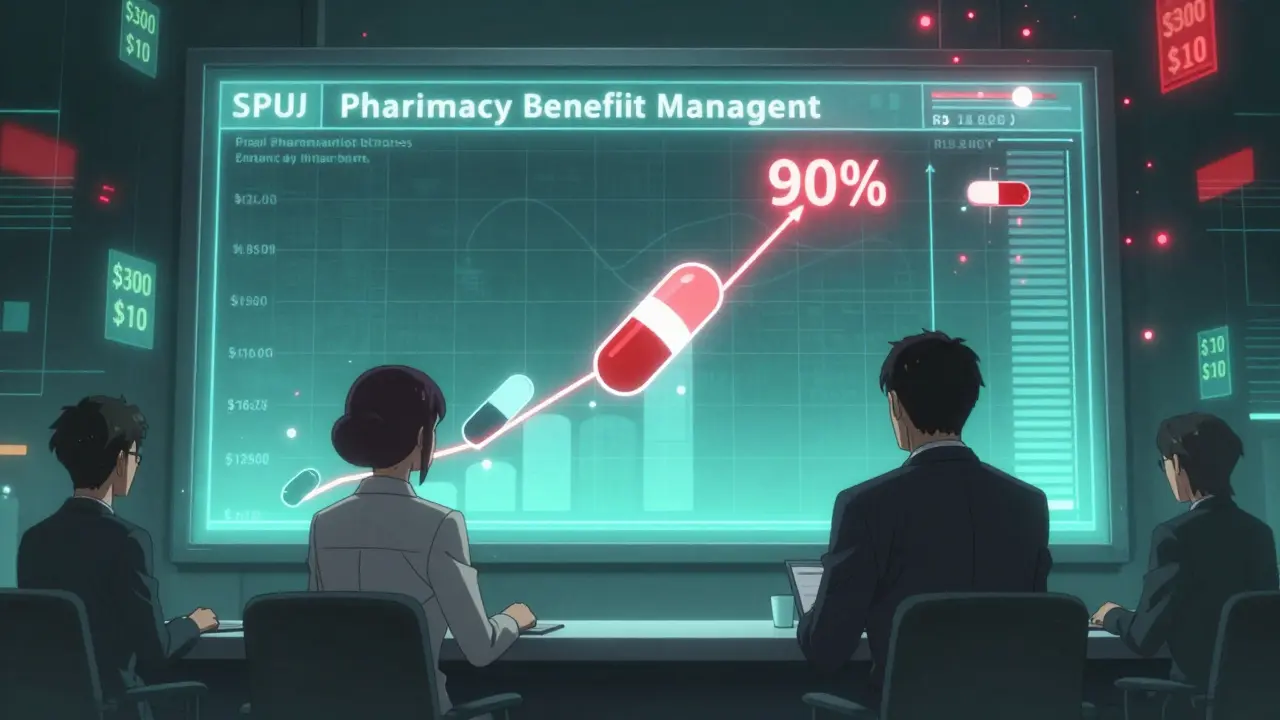
Why Some Markets Never Fill Up
Not all drugs see five or more generics. Some stay with just two or three. Why? Complex drugs-like injectables, inhalers, or oncology treatments-require specialized manufacturing. Only a few companies have the tech or capacity. Oncology generics, for example, rarely drop below 35-40% of the brand price, even with multiple entrants. They’re harder to make, harder to distribute, and harder to profit from. Meanwhile, simple pills like metformin or lisinopril? They’ve got 10+ manufacturers. Prices are at 10-15% of the brand. But that’s also where shortages hit hardest. When the profit margin is razor-thin, one factory shutdown can wipe out supply for millions of patients.The Shortage Problem
The more generics that enter, the more unstable the market becomes. In 2022, 37% of generic markets with multiple competitors experienced shortages within 18 months. That’s nearly five times higher than during the first generic’s exclusivity period. Why? Because manufacturers can’t afford to keep making drugs that sell for pennies. When the price drops below the cost of production, they walk away. And since most rely on shared CMOs, one company’s exit can leave others without supply. The result? A vicious cycle. More competitors → lower prices → fewer manufacturers → shortages → price spikes → more exits.What’s Next?
The industry is splitting into two types of players. One group-called "Innovation Players"-focuses on complex generics with limited competition. They charge more, make more profit, and avoid the race to the bottom. The other group-"Efficiency Players"-compete on cost in saturated markets. They’re the ones selling pills for 10 cents each. By 2027, experts predict 70% of simple generics will have five or more competitors, with prices at 10-15% of brand levels. But for complex drugs, only 2-3 competitors will remain, keeping prices at 30-40%. And nearly half of top-selling drugs will have an authorized generic running alongside the first one. The system isn’t broken. It’s just brutal. The first generic wins the battle. But the war is won by whoever controls the contracts, manages the supply chain, and avoids the race to zero.What is the 180-day exclusivity period for generic drugs?
The 180-day exclusivity period is a legal incentive granted to the first generic drug manufacturer that successfully challenges a brand drug’s patent. During this time, no other generic can legally enter the market. The period starts when the generic is first marketed or when a court rules the patent is invalid or not infringed. This window allows the first entrant to recoup litigation costs and capture the majority of the market before competition begins.
How do authorized generics affect the first generic’s market share?
When a brand company launches an authorized generic during the first generic’s exclusivity period, it directly competes for the same customers. This can slash the first generic’s market share from 70-80% down to 40-50%. Revenue drops by 30-40% because the authorized generic is identical in quality but often priced lower, and it carries the brand’s reputation. This strategy lets the original company keep profits without violating patent laws.
Why do generic drug prices drop so sharply after the third entrant?
The steepest price drops happen between the second and third generics because that’s when competition becomes truly widespread. With only one or two generics, there’s still some pricing power. But once three or more manufacturers are selling the same drug, buyers-like pharmacies and insurers-start playing them off each other. Each additional competitor typically reduces prices by another 10-15%. By the fifth entrant, prices often stabilize at just 17% of the original brand price.
Why are there more shortages after multiple generics enter the market?
As prices fall below the cost of production, manufacturers stop making the drug. Many rely on shared contract manufacturers, so if one company exits, others lose access to production. In 2022, 62% of generic shortages involved products with three or more manufacturers. Low margins mean no room for error-quality issues, supply chain delays, or regulatory inspections can shut down production entirely.
How do pharmacy benefit managers (PBMs) influence which generic wins?
PBMs control which drugs insurers cover and at what price. Many now use "winner-take-all" contracts, where only one generic gets full formulary placement. Even if a company is the fourth to get FDA approval, if they sign the best deal with a major PBM like CVS or OptumRx, they can capture 80-90% of prescriptions. This turns the race from "who gets approved first?" into "who negotiates the best contract?"
Do complex generics have fewer competitors than simple ones?
Yes. Simple pills like metformin or atorvastatin often have 10+ manufacturers because they’re easy and cheap to make. But complex drugs-injections, inhalers, or oncology treatments-require advanced tech, specialized equipment, and strict quality controls. Only a handful of companies can make them, so competition stays low. Prices for these stay higher, often 30-40% of the brand price, even with multiple entrants.
10 Comments
Teresa Marzo Lostalé
30 December, 2025Wow. This is like watching a war movie where the soldiers are all just trying to sell pills. The first guy gets the fancy armor, then everyone else shows up with pocket knives and still somehow wins. I feel bad for the people who just need their meds and end up stuck in this corporate gladiator pit. 🤔
Celia McTighe
31 December, 2025This is actually kind of beautiful in a messed-up way. Like nature, but with lawyers and balance sheets. 💚 The system’s brutal, but it’s also *working*-just not for the people who need it most. We keep calling it a broken system, but maybe it’s just designed to collapse under its own weight. And yet… people still get their medicine. That’s something.
ANA MARIE VALENZUELA
2 January, 2026Let’s be real-the first generic isn’t some heroic underdog. They’re just the first to exploit a loophole. And the brand companies? They’re not villains-they’re CEOs. They’re not supposed to be saints. The real criminals are the PBMs who pocket 30% of every prescription and pretend they’re helping patients. Fix the middlemen, not the generics.
Payton Daily
3 January, 2026Man. I used to think the drug game was just about science. Turns out it’s all about who can out-scheme who. First guy spends $10M to break a patent, then gets robbed by his own company selling the same pill under a different label. And then the third guy shows up with a rented factory and a prayer. We’re not in pharma-we’re in a dystopian reality show called ‘Who Wants to Be a Billionaire… But Only If You Make Pills for 10 Cents?’
Ryan Touhill
4 January, 2026It’s fascinating how the entire structure hinges on legal technicalities disguised as market incentives. The Hatch-Waxman Act was designed to increase access, yet it has become a sophisticated instrument of rent-seeking behavior. The first generic’s 180-day window is not a reward-it’s a temporary monopoly masquerading as competition. And the authorized generics? A masterstroke of regulatory arbitrage. The FDA is not regulating the market; it is merely documenting its collapse.
One must ask: if the system incentivizes litigation over innovation, are we truly advancing public health-or merely optimizing shareholder returns under the guise of accessibility? The data is clear: more entrants yield lower prices, but also greater systemic fragility. The tragedy lies not in the greed, but in the institutionalized inevitability of it all.
It is not capitalism that is broken. It is the assumption that markets, left to their own devices, will ever prioritize human need over structural advantage.
Bradly Draper
6 January, 2026I just know my grandma takes metformin and pays $4 a month. But last year she couldn’t get it for three weeks. No one talks about that part. Just numbers and lawyers. But people are dying because some factory shut down. That’s the real story.
Sydney Lee
8 January, 2026It’s not just about drugs-it’s about control. The PBM’s ‘winner-take-all’ model? That’s not competition. That’s feudalism with a barcode. The brand companies don’t even need to fight anymore-they just sell the license to the middlemen. And the FDA? They’re the bouncer letting everyone in, but not checking if the room’s on fire.
We’re not in a free market. We’re in a curated auction where the only rule is: whoever has the deepest pockets, wins the right to sell the cheapest thing.
Kelsey Youmans
9 January, 2026The structural inefficiencies described here are not anomalies-they are systemic features. The convergence of regulatory frameworks, contractual incentives, and manufacturing dependencies has created a supply chain that is simultaneously hyper-competitive and catastrophically fragile. One must conclude that the current model prioritizes short-term cost containment over long-term resilience. The result is not a triumph of market efficiency, but a testament to the perils of commodifying essential human needs.
Hakim Bachiri
11 January, 2026USA! USA! We got the best generics in the world… until the factory in India shuts down and we’re all out of lisinopril for 6 months! HAHA! Who needs stability? We got DRAMA! And lawsuits! And PBMs getting rich off your grandma’s heart pills! This is AMERICA, BABY! 🇺🇸💸
Gran Badshah
12 January, 2026Back home in India, we get generics for 1 rupee. No lawsuits. No PBMs. Just pills. People here make it sound like a spy movie. In my village, they just take the pill. No one cares who made it. As long as it works.