

Imagine waking up every day feeling like you've swallowed a balloon. You're bloated, uncomfortable, and no matter what you eat, your gut seems to react with chaos. This isn't just "bad digestion" or a simple food intolerance; it could be Small Intestinal Bacterial Overgrowth is a condition where bacteria from the large intestine migrate upward or overgrow in the small intestine, leading to malabsorption and digestive distress. Also known as SIBO, it transforms your small bowel from a nutrient-absorbing tube into a fermentation vat.
If you've been told you have Irritable Bowel Syndrome (IBS), you might actually be dealing with SIBO. Research shows an overlap between the two in as many as 30-85% of cases. The real challenge isn't just feeling the symptoms-it's getting a diagnosis that actually holds water. While the gold standard involves invasive procedures, most of us rely on breath tests. But are they actually accurate? Let's break down how these tests work, why they sometimes fail, and how to actually get rid of the bacteria for good.
What Exactly Causes SIBO?
Your body has built-in "cleaning crews" to keep the small intestine clear of excess bacteria. When these systems break down, bacteria move in and set up camp. It usually isn't a random occurrence; there's typically an underlying trigger. For some, it's a result of gastrointestinal surgery, which accounts for 30-50% of post-surgical cases. For others, it's a motility issue-essentially, the "conveyor belt" of the gut slows down. Conditions like gastroparesis (stomach paralysis) are present in 25-40% of patients.
Age and medication also play a huge role. Many elderly patients suffer from gastric hypochlorhydria-a fancy way of saying they don't produce enough stomach acid. Since acid kills invading bacteria, a lack of it opens the door for overgrowth. Even common medications can be the culprit. A 2017 study in JAMA Internal Medicine found that prolonged use of proton pump inhibitors (PPIs) can increase your SIBO risk by two to three times. If you're constantly suppressing your acid, you're essentially rolling out the welcome mat for bacteria.
Decoding the SIBO Breath Test
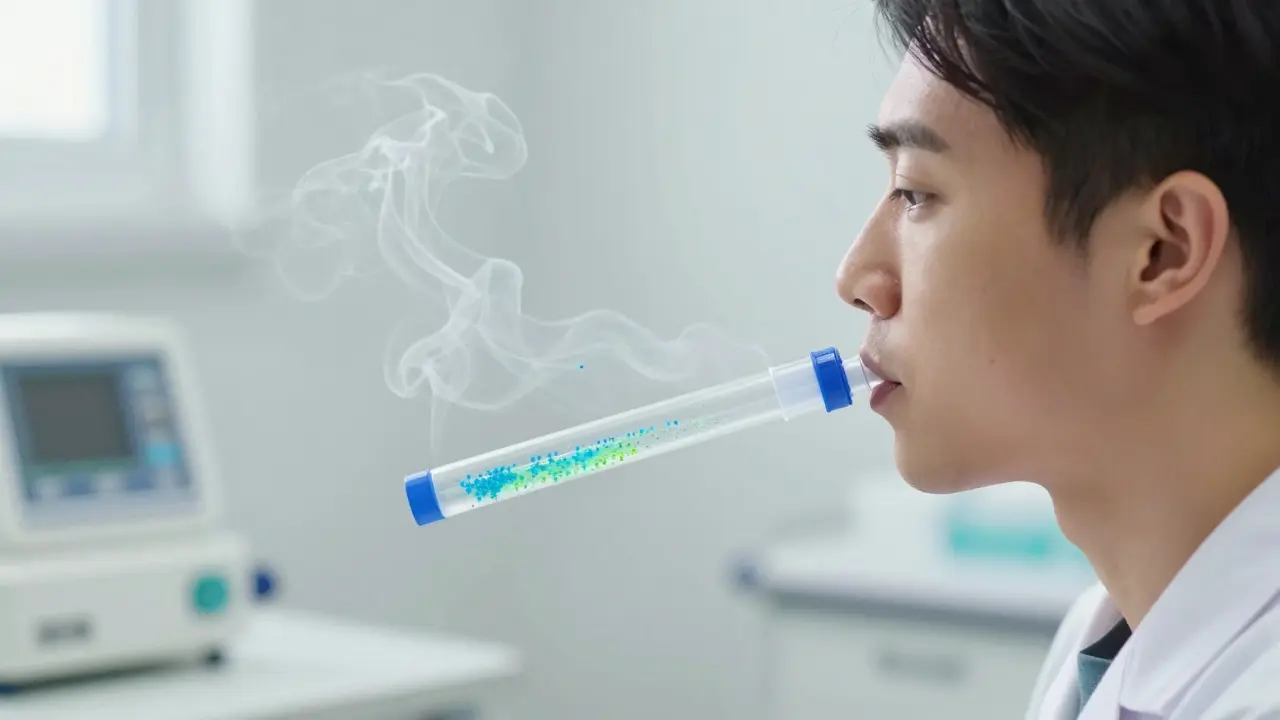
Since doctors can't easily peer into your small intestine, they look for a "smoke signal" in your breath. When bacteria in the small intestine ferment sugars, they produce gases-specifically hydrogen and methane. These gases are absorbed into your bloodstream and exhaled through your lungs.
There are two main types of tests you'll likely encounter: the Glucose Breath Test (GBT) and the Lactulose Breath Test (LBT). Here is how they differ in practice:
| Feature | Glucose Breath Test (GBT) | Lactulose Breath Test (LBT) |
|---|---|---|
| Primary Sugar | 10g Glucose | 10g Lactulose |
| Specificity | High (83.2%) | Moderate (70.6%) |
| Sensitivity | Lower (46.0%) | Higher (62.3%) |
| Main Weakness | Absorbed quickly by the upper gut | More prone to false positives |
The GBT is highly specific, but it has a major flaw: glucose is absorbed very quickly in the first part of the small intestine. If your bacteria are living further down the line, the glucose is gone before it even reaches them, leading to a false negative. The LBT uses a sugar that isn't absorbed as easily, allowing it to travel further down the tract, which makes it more sensitive but slightly less precise.
The Strict Rules of Testing
You can't just walk into a clinic and blow into a tube. If you don't prepare correctly, the test is essentially useless. About 25-30% of inconclusive results are caused by patients not following the prep protocols. To get an accurate reading, you need to follow these strict guidelines:
- Fasting: You must fast for exactly 12 hours before the test.
- Antibiotic Break: No antibiotics for at least 4 full weeks. These kill the very bacteria the test is trying to find.
- Medication Pause: Avoid prokinetics (meds that move the gut) and laxatives for 7 days.
- Dietary Restrictions: For 24-48 hours prior, avoid high-fiber foods and complex carbs. If you're constipated, you may need even more time to clear your system.
Once the test starts, you'll drink the sugar solution and provide breath samples every 15-20 minutes for up to two hours. A positive result is generally a rise of 20 ppm (parts per million) for hydrogen or 10 ppm for methane above your baseline.
The "Gold Standard" vs. The Practical Reality
There is a heated debate in the medical community about these breath tests. On one side, experts like Dr. Mark Pimentel argue that breath tests are the most practical tool we have. On the other, some believe they are merely screening tools, not definitive diagnoses.
The true gold standard is a Small Intestinal Fluid Culture. This involves an upper endoscopy where a doctor collects 3-5mL of fluid from the jejunum. If the count is over 10^5 colony-forming units per milliliter (CFU/mL), you have SIBO. The massive advantage here is that the lab can grow the bacteria and test exactly which antibiotic kills them. Breath tests can't do that; they just tell you that *something* is fermenting.
However, endoscopy is expensive (up to $2,500 compared to $300 for a breath test) and invasive. Most people can't get this done unless they are at a major academic center, like UC Davis Health, which recently became one of the few facilities in Northern California to offer routine aspirate testing. For the average person, the breath test remains the only viable option, despite its 40% potential misdiagnosis rate.
Treatment and the Battle Against Recurrence
Once you've confirmed an overgrowth, the goal is to clear the bacteria without destroying your entire microbiome. The most common pharmacological approach is a 10-14 day course of Rifaximin (typically 1,200mg daily). Rifaximin is unique because it stays in the gut and isn't absorbed into the bloodstream, making it a targeted strike against the overgrowth.
But here's the catch: the bacteria often come back. Recurrence rates are alarmingly high, exceeding 40% within nine months. This happens because the antibiotic treats the *symptom* (the bacteria) but not the *cause* (the motility issue or the lack of stomach acid). If your gut is still "slow," the bacteria will simply move back in.
Treatment also depends on what you're producing. If you are a methane producer-which is often linked to Intestinal Methanogen Overgrowth (IMO)-you're more likely to experience constipation. These patients often respond better to a combination therapy of neomycin and rifaximin rather than rifaximin alone.

Looking Ahead: The Future of Diagnostics
We are moving toward a world where we won't have to guess. Researchers at the Mayo Clinic and Johns Hopkins are working on next-generation sequencing and intraluminal gas sampling. There's even a new breath test analyzer in clinical trials at Cedars-Sinai that predicts an 85% accuracy rate. Until then, the best approach is a combination of a thoughtful breath test interpretation, targeted antibiotics, and a lifelong focus on the underlying cause of the motility failure.
Can I take a SIBO breath test at home?
While some companies sell home kits, they are often criticized for lack of standardization. Clinical-grade tests use specialized analyzers like the QuinTron BreathTracker, which are far more reliable than home-based approximations.
Why do I feel worse during the breath test?
The high dose of sugar (glucose or lactulose) acts as fuel for the bacteria. As they rapidly ferment the sugar to produce the gas the test measures, you may experience intense bloating and gas during the procedure.
Does a positive SIBO test always mean I need antibiotics?
Not necessarily. Many people have a small amount of bacterial overgrowth without symptoms. Doctors generally only treat SIBO if the test is positive AND the patient is experiencing significant clinical symptoms like malabsorption or severe bloating.
What is the difference between hydrogen and methane SIBO?
Hydrogen-dominant SIBO is typically associated with diarrhea and urgency. Methane-dominant SIBO (or IMO) is strongly linked to constipation, as methane gas slows down intestinal transit time.
How long does Rifaximin take to work?
Most patients notice a reduction in bloating and improved bowel movements within 7 to 14 days of starting the medication, though the full effect is assessed after the complete course is finished.
Next Steps and Troubleshooting
If you suspect SIBO but your breath test came back negative, don't give up. You might be a "non-hydrogen producer," which occurs in 15-20% of the population. In this case, the test cannot detect the gas even if bacteria are present. Ask your doctor about methane testing or, if you are at a specialized center, an aspirate culture.
For those who have successfully cleared the bacteria, the focus must shift to prevention. This often involves "prokinetic" agents-medications or natural supplements that help the gut move-to prevent bacteria from stagnating and growing again. If you have a history of PPI use, discuss a strategy with your doctor to safely reduce acid suppression and restore your natural gut defenses.