
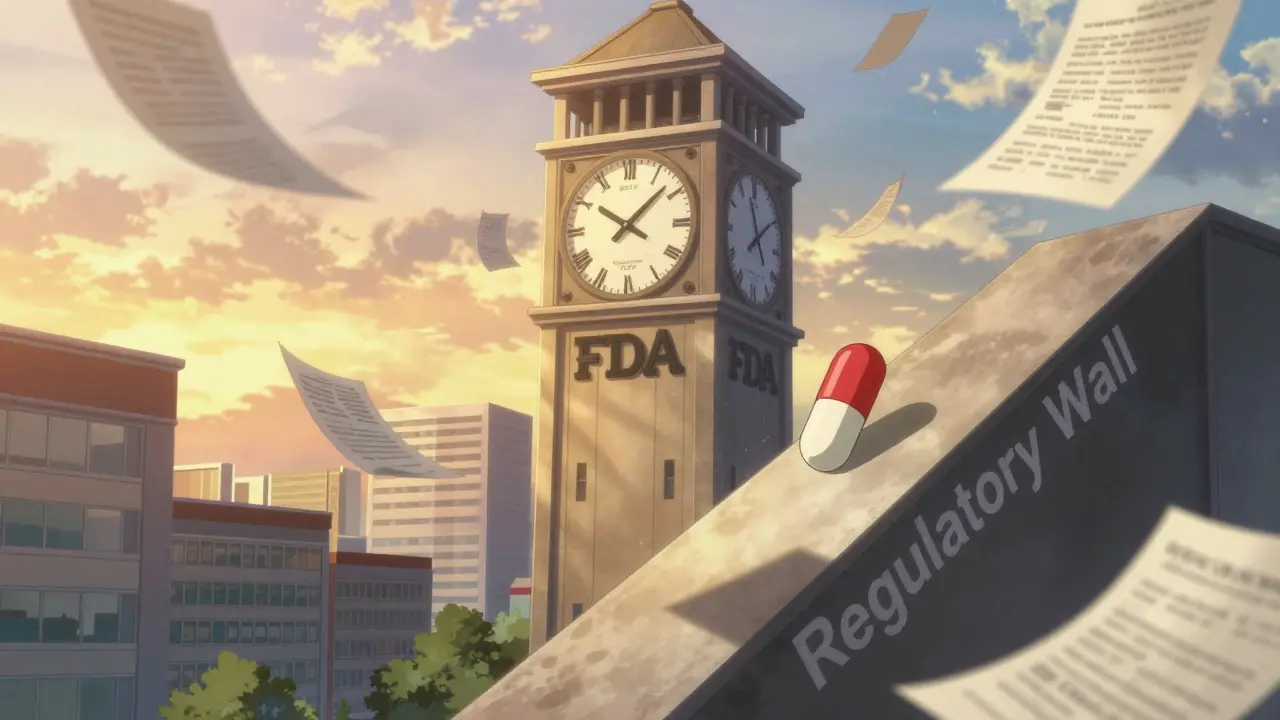
When a new drug hits the market, you might think its high price is just because of patent protection. But in reality, many drugs stay expensive for years after their patents expire - and that’s thanks to something called regulatory exclusivity. This isn’t a patent. It’s a government-mandated delay on generic competitors, built into the law itself. And it’s one of the biggest reasons why drug prices stay high even when patents run out.
What Is Regulatory Exclusivity?
Regulatory exclusivity is a time-limited period during which the FDA can’t approve generic or biosimilar versions of a brand-name drug. Unlike patents, which protect specific chemical structures or methods of making a drug, exclusivity protects the drug product as a whole. It doesn’t matter if a competitor comes up with a slightly different formula - if it’s meant to do the same thing, they’re blocked. This protection kicks in automatically when the FDA approves a new drug. No lawsuit. No filing. No paperwork from the company. Just a clock that starts ticking on approval day. And that clock can run longer than the patent. For example, a drug might have a 20-year patent, but if it takes 7 years to get through clinical trials and FDA review, the patent could expire before the drug even hits shelves. That’s where exclusivity steps in. It ensures the company gets a real shot at recouping its investment.Types of Regulatory Exclusivity in the U.S.
The U.S. doesn’t have one blanket rule. There are several types, each with different rules and lengths:- New Chemical Entity (NCE) Exclusivity - 5 years. This applies to drugs with a completely new active ingredient. During the first 4 years, the FDA won’t even accept a generic application. At year 5, generics can be approved - but only if they prove they’re bioequivalent.
- Orphan Drug Exclusivity - 7 years. For drugs treating rare diseases affecting fewer than 200,000 people in the U.S. This one is powerful because it’s tied to the disease, not the drug. Even if another company develops a different drug for the same rare condition, they can’t get approval until the 7 years are up.
- Biologics Exclusivity - 12 years. Created by the BPCIA in 2009, this protects complex biological drugs like monoclonal antibodies. These aren’t chemically synthesized like traditional pills - they’re made from living cells. Because they’re so hard to copy exactly, the law gives them 12 years of protection. Humira, for example, kept its monopoly until 2023, even though its main patent expired in 2016.
- 3-Year Exclusivity - For new uses, new formulations, or new patient populations of an already-approved drug. If a company adds a new indication - say, using an existing drug for a different cancer - they get 3 years of exclusivity for that specific use.
These periods can stack. A drug might get 5 years for being a new chemical, plus 3 more for a new use. Or a biologic might get 12 years of exclusivity while still holding onto a patent that expires later. The result? Some drugs enjoy over a decade of market control.
How It Compares to Patents
Patents and exclusivity sound similar, but they’re totally different systems:| Feature | Patents | Regulatory Exclusivity |
|---|---|---|
| Who grants it? | U.S. Patent and Trademark Office | Food and Drug Administration (FDA) |
| When does it start? | Date of filing (often years before approval) | Date of FDA approval |
| How long does it last? | Usually 20 years from filing | 5, 7, 12, or 3 years depending on type |
| Can it be challenged? | Yes - generics can sue to invalidate it | No - it’s automatic and non-negotiable |
| What does it protect? | Specific chemical structure or method | The entire drug product, regardless of patent claims |
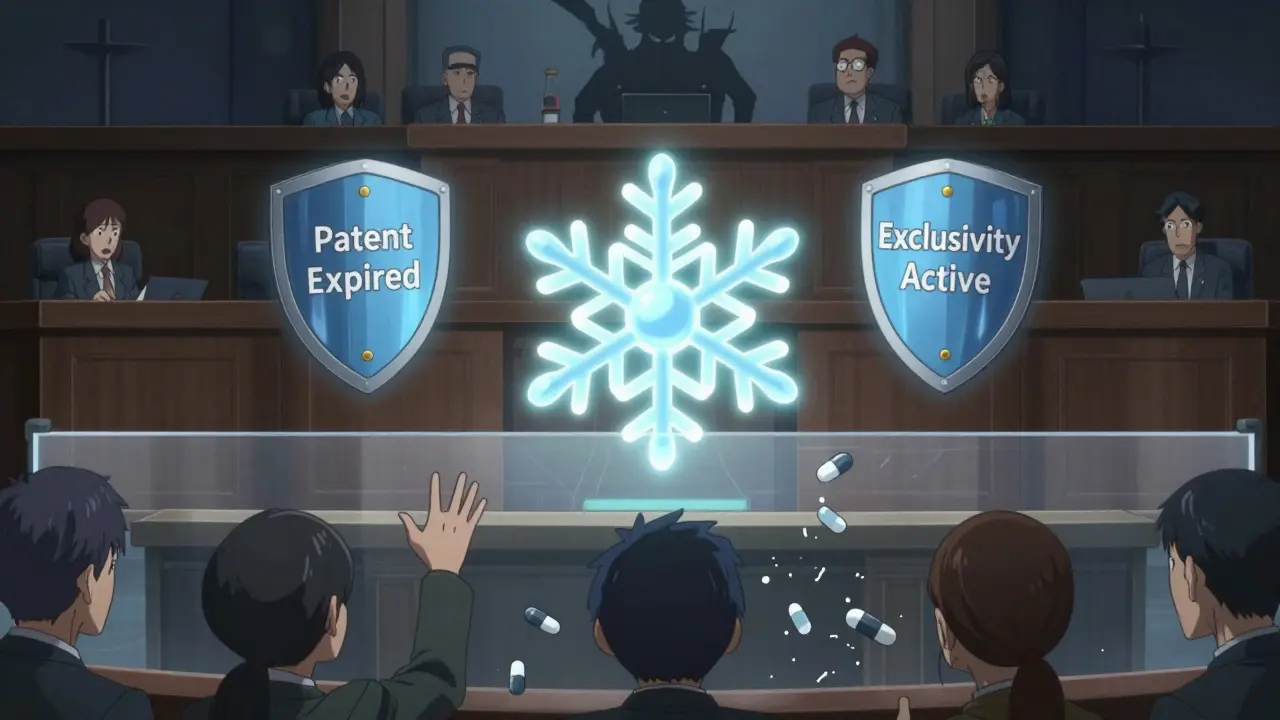
The big difference? Patents are a legal battle. Exclusivity is a regulatory wall. A company can lose a patent lawsuit and still keep its monopoly if exclusivity hasn’t expired. That’s why drugmakers rely on exclusivity more than ever - especially for biologics.
Why It Matters for Drug Prices
Generic drugs typically cost 80-85% less than brand-name versions. But exclusivity blocks that competition. IQVIA found that drugs under exclusivity sell for 3.2 times more than their generic equivalents. That’s billions in extra revenue. Take Humira again. AbbVie didn’t just use patents. They layered on 12 years of biologics exclusivity. Even when patents started expiring in 2016, the FDA couldn’t approve biosimilars until 2023. In 2022 alone, Humira made $19.9 billion in the U.S. - all while no competitor was legally allowed to enter. This isn’t just about one drug. In 2023, nearly half of all new drug approvals were for orphan drugs - many of which get 7-year exclusivity. That means a tiny patient population can get a drug priced at $500,000 a year - and no one else can touch it for seven years.Global Differences
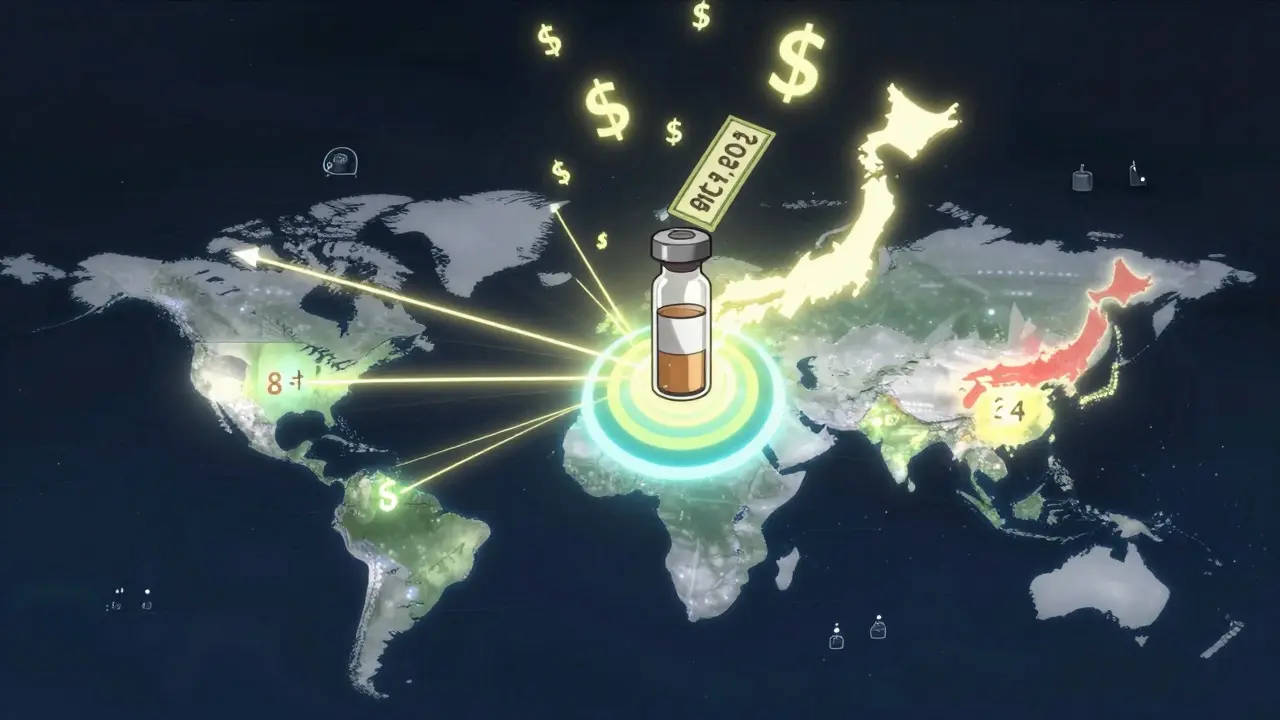
The U.S. isn’t the only player. Other countries have their own rules:- European Union: Uses an "8+2+1" system. 8 years of data protection (no generics can use the originator’s clinical data), then 2 years of market exclusivity (no sales allowed), plus a possible 1-year extension for new indications.
- Japan: 10 years of data exclusivity for new chemical entities.
- Canada: 8 years of data protection, with 6 years of market exclusivity.
The EU is trying to shorten its data exclusivity from 8 to 6 years to speed up generics. But the U.S. has held firm - and even expanded protections for biologics. That’s why many global drugmakers file first in the U.S. - it offers the longest runway.
Who Benefits? Who Loses?
The system was designed as a trade-off: "We’ll give you exclusivity so you’ll invest in risky R&D, and then generics will come in to lower prices." But reality is messier. Originator companies love it. A 2024 survey by the Association for Accessible Medicines found 89% of brand-name drugmakers said exclusivity is "essential" for recouping R&D costs. And they’re not wrong - developing a new drug costs an average of $2.6 billion, according to Tufts CSDD. But generic companies hate it. The same survey showed 68% of generic manufacturers think the exclusivity periods - especially the 12-year biologics term - are "excessively long." They’re forced to wait years to start development, often without knowing if the patent will hold up. Some spend millions building a generic drug, only to find out the exclusivity clock hasn’t expired yet. Patients and insurers pay the price. A 2022 analysis by Public Citizen argued that extended exclusivity delays competition longer than needed to incentivize innovation. The average combined patent and exclusivity period for a new drug is now 12.3 years. For biologics? 14.7 years. That’s more than a decade of monopoly pricing.What’s Changing?
Pressure is building. The FDA’s 2024 Drug Competition Action Plan says it’s looking to "modernize exclusivity frameworks." Congress has floated bills to cut biologics exclusivity from 12 to 10 years. The European Commission is pushing for reforms to help fight antimicrobial resistance. Some experts predict the average exclusivity period will drop from 12.3 years to 10.8 years by 2030. But don’t expect a quick end. The pharmaceutical industry spends hundreds of millions lobbying to keep these protections intact. Meanwhile, companies are getting smarter. Some now file for multiple types of exclusivity on the same drug - combining NCE, orphan, and 3-year exclusivity to stretch protection. Others use "patent thickets" - filing dozens of minor patents - alongside exclusivity to create overlapping barriers.What This Means for You
If you’re a patient, this explains why your prescription is still expensive even after the brand-name drug "should" be generic. If you’re a healthcare provider, it’s why formularies change slowly. If you’re in policy or finance, it’s why drug spending keeps climbing. Regulatory exclusivity isn’t a loophole. It’s law. And it’s working exactly as designed - for drugmakers. The question is whether society still believes that design serves the public.Is regulatory exclusivity the same as a patent?
No. Patents protect specific inventions and are granted by the patent office. Regulatory exclusivity is granted by the FDA and protects the entire drug product from generic approval for a set period. Exclusivity doesn’t require filing or enforcement - it’s automatic upon approval.
Can a drug have both a patent and regulatory exclusivity?
Yes. Most new drugs have both. Patents often expire before the drug is approved, so exclusivity ensures the company still has market control. For example, a biologic might have a patent expiring in 2020 but still be protected by 12 years of regulatory exclusivity until 2030.
Why do biologics get 12 years of exclusivity?
Biologics are made from living cells and are extremely complex to replicate. Unlike small-molecule drugs, you can’t just copy them exactly. The 12-year period was designed to account for the higher R&D costs and technical challenges of developing biosimilars. However, critics argue this period is too long and delays affordable alternatives.
Does regulatory exclusivity apply worldwide?
No. Each country has its own rules. The U.S. offers up to 12 years for biologics. The EU gives 8 years of data protection plus 2 years of market exclusivity. Japan gives 10 years. A drug approved in the U.S. might face generic competition sooner in another country.
How do generic companies know when exclusivity expires?
The FDA publishes the Purple Book, which lists all approved biologics and their exclusivity status. For small-molecule drugs, the Orange Book lists patents and exclusivity. But tracking overlapping periods - especially across different types of exclusivity - requires specialized regulatory expertise. Many companies hire dedicated exclusivity managers.
11 Comments
Angie Datuin
9 February, 2026Wow, I never realized how much of a wall exclusivity is compared to patents. I thought patents were the main barrier, but this makes so much sense now. My mom’s insulin was still crazy expensive years after the patent expired - I always wondered why.
It’s wild that the FDA just auto-locks generics in. No one even has to ask. Just... poof. No competition for a decade. That’s not innovation, that’s a monopoly with paperwork.
Camille Hall
10 February, 2026This is such an important breakdown. I’ve been following drug pricing for years, and this is the first time I’ve seen exclusivity explained clearly alongside patents. The stacking effect is terrifying - 5 years for a new chemical, plus 3 for a new use, plus 12 for being a biologic? That’s 20 years of monopoly before generics even get a shot.
And don’t get me started on orphan drugs. $500k/year for 200,000 people? That’s not a market failure. That’s a design feature.
Ritteka Goyal
10 February, 2026OMG I just read this and I’m so mad!! Like why are we letting these pharma giants just sit on drugs for 12 years?? In India we have generics that cost 1/10th and people LIVE because of it!!
USA you are literally killing your own people with this system. My cousin died because he couldn’t afford his meds after his patent expired but exclusivity kicked in. I mean really?? 12 years?? Are you kidding me??
And the EU is trying to fix this but USA?? You’re doubling down. I’m crying. I’m so angry. This is why we can’t have nice things. Pharma lobby owns Congress. Always has. Always will. #PharmaKills
Monica Warnick
12 February, 2026Okay so I’m gonna say something controversial - I don’t care if drug prices are high. If you’re spending $2.6 billion to develop a drug, you deserve to make your money back.
Also, generics? They’re not ‘better.’ They’re just cheaper. Sometimes they don’t work the same. I’ve had bad reactions. I’m not a lab rat for Big Pharma’s cost-cutting experiments.
And let’s be real - if you think the FDA is some neutral arbiter, you’ve never read their meeting transcripts. They’re just as cozy with pharma as the patent office. This isn’t a conspiracy. It’s capitalism.
Ashlyn Ellison
13 February, 2026Humira made $20 billion in one year with no competition. That’s insane. And now biosimilars are finally here - but only after 7 years of exclusivity + 7 years of patent extensions. That’s 14 years of monopoly on one drug.
Meanwhile, I’m paying $400 for my asthma inhaler that’s been around since 1995. Someone explain to me how that’s fair.
Jonah Mann
14 February, 2026Wait wait wait - I think you’re missing something. The 12-year biologics exclusivity? It’s not just about complexity. It’s about manufacturing. You can’t just ‘copy’ a biologic like a pill. It’s made from living cells - even tiny changes in temperature or pH during production can make it totally different.
So yeah, it’s expensive. But if you think a biosimilar is just a generic, you’re gonna get hurt. I’ve seen patients have immune reactions because their ‘biosimilar’ wasn’t stable. FDA’s got to be careful. Not saying it’s perfect - but it’s not just greed.
Tricia O'Sullivan
14 February, 2026While I appreciate the thoroughness of this analysis, I must respectfully note that the regulatory framework in the United States, while complex, was established with the intention of balancing innovation incentives with public access. The European Union’s 8+2+1 model, for instance, reflects a different societal calculus - one that prioritizes earlier market entry at the expense of R&D investment. The U.S. model, though criticized, has enabled the development of life-saving therapies that might otherwise never have been pursued.
That said, the stacking of exclusivities - particularly in cases involving orphan drugs - does warrant further scrutiny. A sunset clause, perhaps?
Tatiana Barbosa
15 February, 2026Let’s get real - this isn’t about innovation. It’s about profit. Pharma companies aren’t building rockets. They’re tweaking molecules and calling it a new drug. 3-year exclusivity for a new cancer indication? That’s not innovation - that’s gaming the system.
And don’t even get me started on patent thickets. 50 patents on one drug? That’s not legal. That’s extortion. We’re letting corporations turn healthcare into a casino - and patients are losing every hand.
But hey, at least we’ve got biosimilars now. Took long enough. Now let’s cut exclusivity to 5 years. No more. Period.
MANI V
16 February, 2026You people are naive. This isn’t about drugs. It’s about control. The government gives exclusivity so they can keep you dependent. Think about it - if generics were allowed immediately, people would stop trusting the system. They’d say, ‘Why pay $1000 for a pill when I can get it for $10?’
So they delay. They stretch. They lie. And you? You sit here debating ‘fairness’ while your insulin costs more than your rent.
Wake up. This isn’t broken. It’s working exactly as intended.
Simon Critchley
17 February, 2026Broooooo - this is peak regulatory theater. 12 years for biologics? That’s like giving a chef 12 years to monopolize a recipe that’s just... chicken and rice. Except the chicken is alive and the rice is made of DNA.
And the FDA? They’re just the bouncer at the club. ‘Nope, no generics. Only the original VIPs.’
Meanwhile, the EU’s over there like ‘hey, can we shorten this to 6?’ and the U.S. goes ‘Nah, we’re good.’
It’s not science. It’s a cash grab with a white coat.
Karianne Jackson
18 February, 2026I just read this and I’m crying. My kid needs a drug that’s been out for 10 years and we still can’t get the generic. It’s not fair. I hate this system.