
Switching from brand-name drugs to generic medications isn’t just about saving money-it’s about making smarter, equally safe choices for your health. If you’ve ever looked at your pharmacy receipt and wondered why your prescription suddenly cost a fraction of what it used to, you’re not alone. Millions of people make this switch every year, and for good reason. Generic drugs work the same way as their brand-name counterparts, but they cost up to 85% less. That’s not a marketing claim. It’s backed by data from the U.S. Food and Drug Administration (FDA) and real-world results from patients, pharmacists, and health systems.
They’re Not Cheaper Because They’re Weaker
One of the biggest myths about generic medications is that they’re less effective. That’s simply not true. By law, a generic drug must contain the same active ingredient, in the same strength, and delivered the same way (pill, injection, patch, etc.) as the brand-name version. The FDA requires every generic to prove it delivers the same amount of medicine into your bloodstream at the same rate as the original. This is called bioequivalence. To get approved, a generic must show that its absorption falls within 80% to 125% of the brand-name drug’s levels. That’s a tight range-tighter than many over-the-counter supplements are held to.Think of it like this: if you’re taking metformin for diabetes, whether it’s called Glucophage or just metformin, your body processes it the same way. The pills might look different-different color, shape, or markings-but that’s only because of inactive ingredients like dyes or fillers. Those don’t affect how the medicine works. The FDA inspects manufacturing sites for generics just as strictly as it does for brand-name drugs. In fact, many brand-name companies actually make the generic versions of their own drugs under different labels.
The Real Savings Are Staggering
Let’s talk numbers. In 2023, generic drugs accounted for 90% of all prescriptions filled in the U.S., but only 23% of total drug spending. That means for every dollar spent on prescriptions, only 23 cents went to generics-even though they made up nine out of ten pills. How is that possible? Because generics don’t need to pay for expensive clinical trials or marketing campaigns. They build on the research already done by the original drug maker.Take Lipitor, a cholesterol drug. When its patent expired in 2011, the brand-name version cost about $130 a month. Today, the generic version (atorvastatin) costs as little as $4 at major pharmacies. Warfarin, a blood thinner, used to be sold as Coumadin and cost over $300 for a 30-day supply. Now, the generic runs about $4. Fexofenadine (generic for Allegra) dropped from $30 to $10. These aren’t outliers-they’re the rule.
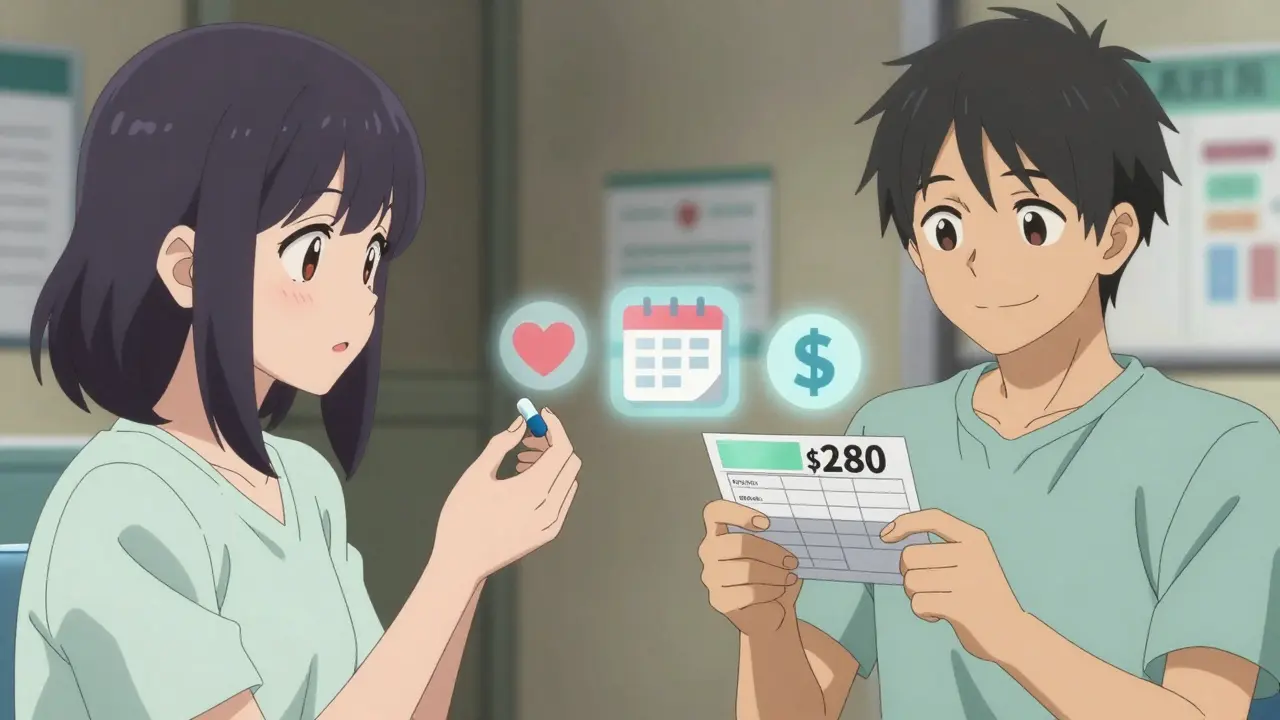
Across the board, generic medications save patients an average of $80-$100 per prescription. For someone taking multiple meds, that adds up fast. One Reddit user in March 2024 shared that switching their blood pressure meds to generic saved them $280 a month. That’s $3,360 a year. For seniors on fixed incomes, that kind of savings isn’t just convenient-it’s life-changing.
Insurance Plans Push Generics for a Reason
Your insurance company doesn’t just prefer generics because they’re nice-they’re financially smart. Most plans structure their formularies so that generics are in the lowest cost tier. You might pay $1-$10 for a generic, while the brand-name version costs $25-$75. Some plans don’t cover brand-name drugs at all unless you’ve tried and failed the generic first. That’s not a trick-it’s a system designed to keep premiums lower for everyone.The same logic applies to Medicare Part D. In 2023, beneficiaries paid an average of $1.85 per generic prescription versus $33.67 for brand-name drugs. That’s a 94% difference. And it’s not just about what you pay at the counter-when people can afford their meds, they’re less likely to skip doses, go to the ER, or be hospitalized. A 2023 study found that patients using generics were 68% less likely to skip doses due to cost. That’s a huge win for long-term health.
Doctors and Experts Back Generics
The American Medical Association, the FDA, and major health systems all agree: when appropriate, prescribe generics. Dr. Janet Woodcock, former head of the FDA’s drug center, said it plainly: “Generic drugs undergo rigorous review to ensure they are as safe and effective as brand-name drugs.”Large studies back this up. A 2022 study in the Journal of Managed Care & Specialty Pharmacy looked at thousands of patients on generic and brand-name heart medications. There was no difference in outcomes for blood pressure control or heart failure. Another study in the Journal of the American Heart Association tracked 186,000 patients and found identical results between generic and brand-name heart drugs. Even Dr. Aaron Kesselheim from Harvard Medical School, who’s studied this closely, concluded: “Our research confirms that generic cardiovascular drugs perform as well as their brand-name counterparts.”
Some specialists raise concerns about narrow therapeutic index (NTI) drugs-medications where tiny changes in blood levels can matter, like certain seizure or thyroid drugs. But even here, the FDA says approved generics meet the same strict standards. A 2023 review of over 100,000 patients on generic antiepileptics showed no increase in seizures or side effects. That doesn’t mean every patient is the same-some people notice subtle differences, and that’s okay. But those cases are rare, and they’re not a reason to avoid generics altogether.
What About the Pill That Looked Different?
You’ve probably had this happen: you pick up your prescription, and the pill looks completely different. Maybe it’s blue instead of white, or oval instead of round. That’s because generic manufacturers change their suppliers or packaging. It’s harmless-but it can cause anxiety.One Drugs.com user wrote in February 2024: “My pharmacy switched generic manufacturers and the pill color changed, which made me anxious.” That’s understandable. But the medicine inside? Identical. Pharmacists are trained to explain this during transitions. If you’re ever unsure, ask them. Most will show you the FDA’s Orange Book-the official list of approved generics and their therapeutic ratings. It’s public, and it’s reliable.

Generics Are the Backbone of Modern Healthcare
From 2012 to 2022, generic drugs saved the U.S. healthcare system $1.67 trillion. That’s not a typo. That’s over a trillion and a half dollars. Without generics, millions of people couldn’t afford their meds. Hospitals and pharmacies rely on them to keep care affordable. Nearly all hospitals (99%) and retail pharmacies (98%) automatically substitute generics unless told otherwise by the prescriber.And it’s not just pills. The same logic applies to biosimilars-generic versions of complex biologic drugs like insulin or cancer treatments. As of late 2023, the FDA had approved 37 biosimilars. Experts predict they’ll save Medicare $50 billion a year by 2030. That’s not science fiction-it’s already happening.
How to Make the Switch
Switching is simple:- Ask your doctor: “Is there a generic version of this drug?”
- Check your insurance formulary-generics are almost always cheaper.
- When you get your prescription, confirm with the pharmacist that it’s the generic.
- If the pill looks different, ask if it’s still the same medicine. It almost always is.
- Monitor how you feel. Most people notice no difference at all.
If you’ve been on a brand-name drug for years and are nervous about switching, talk to your doctor. You can try the generic for a month and see how you feel. In most cases, you won’t notice a thing.
Bottom Line: Generics Work. They Save Money. They’re Safe.
There’s no magic trick here. Generic medications are not second-rate. They’re not “lesser.” They’re the same medicine, sold at a fair price. With 90% of prescriptions filled with generics and no drop in effectiveness, the evidence is clear: switching saves you money without sacrificing your health.Every time you choose a generic, you’re not just cutting your own costs-you’re helping make healthcare more affordable for everyone. And that’s a win you can feel every time you pay for your prescription.
Are generic medications as safe as brand-name drugs?
Yes. The FDA requires generic drugs to meet the same strict standards for quality, purity, and strength as brand-name drugs. They must prove bioequivalence-meaning they deliver the same amount of active ingredient into your bloodstream at the same rate. The FDA inspects manufacturing facilities for generics just as often as those for brand-name drugs. Adverse event reports for generics are proportional to their usage, showing no higher safety risks.
Why do generic pills look different?
Generic pills can look different because they use different inactive ingredients-like dyes, fillers, or coatings-to meet manufacturing standards or trademark rules. These ingredients don’t affect how the medicine works. Only the active ingredient matters, and it’s identical to the brand-name version. Changes in color or shape don’t mean the drug is different or weaker.
Can I switch to a generic without talking to my doctor?
In most cases, yes. Pharmacists are allowed to substitute a generic unless your doctor specifically writes “Dispense as Written” or “Do Not Substitute.” But it’s still a good idea to check with your doctor, especially if you’re taking multiple medications, have a complex condition, or have had reactions to past switches. They can confirm it’s safe for your specific case.
Do generics take longer to work?
No. To get FDA approval, generics must match the brand-name drug’s absorption rate within a very narrow range. That means they enter your bloodstream at the same speed and in the same amount. Whether it’s a blood pressure pill or an antibiotic, the timing of action is the same. Any perceived delay is usually due to placebo effect or unrelated factors like diet or stress.
What if I don’t feel the same on a generic?
If you feel different after switching, talk to your doctor. While rare, some people may notice subtle changes-especially with medications that have a narrow therapeutic window, like certain seizure or thyroid drugs. But this doesn’t mean the generic is inferior. It could be a change in inactive ingredients, or even psychological factors. Your doctor can help determine if switching back or trying another generic is needed. Most people experience no difference at all.
15 Comments
Ariel Edmisten
7 February, 2026Generics saved me $400 last year on my blood pressure meds. No difference in how I feel. Just cheaper.
Paula Sa
8 February, 2026I was skeptical at first, but after switching my diabetes meds to generic metformin, I’ve been stable for two years. My pharmacist showed me the FDA’s Orange Book-turns out, the same company makes both versions. Mind blown.
It’s wild how people still think color or shape means quality. The active ingredient doesn’t care what dye it’s wrapped in.
Also, if your doctor’s like ‘oh, this one’s brand-only,’ ask if they’ve checked the formulary. Most times, it’s just habit.
My mom’s on six generics now. She says she feels better because she’s not stressed about bills anymore. That’s real medicine.
Healthcare isn’t about branding. It’s about access. And generics? They’re the quiet heroes.
Stop treating your meds like a fashion choice. They’re not.
Also, I switched my thyroid med last year. No issues. No ‘weird vibes.’ Just steady levels.
People who say ‘I felt different’-did you track your labs? Or just assume it was the pill?
There’s data. There’s science. And there’s fear. Don’t let fear cost you your health.
Generics aren’t ‘second-tier.’ They’re the baseline. The brand-name stuff? That’s the luxury upgrade.
And if you’re worried about biosimilars? Same logic. More data coming in every year.
Bottom line: if it’s FDA-approved, trust it. Your wallet and your body will thank you.
Niel Amstrong Stein
9 February, 2026Bro, I used to think generics were sketchy until I saw my grandpa’s prescription history.
He was on brand-name Lipitor for years. $140/month. Then it went generic. $5. He cried. Not from sadness-from relief.
He’s 78. Lives alone. No family nearby. That $135 saved every month? That’s groceries. That’s heating. That’s not skipping a doctor visit.
And yeah, the pill looks different now. Blue instead of white. He panicked for a week. Called the pharmacy twice.
They showed him the label. The active ingredient. The FDA stamp.
He’s been fine since.
Generics don’t suck. People who say they do? Usually haven’t tried them.
Also-emoji time 🤯💊💰
Mary Carroll Allen
10 February, 2026I switched my antidepressant to generic and thought I was gonna die
I literally had panic attacks thinking the pill was 'weaker'
Turns out it was just my brain being dramatic
I went to my therapist and we talked about how fear of change affects our bodies
After 3 weeks I felt BETTER
Not because the med changed
Because I stopped obsessing over it
Also my pharmacist gave me a pamphlet that said 90% of people feel NO difference
Why do we treat medicine like a sacred artifact??
It's a molecule. Not a religion
Also typo sorry I'm typing on phone
but this matters
so much
Sarah B
11 February, 2026Generics are the only reason I can afford to live
AMIT JINDAL
12 February, 2026Let me tell you something about generics, you see, I worked in a pharma lab in Bangalore for 7 years, and I’ve seen how these pills are made, and let me tell you, the quality control in the U.S. is nothing compared to what we do in India, I mean, we have ISO certifications, we use laser-guided sorting machines, we test every batch 17 times, and yet you Americans still think generics are sketchy? Come on
Also, I read your article and you mentioned the FDA, but did you know the FDA doesn’t inspect every single plant? They do random audits, and sometimes the gap between inspections is over 2 years, which means some generics are sitting in warehouses with 8% variance in potency, and you think that’s okay?
And don’t get me started on the fillers
Some generics use cornstarch from China, which can trigger inflammation in people with autoimmune disorders
And the dyes? Some are carcinogenic
Look, I’m not saying don’t use generics
I’m saying DO YOUR RESEARCH
Check the manufacturer
Look up the lot number
And if you’re on a narrow therapeutic index drug? Stick with brand
Because I’ve seen people die because they trusted a $3 pill from a company that outsources to a factory in a village with no running water
And yes I’m speaking from experience
My cousin took a generic seizure med
She had a seizure
Turned out the batch had 12% less active ingredient
So yeah
Be careful
Not all generics are equal
And if you’re just blindly trusting the system
You’re being naive
And naive people get hurt
Gouris Patnaik
12 February, 2026India makes 20% of the world’s generic drugs. We don’t cut corners. We optimize. You think your $4 pill is cheap because it’s low quality? No. It’s cheap because we don’t spend $500 million on ads for a pill that does the same thing as the $130 one.
You Americans act like generics are a compromise. We treat them as a triumph of efficiency.
Our pharmacists don’t need to explain why the pill looks different. They just hand it over. Because they know. Because they trust the science.
Stop projecting your fear onto medicine. It’s not a status symbol. It’s a tool.
And if you’re worried about quality? Look up the manufacturer. Most Indian generics are made in FDA-approved plants. Same facility. Same machines. Same inspectors.
It’s not about where it’s made. It’s about what’s inside.
And what’s inside? Exactly what the brand-name has.
Stop being dramatic.
Amit Jain
14 February, 2026Generics? More like gener-BS
I switched to generic omeprazole and my heartburn got worse
My doc said 'it's placebo' but I know better
They cut corners
They use cheap fillers
They don't test enough
My cousin's mom died from a bad generic
Don't be a sheep
Stick with the brand
It's not about money
It's about survival
And if you're okay with risking your life for $5
Then you're not smart
You're just lazy
Catherine Wybourne
16 February, 2026Oh honey, I had the same reaction when my pharmacist switched my thyroid med from brand to generic.
I thought I was going to collapse.
Turned out I was just anxious.
My TSH levels? Identical.
My energy? Better.
Because now I had money for yoga classes.
And don’t get me started on how much I save on coffee.
Generics aren’t a compromise.
They’re a revolution.
And if you’re still scared?
Try it for 30 days.
Then come back and tell me it didn’t work.
…I’ll be here.
With tea.
And a smile.
Jesse Lord
17 February, 2026I used to be the guy who refused generics
Then my kid got sick
Insurance dropped the brand-name
I panicked
Switched anyway
Nothing changed
Just saved $700/month
That’s 3 months of rent
Or 12 months of diapers
Or 200 hours of sleep
Because I wasn’t stressing about money
So yeah
I’m a convert
And if you’re scared
Just ask your pharmacist
They’ve seen it all
And they’ll tell you the truth
Not the hype
Not the fear
Just the facts
Lakisha Sarbah
19 February, 2026I switched my asthma inhaler to generic and my inhaler broke
Not the medicine
The plastic case
It was flimsier
So I called the pharmacy
They gave me a different manufacturer
Same pill
Better case
Same price
So yeah
It’s not the drug
It’s the packaging
And you can ask for a different one
They’ll help
They want you to stay healthy
Not scared
Ashley Hutchins
19 February, 2026Generics are a scam
They’re made in China
They’re full of toxins
People who use them are fools
And if you’re okay with that
You’re part of the problem
Stop being so naive
Buy the brand
It’s your life
Tola Adedipe
20 February, 2026My dad’s on 8 different meds. 7 are generic. The 8th? Brand. Why? Because the generic made him nauseous.
We didn’t assume. We tested.
Switched back. Nausea went away.
Then we tried a different generic manufacturer.
No nausea.
Same active ingredient.
Different filler.
So yeah.
Not all generics are the same.
But that doesn’t mean they’re bad.
It means you need to be smart.
Ask for options.
Track symptoms.
Work with your pharmacist.
They’re not trying to trick you.
They’re trying to help you stay alive.
And if you’re mad at the system?
Take it out on the CEOs.
Not the pills.
Joey Gianvincenzi
21 February, 2026While I appreciate the empirical data presented, I must respectfully challenge the underlying assumption that cost-efficiency supersedes patient autonomy in pharmaceutical decision-making. The FDA’s bioequivalence thresholds, while statistically rigorous, do not account for inter-individual pharmacokinetic variance. Moreover, the commercial incentives embedded within the generic manufacturing ecosystem-particularly those involving contract manufacturing organizations with inconsistent regulatory oversight-present a latent risk profile that is neither transparent nor adequately mitigated. The commodification of life-sustaining therapeutics, however economically rational, risks eroding the foundational principle of personalized medicine. I urge a more nuanced discourse-one that prioritizes individual physiological integrity over systemic cost containment.
Gouris Patnaik
21 February, 2026And yet here you are, using a phone made in China, driving a car assembled in Mexico, and wearing clothes stitched in Bangladesh. You’re fine with global supply chains for everything… except the pill in your hand.
Generics aren’t ‘commodified.’ They’re democratized.
And if you really cared about ‘personalized medicine,’ you’d be asking for biosimilars-not clinging to $100/month brand-name drugs that do the exact same thing.
Stop hiding behind jargon.
Just say you’re scared.
That’s okay.
But don’t pretend it’s science.