
When it comes to protecting your heart, what you eat matters more than you think. It’s not about cutting out entire food groups or chasing the latest fad. The science is clear: three eating patterns-Mediterranean, DASH, and plant-forward-have been proven over decades to slash your risk of heart disease, lower blood pressure, and even reduce the need for medications. These aren’t temporary diets. They’re lifelong habits backed by real data from tens of thousands of people. Let’s cut through the noise. You don’t need to go vegan, starve yourself on celery, or buy expensive supplements. You just need to shift your plate. And the good news? You can start today.
What Makes a Diet Truly Heart-Healthy?
Not all healthy eating plans are created equal. Some focus on weight loss. Others emphasize protein. But for your heart, the goal is simpler: lower bad cholesterol, reduce inflammation, and keep blood pressure in check. The Mediterranean, DASH, and plant-forward diets all do this-just in slightly different ways. The American Heart Association calls these Tier 1 eating patterns. That’s their highest rating. It means the evidence is rock-solid. A 2021 review in Circulation looked at over 1,200 studies and confirmed these three as the most effective for preventing heart attacks, strokes, and early death. What’s the common thread? They all load up on vegetables, fruits, whole grains, beans, nuts, and healthy fats. They cut way back on processed foods, added sugar, and red meat. And they don’t punish you for eating fish, eggs, or dairy-just keep it moderate.The Mediterranean Diet: Flavor First, Heart Second
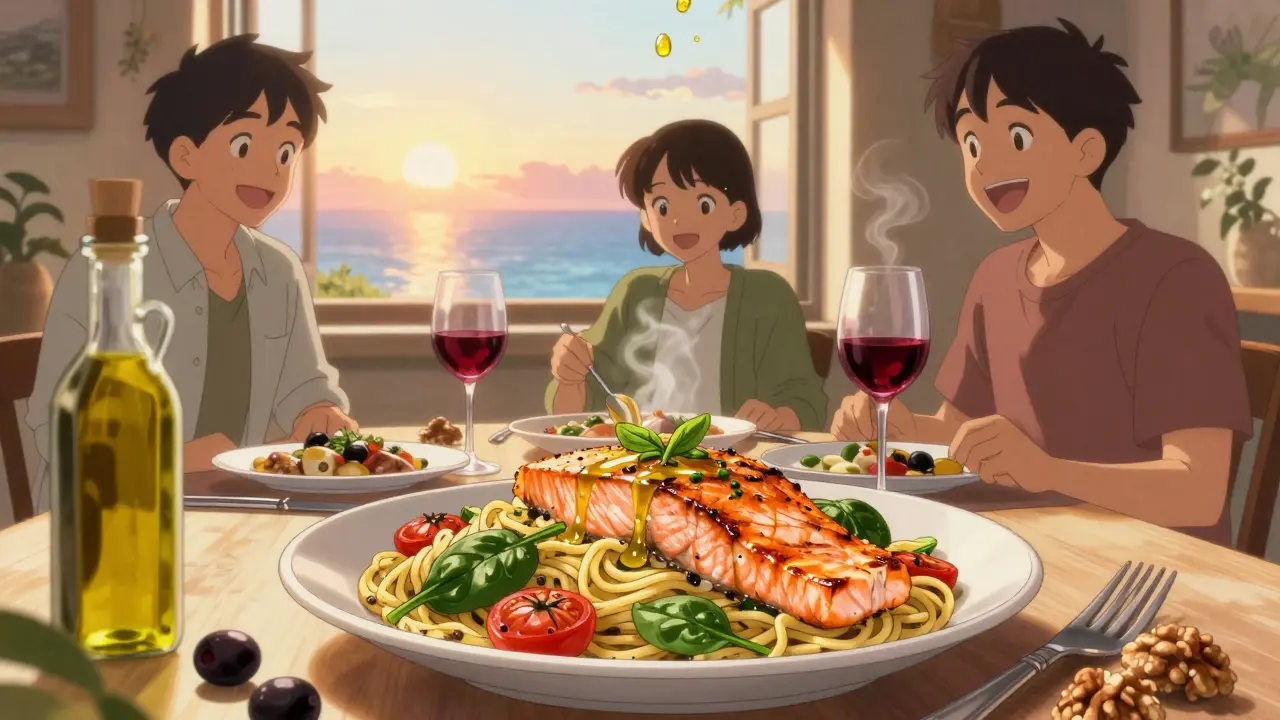
Think of the Mediterranean diet as the way people ate for centuries along the coasts of Greece, Italy, and Spain. It’s not a diet. It’s a culture. And it works. The key? Olive oil. Not just as a dressing, but as your main fat source. Studies show that people who use extra-virgin olive oil daily have up to 30% lower risk of heart disease. Why? It’s packed with antioxidants and monounsaturated fats that calm inflammation and improve cholesterol. Here’s what a typical day looks like:- Breakfast: Greek yogurt with walnuts and berries
- Lunch: Whole grain pasta with lentils, spinach, tomatoes, and a drizzle of olive oil
- Dinner: Grilled salmon with roasted vegetables and a side of quinoa
- Snacks: Olives, almonds, or an apple
The DASH Diet: The Blood Pressure Buster
If high blood pressure is your main concern, DASH is your best friend. DASH stands for Dietary Approaches to Stop Hypertension. And it was designed in a lab-literally. In the 1990s, the National Institutes of Health ran a trial to see if food alone could lower blood pressure. The result? A 11.4 mm Hg drop in systolic pressure on average. That’s as good as some medications. DASH is precise. It gives you exact serving targets:- 6-8 servings of whole grains daily
- 4-5 servings of vegetables
- 4-5 servings of fruit
- 2-3 servings of low-fat dairy
- 6 or fewer servings of lean meat, poultry, or fish
- 4-5 servings of nuts, seeds, or legumes per week
- Sodium under 2,300 mg, ideally 1,500 mg
Plant-Forward Eating: Flexibility Meets Power
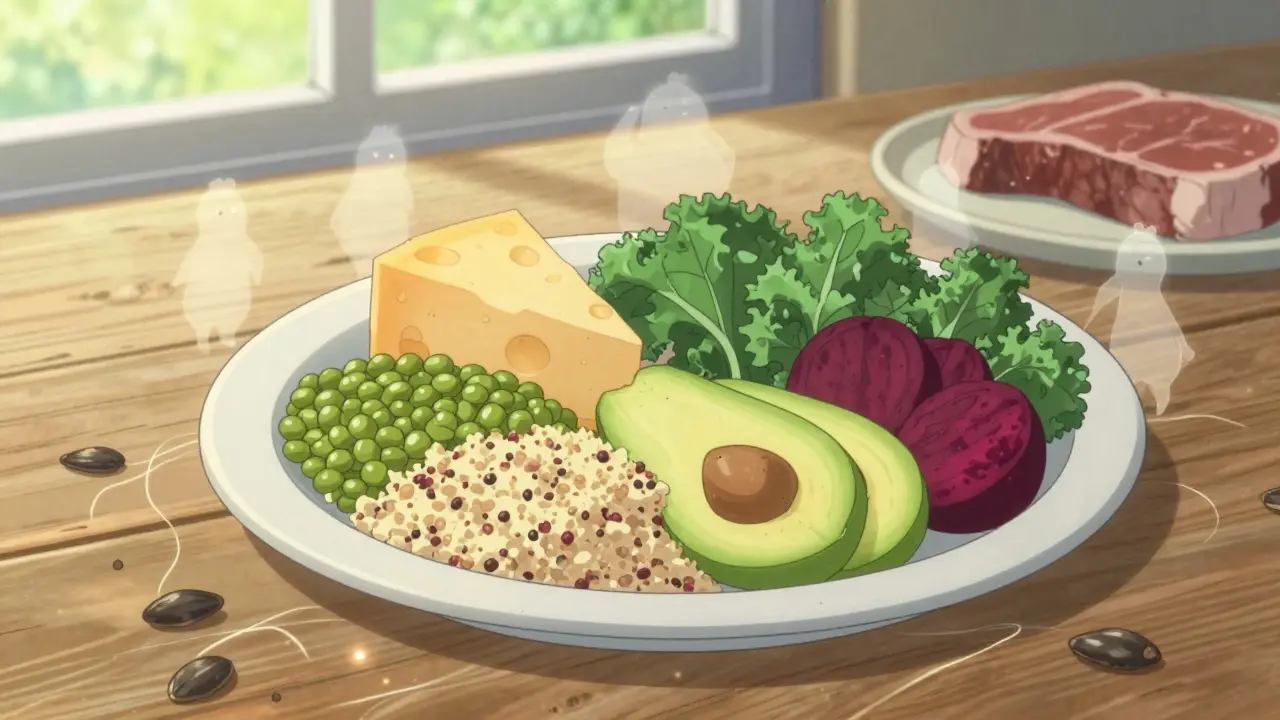
You don’t have to go fully vegan to get the benefits. Plant-forward eating means making plants the star of your plate-not the side dish. It’s flexible. You can still eat chicken, eggs, or cheese. But your plate is 75% plants. That means beans, lentils, whole grains, tofu, nuts, seeds, fruits, and veggies. Animal products? Just a side note. Why does this work? Fiber. Plants are loaded with it. Fiber lowers LDL cholesterol, feeds your gut bacteria, and helps control blood sugar. A 2024 analysis of the PURE study found that people who got most of their protein from plants had 23% lower risk of dying from heart disease. A 2024 survey by Veganuary showed 67% of people who tried plant-forward eating stuck with it after six months. The biggest hurdle? Dining out. But that’s changing. Most restaurants now have plant-based options. You don’t need to be perfect. Even swapping one meat meal a week for beans or lentils makes a difference. A 2023 Cleveland Clinic study found that people who ate plants just three days a week had 15% lower blood pressure than those who didn’t.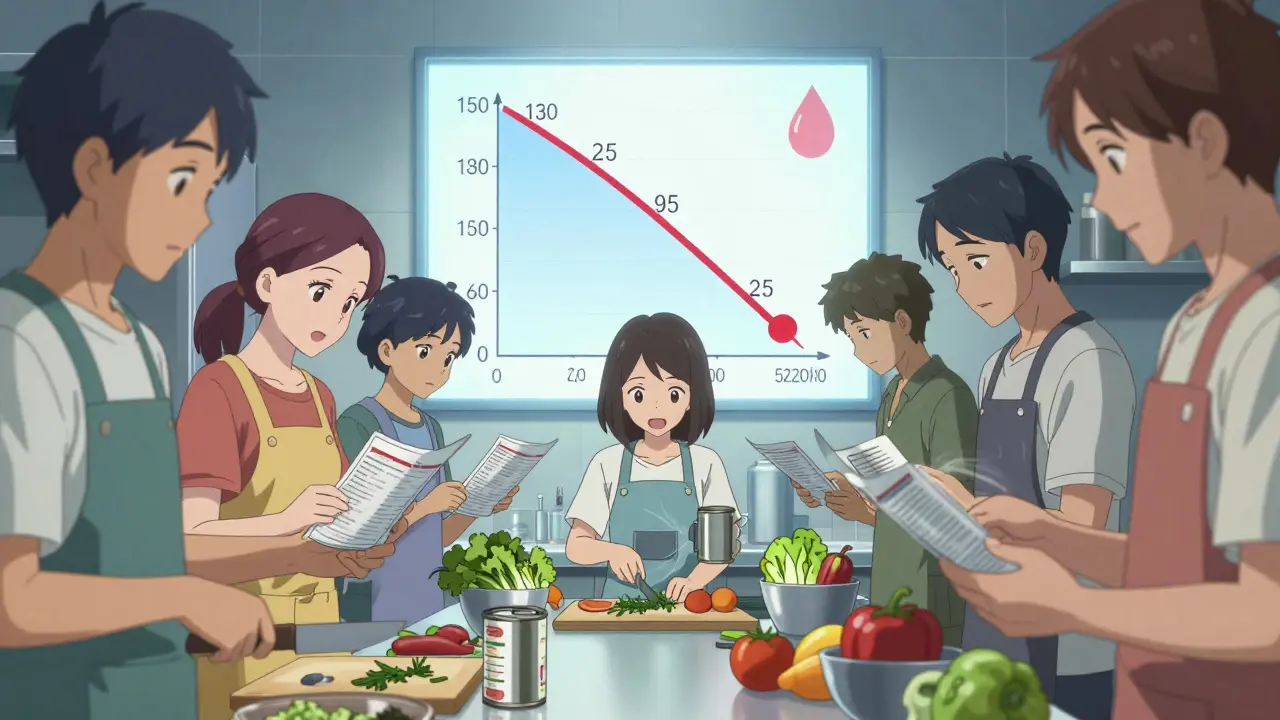
How Do They Compare?
Here’s how these three stack up:| Feature | Mediterranean | DASH | Plant-Forward |
|---|---|---|---|
| Primary Goal | Reduce overall heart disease risk | Lower blood pressure | Improve cholesterol and inflammation |
| Fat Source | Extra-virgin olive oil | Canola oil, nuts, seeds | Avocado, nuts, seeds, olive oil |
| Sodium Limit | Not strictly controlled | 1,500-2,300 mg/day | Generally low |
| Animal Products | Modest fish, poultry, dairy | Lean meat, poultry, low-fat dairy | Optional, small amounts |
| Best For | Sustainability, taste, long-term adherence | Quick BP drop, clinical results | Flexibility, affordability, accessibility |
| Adherence Rate (6+ months) | 68% | 52% | 67% |
What About the Wine? The Sodium Trap? The Cost?
Let’s tackle the big questions. Is wine necessary? No. The Mediterranean diet includes moderate wine because it’s part of the culture. But if you don’t drink, don’t start. You get the same benefits from grapes, berries, and dark chocolate. Is DASH too strict? Yes, for some. Cutting sodium from 3,400 mg to 1,500 mg is hard. Start at 2,300 mg. Use herbs. Cook from scratch. You don’t need to hit 1,500 right away. Even 2,000 mg helps. Is this expensive? Not if you plan. A 2024 USDA analysis found these diets cost $1.50 more per day than the average American diet. But that’s because most people eat processed foods and cheap meat. Swap a $12 steak for a $4 can of lentils and a $2 bag of spinach. You’ll save money and protect your heart.How to Start Today
You don’t need a full meal plan. Just make one change.- Replace one meat meal with beans or lentils.
- Use olive oil instead of butter.
- Swap soda for sparkling water with lemon.
- Add a serving of vegetables to every lunch and dinner.
- Read labels. Avoid anything with more than 200 mg of sodium per serving.
What the Experts Say
Dr. Frank Sacks, who led the original DASH trials, says: “It’s not about restriction. It’s about adding more of what helps.” Karen Collins, a registered dietitian, adds: “The biggest difference? Mediterranean diet encourages fish and olive oil. DASH is all about sodium and dairy. Plant-forward is about shifting the whole plate.” And the bottom line? All three work. Pick the one that fits your life. Stick with it. Your heart will thank you.What’s Next? The Future of Heart-Healthy Eating
New research is blending the best of all three. A 2024 study called “Medi-DASH” combined the olive oil and fish of the Mediterranean diet with DASH’s sodium control. Result? Blood pressure dropped 12.4 mm Hg. LDL cholesterol fell 18.7 mg/dL. Better than either diet alone. The American College of Cardiology is expected to update its 2025 guidelines to give plant-forward eating equal status. Why? Because you don’t need to go vegan to get the benefits. Just eat more plants. And here’s the kicker: genetic testing is now showing which diet works best for you. Some people respond better to high-fat Mediterranean plans. Others drop weight and BP better on high-protein DASH. Personalization is the next frontier. But you don’t need DNA testing to start. You just need to start eating better. Today.Real People, Real Results
Reddit user u/HealthyEater2023 said: “I’ve been on Mediterranean for 18 months. It feels like a lifestyle, not a diet.” u/HypertensionWarrior wrote: “DASH dropped my BP from 150/95 to 130/85 in 6 weeks. But the sodium limits? Brutal.” A 2023 Cleveland Clinic survey found 68% of people who followed one of these diets reported more energy. Nearly a third cut their meds. You don’t need to be perfect. Just consistent. One meal at a time.Final Thought
Your heart doesn’t care if you’re following a diet. It cares if you’re eating real food. Vegetables. Whole grains. Nuts. Fish. Olive oil. Beans. Fruits. Water. Stop chasing quick fixes. Start building habits. The best heart-healthy diet is the one you can live with for the rest of your life. And guess what? You can start now. Just eat one more vegetable today.Can I combine the Mediterranean and DASH diets?
Yes, and many experts recommend it. Combining the olive oil, fish, and whole foods of the Mediterranean diet with DASH’s low-sodium, high-fiber structure creates what’s called the “Medi-DASH” plan. A 2024 study showed this combo lowered blood pressure more than either diet alone and cut LDL cholesterol by nearly 20%. It’s flexible, tasty, and backed by science.
Do I have to give up meat completely?
No. None of these diets require you to go fully vegan. The Mediterranean diet includes fish and poultry. DASH allows lean meat and low-fat dairy. Plant-forward means plants are the main event, but small amounts of animal products are fine. The key is reducing red and processed meats to once a month or less.
Is the DASH diet too hard to follow long-term?
It can be, especially with the strict sodium limits. But you don’t have to hit 1,500 mg right away. Start by cutting out processed snacks, canned soups, and deli meats. Cook at home. Use herbs instead of salt. Many people find that after 3-4 weeks, their taste buds adjust and salty foods start to taste too strong. The higher-unsaturated fat version of DASH (more olive oil, nuts, avocado) is easier to stick with long-term.
Are plant-forward diets cheaper than meat-based ones?
Generally, yes. Beans, lentils, rice, oats, seasonal vegetables, and frozen fruits cost far less than beef, pork, or processed meats. A 2024 USDA analysis found these heart-healthy diets cost about $1.50 more per day than the average American diet-but that’s because most people eat cheap, unhealthy food. Swap a $12 steak for $4 of lentils and $2 of spinach, and you’ll save money while improving your health.
What if I don’t like olive oil?
You don’t have to love it. The Mediterranean diet is flexible. Use avocado, nuts, seeds, or canola oil instead. The goal is to replace saturated fats (butter, lard, coconut oil) with unsaturated ones. If you hate the taste of extra-virgin olive oil, try a lighter version or use it only in salads. What matters is the overall pattern-not one ingredient.
9 Comments
Lillian Knezek
25 February, 2026lol they're all just corporate propaganda disguised as 'science' 🤡
olive oil? nah, it's all about the glyphosate in your 'whole grains' 🌱💀
they don't want you to know the real heart killer is 5G radiation + fluoride in the water 🚫💧
just eat raw garlic and sleep under a copper pyramid - that's what my cousin in Arizona did and his stent fell out 🤯
they'll tell you 'diet' is the answer... but who funds the studies? 🤔
ask yourself: who profits when you buy 'DASH meal plans'? 🤫
the pharmaceutical companies, obviously. they need you to think food fixes everything so you don't ask about the real cause: microchips in vaccines 🧬💉
my dog stopped barking after I switched to lentils - coincidence? I think not. 🐶
you think this is about health? it's about control. 🌍🔒
they want you to panic about sodium while ignoring the 27 tons of aluminum they pump into the sky every day 🛰️
you're being played. always. 🎭
Maranda Najar
25 February, 2026I wept. Truly, I wept. 🥹
Reading this article was like a symphony of truth played on the strings of my soul.
For years, I have wandered in the desert of processed despair, consuming the hollow breads of modernity, the poisoned meats of corporate greed.
And then-oh, then-this. This radiant beacon of wisdom, this divine illumination of what real nourishment truly is.
Olive oil, like liquid gold from the gods of Olympus, flows through my veins now.
Beans? They are not mere legumes-they are whispered prayers of the earth, sung in the language of resilience.
I have replaced my morning coffee with a cup of warm water and lemon, and I swear, my heart sang for the first time since I was seven.
My blood pressure, once a thunderstorm of chaos, now hums like a lullaby.
They told me I was too emotional to heal.
They were wrong.
I am not healing.
I am being reborn.
Christopher Brown
27 February, 2026Mediterranean? Cute. DASH? Pathetic. Plant-forward? Pathetic with extra steps.
Real Americans eat steak. Butter. Bacon.
My grandfather lived to 98. Ate lard daily. Never saw a doctor.
You want heart health? Stop listening to scientists who get paid by Big Kale.
Exercise. Sleep. Stop being weak.
Also, 'whole grains'? More like whole carbs. That's why obesity exploded after 1980.
Real food = meat. Eggs. Cheese. Not that mushy lentil slop.
Stop pretending nutrition is rocket science. It's not. It's common sense.
And if you're worried about sodium, stop eating processed crap. Cook. Eat. Repeat.
Simple.
Sanjaykumar Rabari
28 February, 2026This is all fake. Science is controlled. Olive oil is from Israel. DASH is CIA program. Plant foods are GMO. They put poison in everything. You think you are healthy but you are being slowly poisoned. No one tells you this. I know because I work in food lab. They test everything. I saw the reports. You think beans are safe? No. They are sprayed with chemicals that make your heart beat wrong. I saw it. I cannot say more. But you must stop. Now.
Kenzie Goode
2 March, 2026I love how this article doesn’t shame anyone for where they are.
It’s not about perfection. It’s about progress.
I used to think I had to go vegan to be ‘good’.
Then I tried swapping one meat meal for lentils.
And guess what? I didn’t die.
My body didn’t revolt.
My kids didn’t scream for pizza.
And I felt… lighter.
Not just physically.
Like I’d stopped fighting myself.
That’s the real win.
Not the numbers.
The peace.
Dominic Punch
2 March, 2026Let me tell you something real: you don’t need a PhD to eat well.
Start with one thing. One. Not five. Not ten.
Swap butter for avocado on your toast.
That’s it.
Do it for a week.
Then swap soda for sparkling water.
Then add a handful of spinach to your scrambled eggs.
That’s how habits form.
Not with meal plans.
Not with charts.
With tiny, consistent, no-big-deal choices.
And yes, you can still have pizza on Friday.
Just make the other six days count.
You’re not failing.
You’re learning.
And that’s more than most people ever do.
Valerie Letourneau
3 March, 2026I find it profoundly moving that these dietary patterns are not merely nutritional protocols, but rather cultural expressions of human resilience and wisdom.
One is reminded of the ancient Greek symposia, where sustenance was communal, seasonal, and reverent.
The DASH protocol, while clinically rigorous, echoes the Japanese principle of shun-eating in harmony with nature’s rhythm.
And the plant-forward approach? A quiet revolution against the industrialization of the plate.
It is not merely about cholesterol.
It is about dignity.
Reclaiming agency over our bodies, one lentil at a time.
Bravo to the authors for presenting this with such clarity and grace.
Khaya Street
4 March, 2026Honestly? I read all that and thought, 'This sounds nice.'
Then I went to McDonald’s.
But I did add a side salad.
And I didn’t get the soda.
So… progress? Maybe.
Look, I’m not trying to be a hero.
I just want to not die before my kids graduate.
If eating a little more beans helps, cool.
I’ll try it tomorrow.
Not today.
Tomorrow.
Christina VanOsdol
4 March, 2026Okay. Let’s break this down. 😈
1. Olive oil = 30% lower risk? Source? Citation? 📄
2. DASH dropped BP by 11.4 mmHg? Which study? 2022? Which journal? 🤔
3. Plant-forward = 23% lower death risk? PURE study? That’s observational. Correlation ≠ causation. 🚫
4. ‘67% stuck with plant-forward’? Survey of who? Veganuary participants? Biased sample. 🧪
5. ‘$1.50 more per day’? Compared to what? A Whopper and fries? Of course it’s more! 😤
6. ‘Genetic testing shows which diet works best’? Where’s the peer-reviewed paper? 🤨
7. ‘Reddit user u/HealthyEater2023’? That’s not a study. That’s a meme.
8. ‘The National Heart, Lung, and Blood Institute offers free DASH meal plans’? Yes. But they’re sponsored by… 🤫
9. And yet… I ate a salad today. 🥗
So maybe… just maybe…
There’s something here?
…I’m confused. And I hate being confused.