
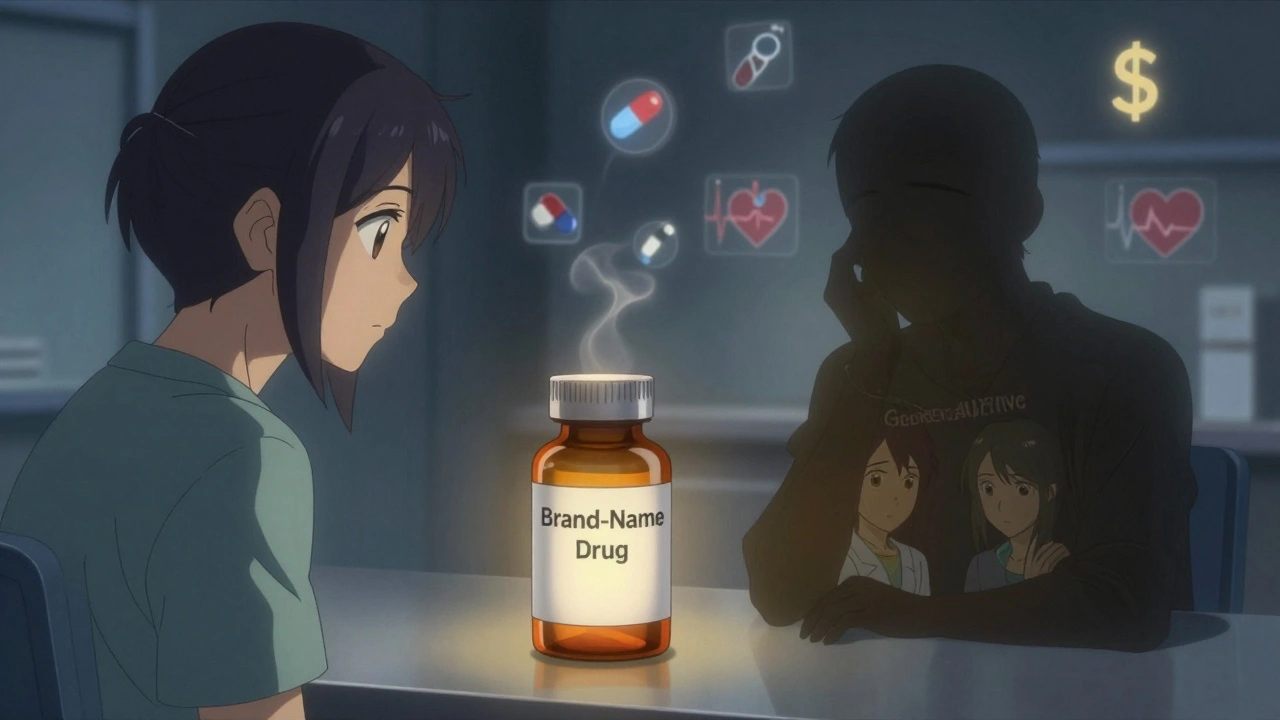
Why do so many patients stick with expensive medications even when cheaper, equally effective options are available? It’s not about ignorance. It’s not about laziness. It’s about how our brains actually work-and that’s where behavioral economics comes in.
People Don’t Decide Like Robots
Traditional medicine assumes patients are rational actors: they weigh costs, benefits, side effects, and pick the best option. But real people? They don’t. A 2022 study found that 68% of patients keep taking their current drug-even when a similar one costs 30% less. Why? Fear. Uncertainty. Habit. Loss aversion. Behavioral economics flips the script. Instead of blaming patients for not acting logically, it asks: What invisible forces are pushing them? The answer lies in cognitive biases-mental shortcuts our brains use to make decisions fast, even when they lead us astray.Loss Aversion: The Fear of Losing What You Have
People hate losing more than they like gaining. That’s loss aversion, and it’s powerful in medicine. Imagine you’ve been on a blood pressure pill for two years. Your doctor says there’s a cheaper generic that works just as well. You might think: What if it doesn’t work? What if I feel worse? Even if the science says it’s safe, your brain fixates on the risk of losing your current stability. That’s why only about half of patients take their meds as prescribed. One study showed that when patients were told they’d lose a $50 rebate if they missed a dose, adherence jumped. Not because they cared about the money. Because they didn’t want to lose something they already had.Present Bias: Today Feels Bigger Than Tomorrow
You know you need to take your diabetes meds every day. But right now, you’re tired. You’re busy. You feel fine. So you skip it. Tomorrow, you’ll do better. That’s present bias-the brain’s tendency to value immediate comfort over future rewards. It’s why one-third of prescriptions are never even picked up from the pharmacy. The benefit (avoiding a heart attack in five years) feels distant. The cost (remembering to take a pill now) feels real. Simple fixes work. A 2021 study found that SMS reminders saying “Don’t lose your streak!” improved adherence by nearly 20%. Why? It turned medication into a game of not losing something you’ve already built-your daily streak. That taps into loss aversion again, but also taps into our love for consistency.Confirmation Bias: “More Expensive = Better”
A 2022 study showed that patients often believe pricier drugs are more effective-even when studies prove otherwise. This isn’t stupidity. It’s confirmation bias: we interpret information in a way that supports what we already believe. If you’ve been told your brand-name drug is “the best,” you’ll notice every time you feel good on it. You’ll ignore the times you felt fine on generics. Your brain filters out evidence that contradicts your belief. And with drug prices rising 47% faster than inflation since 2010, that belief is being reinforced every time you pay more.Defaults and Nudges: Making the Right Choice Easier
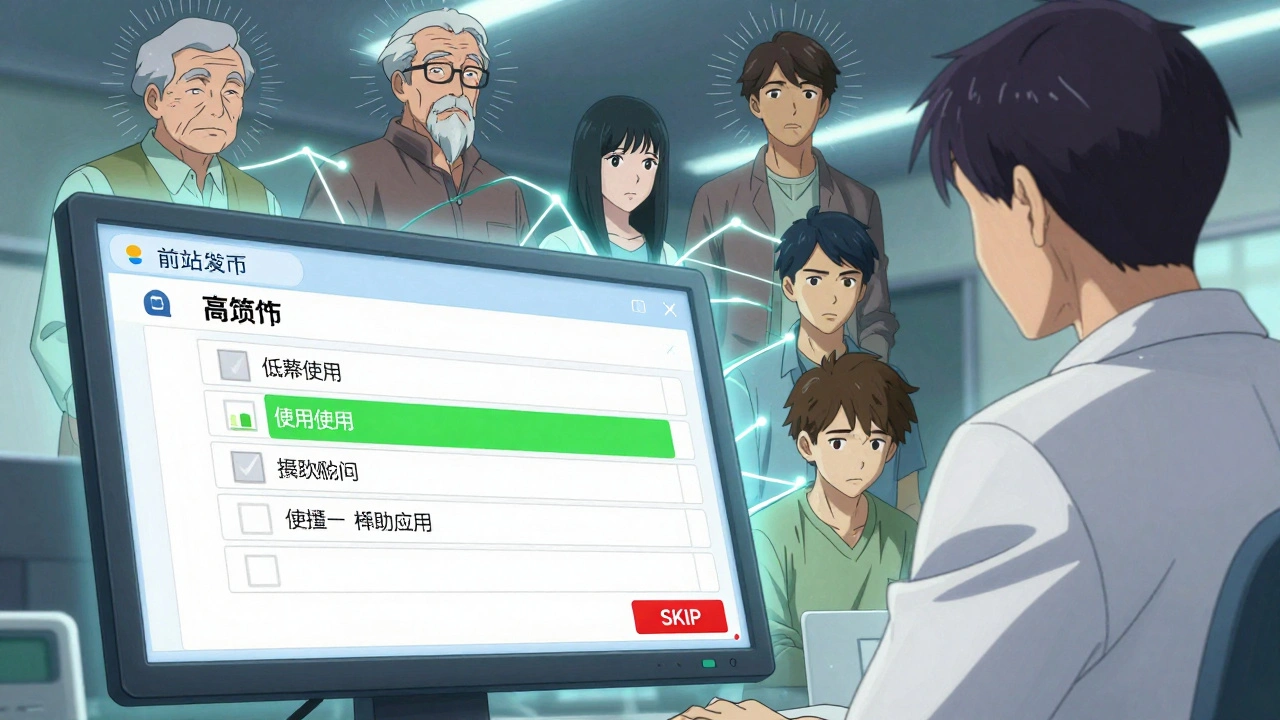
Here’s a shocking fact: when doctors’ electronic prescribing systems default to a cheaper, equally effective drug, substitutions increase by 38%. Not because doctors changed their minds. Because the system made the better choice the easiest one. This is called a “nudge”-a tiny change in how options are presented that guides behavior without restricting freedom. You can still pick the expensive drug. But the system makes the smart choice the automatic one. Hospitals using this method saw better outcomes. Pharmacies that set default refill options for chronic meds saw fewer lapses. It’s not manipulation. It’s design.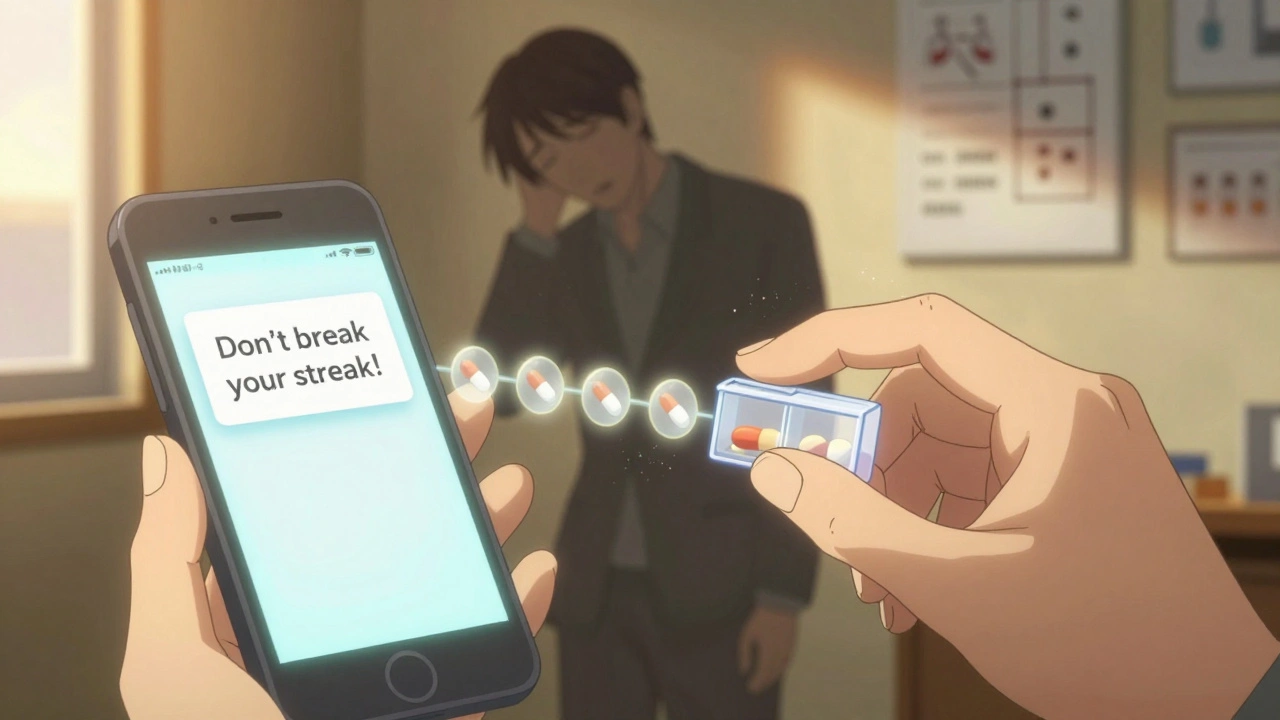
Social Proof: We Follow the Crowd
We care what others do-even strangers. In one HIV clinic, staff posted a chart showing how many patients were staying on their meds. Adherence jumped 22%. Why? Because people don’t want to be the outlier. They want to belong. When you see your peers sticking with treatment, you’re more likely to do the same. This works in reverse too. If you hear “most people stop this drug after six months,” you might think: Maybe I should too. That’s why pharma companies now use testimonials and peer stories in patient support programs-not to sell, but to normalize adherence.Why Education Alone Fails
For decades, doctors and pharmacists tried to fix non-adherence by giving patients more information: “Take this with food.” “Don’t skip doses.” “Here’s a pamphlet.” It barely moved the needle. Studies show traditional education improves adherence by only 5-8%. Behavioral interventions? They improve it by 14-28%. Why? Because knowledge doesn’t change behavior. Emotions, habits, and environment do. A patient might know statins reduce heart attacks. But if they feel fine, think the pill is too expensive, or forget to take it daily, knowledge won’t help. A reminder that says “Your next dose is due in 2 hours” and a rebate for sticking to the schedule? That works.Barriers That Make It Harder
Not everyone responds the same way. Four big barriers stand in the way:- Polypharmacy: Each extra pill you take reduces adherence by 8.3%. Five pills? That’s a 40% drop in compliance.
- Asymptomatic conditions: If you don’t feel sick (like high cholesterol or early diabetes), you’re 32.7% less likely to stick with meds.
- Negative beliefs: 41% of people stop meds because they think drugs are “poison” or “unnatural.”
- Mental health: Depression cuts adherence by nearly 30%. Anxiety makes people avoid anything that feels like a chore.
Real-World Tools That Work
Here’s what’s working right now:- Smart pill bottles: Track when you open them and send reminders. Cost: $47.50/month per patient. Adherence boost: 24%.
- SMS nudges: “Don’t break your streak!” messages. Cost: $8.25/month. Adherence boost: 20%.
- Rebate systems: Earn $10 back for every week you take your meds. In one statin study, persistence jumped 24%.
- Default prescriptions: EHRs set cheaper alternatives as the first option. Substitutions rose 38%.
The Cost of Doing Nothing
Skipping meds isn’t just bad for you. It’s expensive. In the U.S., non-adherence costs the system $289 billion a year. It leads to 125,000 preventable deaths. That’s more than car accidents. Pharmaceutical companies are investing heavily. The behavioral economics market for healthcare grew from $187 million in 2018 to $432 million in 2022. Why? Because it works. Insurance plans now require at least two behavioral interventions for high-risk patients. The FDA’s 2023 guidelines say drug makers must prove they’ve considered how dosing schedules and pill burden affect patient choices.Where It Falls Short
Behavioral economics isn’t magic. It doesn’t fix everything. In cancer care, where treatment options are limited and side effects are brutal, nudges don’t help much. If there’s no alternative drug, you can’t nudge someone to switch. Also, effects fade. Only 34% of programs keep their gains after 12 months. People get used to reminders. Rebates lose their punch. That’s why the next frontier is personalization. New AI tools are starting to predict which patients will respond to which nudges-based on their age, income, mental health, and even past behavior. Early results show a 42% increase in effectiveness. Imagine a system that knows you’re more likely to respond to social pressure than money-and adjusts automatically.It’s Not About Controlling People
Some critics say behavioral economics is manipulative. But that’s a misunderstanding. A nudge doesn’t force you to do anything. It just makes the better choice easier. You can still pick the expensive drug. You can still skip your pills. The system just helps you see the path you’d choose if you had more time, less stress, and clearer information. It’s not about tricking patients. It’s about respecting how humans actually think-and designing care around that.What Comes Next
The future of medication adherence isn’t in bigger pills or louder warnings. It’s in smarter systems. Expect to see:- Digital apps that give real-time feedback on your adherence habits
- Insurance plans that reward consistent behavior with lower premiums
- Biosimilar switches guided by personalized nudges instead of cold formulary rules
- Doctors using AI to recommend the right nudge for each patient
Why do patients keep taking expensive drugs when cheaper ones are available?
Patients often stick with expensive drugs due to psychological biases like loss aversion (fear of losing what they’re used to), confirmation bias (believing pricier = better), and present bias (prioritizing immediate comfort over long-term benefits). Even when they know cheaper options work, their emotions override logic. Studies show 68% of patients won’t switch even if the alternative costs 30% less and is equally effective.
Can simple reminders improve medication adherence?
Yes-but only if they’re designed right. Neutral reminders like “Take your medication” improve adherence by about 8%. But framing them as “Don’t lose your streak!” taps into loss aversion and boosts adherence by nearly 20%. The key isn’t frequency-it’s psychology. Messages that connect to identity, habit, or fear of loss work best.
Do behavioral interventions work better than patient education?
Absolutely. Traditional education improves adherence by only 5-8%. Behavioral interventions-like defaults, rebates, or social norms-boost adherence by 14-28%. Why? Knowledge doesn’t change behavior. Emotions, habits, and environment do. A patient might know they need their pill, but if they’re overwhelmed, forgetful, or afraid, they won’t take it. Nudges make it easier to act.
What’s the biggest barrier to taking meds regularly?
There’s no single biggest barrier-it depends on the person. But the most common are: taking too many pills (each extra one cuts adherence by 8.3%), not feeling sick (adherence drops 32.7% in asymptomatic conditions), negative beliefs about drugs (41% of discontinuations), and mental health issues like depression (which reduces adherence by 28.4%). Effective programs tailor nudges to these specific barriers.
Are behavioral economics tools expensive to implement?
Not necessarily. Simple SMS reminders cost about $8.25 per patient per month and boost adherence by 20%. Smart pill bottles cost $47.50/month but offer 24% gains. Many of the most effective tools-like changing default prescriptions in electronic systems-cost almost nothing to implement. The real cost is in training staff and integrating with existing systems, which 78% of clinics say is challenging.
Can behavioral economics help with drug shortages?
Yes. When a drug runs out, changing the default option in prescribing systems to a safe, equally effective alternative can increase appropriate substitutions by nearly 38%. This isn’t forcing a switch-it’s making the best available option the easiest one to pick. It’s especially useful in emergencies like the 2021 insulin shortage, where quick, safe substitutions saved lives.
Is it ethical to nudge patients’ choices?
Yes-if done transparently and without coercion. Behavioral nudges preserve freedom. Patients can still choose the expensive drug, skip doses, or refuse treatment. The goal isn’t control-it’s support. Just like a seatbelt doesn’t stop you from driving, a default prescription doesn’t stop you from choosing differently. Ethical nudges make good choices easier without taking away choice.
Why do some patients stop taking meds even when they feel fine?
Because many chronic conditions don’t cause symptoms. If you don’t feel sick, your brain says, “Why keep taking this?” That’s called asymptomatic non-adherence. It’s why 32.7% fewer people stick with meds for high blood pressure or cholesterol than for conditions that cause pain or visible symptoms. Nudges that reinforce long-term benefits-like “Your heart thanks you”-help counter this.
8 Comments
Shubham Pandey
2 December, 2025Too much fluff. Just give people reminders and cheaper pills.
Zoe Bray
3 December, 2025The integration of behavioral economic frameworks into clinical decision-support systems represents a paradigmatic shift in therapeutic adherence interventions. The cognitive biases delineated-loss aversion, present bias, and confirmation bias-are not merely heuristic anomalies but robust, empirically validated determinants of patient behavior. The application of nudge theory, particularly through default-prescription architectures, demonstrates statistically significant improvements in substitution rates (38%) without infringing upon autonomy. This is not paternalism; it is informed design grounded in behavioral science.
Moreover, the economic calculus is unequivocal: non-adherence imposes a $289B annual burden on the U.S. healthcare system. The marginal cost of implementing SMS-based adherence nudges ($8.25/patient/month) yields a 20% improvement in compliance, translating to substantial reductions in downstream hospitalizations. The ethical imperative is clear: if we can reduce preventable mortality by leveraging behavioral insights, we are ethically obligated to do so.
The limitations in oncology contexts underscore the necessity for context-sensitive implementation. Nudges are not panaceas; they are tools. Their efficacy is contingent upon the presence of viable alternatives and the cognitive capacity of the patient. Future iterations must incorporate machine learning to dynamically tailor interventions based on longitudinal behavioral data, mental health indicators, and socioeconomic variables.
The FDA’s 2023 guidelines mark a watershed moment. Pharmaceutical manufacturers must now demonstrate that dosing regimens are cognitively optimized-not merely pharmacologically sound. This regulatory evolution signals a maturation of the field: from blaming patients to redesigning systems. The next frontier lies in personalized behavioral analytics, where AI-driven models predict individual susceptibility to specific nudges with 42% greater precision than static interventions.
Allan maniero
5 December, 2025Look, I get it-people aren’t robots, and yeah, we all know that expensive pills feel like they work better. But honestly? Most folks just don’t care enough to dive into the psychology behind it. They see a $200 brand-name bottle and think, ‘This must be the good stuff.’ And honestly? That’s not their fault. The system’s been built to make them think that. The fact that changing the default in the EHR system bumps substitutions by 38%? That’s not magic. That’s just… common sense. Why make people fight the system just to do the right thing?
I’ve seen it in my own family. My aunt skipped her statins because she thought they were ‘poison.’ No amount of pamphlets changed that. But when her pharmacist just… started giving her the generic as the first option, and told her ‘it’s the same thing, just cheaper,’ she didn’t even notice. She just took it. That’s the power of quiet design. No yelling. No lectures. Just making the right choice the easy one.
And the ‘don’t break your streak’ thing? Genius. It’s not about money. It’s about identity. People don’t want to be the one who messes up. They want to be the one who’s consistent. So if you turn meds into a streak, suddenly it’s not a chore-it’s a badge. That’s psychology, not manipulation.
But let’s be real-this stuff only works if you’ve got time, access, and a system that cares. If you’re working two jobs, can’t afford a smart pill bottle, and your doctor’s in and out in 7 minutes? None of this matters. We need to stop pretending behavioral nudges are a silver bullet. They’re a tool. And tools only help if you’ve got the right hands holding them.
Anthony Breakspear
6 December, 2025Bro, this is wild. We’re basically treating people like they’re video game characters now-‘Don’t break your streak!’ ‘Earn $10 for 7 days!’ ‘Look at everyone else taking their meds!’ 🤯
And it works? Hell yeah it works. People aren’t dumb. They’re just tired. Overwhelmed. Stressed. And when your brain’s running on 3% battery, you don’t care about 5-year-old heart attacks-you care about not forgetting your damn pill today.
That $8.25 SMS nudge? That’s cheaper than a latte. And it beats a 30-page pamphlet any day. Why? Because it doesn’t ask you to think. It just reminds you. Like your phone buzzing: ‘Yo, your heart’s still alive. Don’t screw it up.’
And the default prescription thing? That’s the real flex. Doctors aren’t changing their minds. The system just made the smart move the one that pops up first. No pressure. No guilt. Just… here’s the better option. Pick it or don’t. You’re still in control.
But here’s the kicker-this ain’t about tricking people. It’s about respecting how messy humans are. We’re not Excel sheets. We’re emotional, forgetful, biased, tired, beautiful disasters. And if we can design care that meets us where we are? That’s not manipulation. That’s love.
Also, if your pill bottle can text you, I want one. 🤖💊
Elizabeth Farrell
6 December, 2025I’ve spent years working with patients who are just trying to survive, not optimize their adherence metrics. What this piece captures so beautifully is that behavior isn’t about knowledge-it’s about safety, dignity, and belonging. When someone is depressed, or anxious, or juggling three jobs and three kids, the last thing they need is another lecture about ‘taking your meds.’
But when they see a chart in the clinic showing ‘92% of people like you are staying on track’? That doesn’t shame them. It comforts them. It says: You’re not alone. You’re part of the group. That’s powerful.
And the rebate systems? They’re not bribes. They’re affirmations. They say: We see you. We know this is hard. We’re here to help you win. That’s the difference between a system that punishes and one that supports.
What worries me is when we start calling these ‘nudges’ like they’re clever tricks. They’re not. They’re acts of radical care. Designing for the human, not the ideal. Making the right choice the quiet, easy, gentle one. That’s not manipulation. That’s justice.
I’ve seen patients cry when their pharmacy started sending ‘Your streak is still alive’ texts. Not because they cared about the money. But because someone remembered them. And that’s the real nudge-the one that says, ‘You matter.’
Eddy Kimani
7 December, 2025Interesting framework, but I’m curious about the underlying neurocognitive mechanisms. Is loss aversion here primarily mediated by the amygdala’s hyperactivation in the face of perceived threat, or is it more a function of prefrontal cortex depletion under chronic stress? The 68% non-switch rate suggests a strong emotional override, but is that consistent across socioeconomic strata? Also, how does dopamine signaling interact with present bias in patients with comorbid ADHD or substance use disorders? The 2022 AI personalization study showing 42% efficacy gains-was that controlled for baseline cognitive load? Would these nudges still hold in populations with executive dysfunction? I’d love to see a fMRI study tracking neural responses to ‘streak’ messaging versus traditional reminders.
Chelsea Moore
7 December, 2025THIS IS SO DISGUSTING!!!!! PEOPLE AREN’T PETS!!!!! YOU’RE TURNING MEDICATION INTO A GAME OF STREAKS AND REBATES LIKE SOME KIND OF TIKTOK CHALLENGE!!!!! WHO GAVE YOU THE RIGHT TO MANIPULATE PEOPLE’S MINDS LIKE THIS?????!!!!!!
WHAT HAPPENS WHEN THE SMS STOPS???? WHAT HAPPENS WHEN THE REBATE RUNS OUT???? YOU’RE NOT HELPING PEOPLE-YOU’RE ADDICTING THEM TO EXTERNAL REWARDS AND THEN LEAVING THEM TO FALL APART WHEN THE SYSTEM ABANDONS THEM!!!!!
AND DON’T TELL ME IT’S ‘NOT MANIPULATION’-IT’S EXACTLY MANIPULATION!!!!! YOU’RE USING PSYCHOLOGY TO TRICK PEOPLE INTO DOING WHAT YOU WANT!!!!! WHERE’S THE ETHICS???? WHERE’S THE RESPECT????
WE SHOULD BE FIXING THE SYSTEM-NOT TRICKING PEOPLE INTO BEHAVING LIKE ROBOTS BECAUSE THE SYSTEM IS TOO BROKEN TO CARE FOR THEM!!!!! THIS ISN’T INNOVATION-IT’S A COVER-UP FOR A FAILED HEALTHCARE SYSTEM!!!!!
John Biesecker
7 December, 2025honestly… this kinda hits different 😅
i used to skip my blood pressure meds all the time… felt fine, yknow? then my pharma app started saying ‘your streak is at 14 days! don’t let it go to 15!’ and i was like… huh. i don’t wanna lose it. so i took it. just because.
not because i ‘knew better’-because i didn’t wanna feel like a failure. and that’s weirdly powerful.
also… the default prescription thing? my doc switched me to generic without even asking. i didn’t notice until my copay dropped from $80 to $15. i was like… wait… did i just get a free upgrade??
no lectures. no guilt. just… easier. and somehow… that made me feel cared for. not controlled.
we’re not broken. we’re just human. and sometimes… the best help is the kind you don’t even realize you’re getting 🤍