
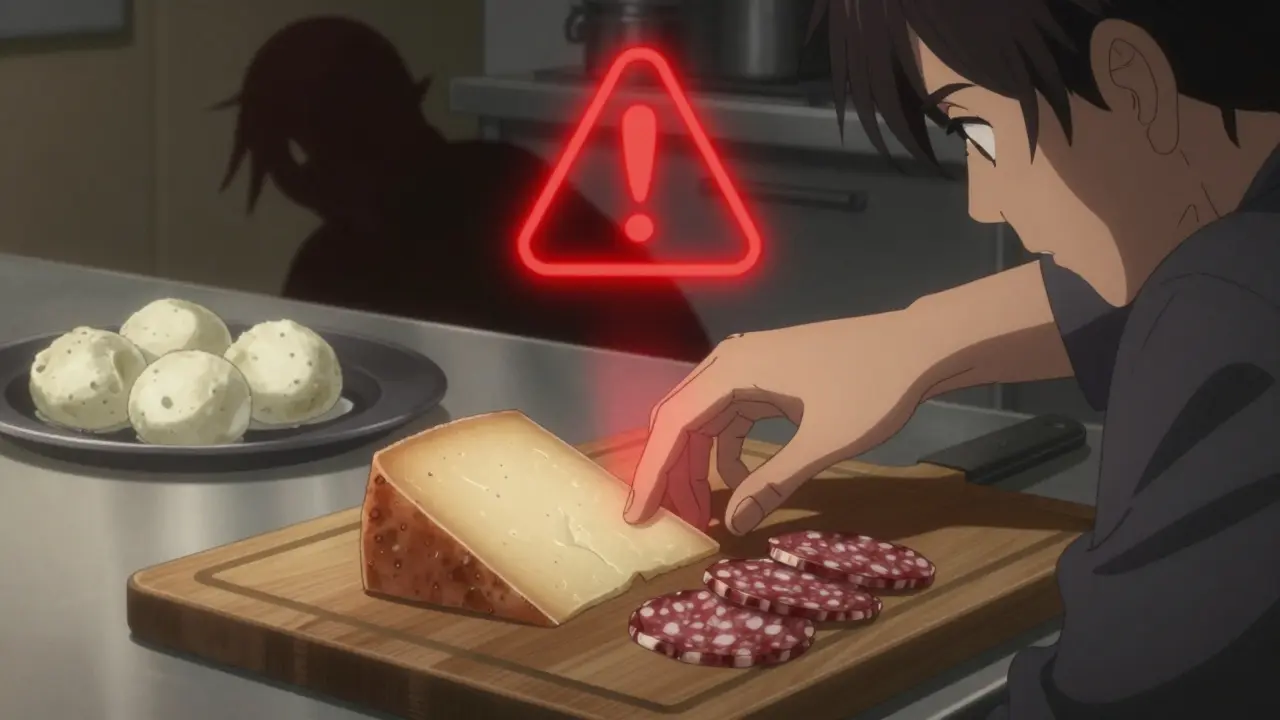
MAOI Tyramine Calculator
Calculate Your Tyramine Intake
Enter the amount of each food you've eaten or plan to eat. The tool will calculate your total tyramine intake and warn you if it exceeds safe levels.
Added Foods
Tyramine Calculation
Safe Food Options
Choose these foods that contain less than 50 mcg/g of tyramine:
- Fresh mozzarella
- Ricotta
- Cottage cheese
- American cheese
- Cream cheese
High-Risk Foods
These foods can trigger a hypertensive crisis when consumed while on MAOIs:
- Aged cheddar, blue cheese, parmesan, swiss, feta, camembert
- Pepperoni, salami, summer sausage
- Soy sauce, miso, fish sauce
When you're on an MAOI antidepressant like Nardil or Parnate, your diet isn't just about calories or taste-it's about survival. A single bite of aged cheddar, salami, or blue cheese can trigger a medical emergency that spikes your blood pressure to dangerous levels in minutes. This isn't a myth or an old wives' tale. It's a well-documented, life-threatening interaction that still catches people off guard today, even in 2026.
Why Tyramine Is the Hidden Danger
Tyramine is a naturally occurring compound found in foods that have been aged, fermented, or cured. It's not added as an ingredient; it forms during the breakdown of proteins over time. The name itself comes from the Greek word tyros, meaning cheese, because it was first isolated from cheese. But it's not just in cheese. It's in dry-cured meats, soy sauce, miso, and even some pickled fish.Here's the problem: Your body normally breaks down tyramine using an enzyme called monoamine oxidase. But if you're taking an MAOI medication-used for treatment-resistant depression or Parkinson’s-this enzyme is blocked. Tyramine builds up in your system and triggers a massive release of norepinephrine, a chemical that tightens blood vessels and sends blood pressure soaring. Systolic pressure can jump 50 to 100 mmHg within 30 minutes. That’s not just a headache. That’s a hypertensive crisis: stroke, heart attack, or even death.
Which Cheeses Are Safe? Which Are Deadly?
Not all cheese is created equal when you're on an MAOI. The difference between safe and dangerous comes down to aging time and how the cheese is made.High-risk cheeses (tyramine > 200 mcg/g):
- Aged cheddar (72-953 mcg/g)
- Blue cheeses like Stilton and Gorgonzola (1,000-3,500 mcg/g)
- Parmaesan (610-1,400 mcg/g)
- Swiss cheese (400-1,200 mcg/g)
- Feta (350-800 mcg/g, especially brined varieties)
- Camembert and Brie (200-600 mcg/g)
A single 30g serving of aged cheddar can contain anywhere from 2.16 to 28.59 mg of tyramine. That’s enough to trigger a crisis in sensitive individuals. A 20g slice of Stilton? It could push you over 3 mg in one bite. And the threshold for danger? Around 6 mg for most people. For some, it’s as low as 2 mg. For others, it takes 25 mg. There’s no universal safe amount.
Safe cheeses (tyramine < 50 mcg/g):
- Fresh mozzarella (under 25 mcg/g)
- Ricotta (under 40 mcg/g)
- Cottage cheese (under 30 mcg/g)
- American cheese (under 50 mcg/g)
- Cream cheese (under 20 mcg/g)
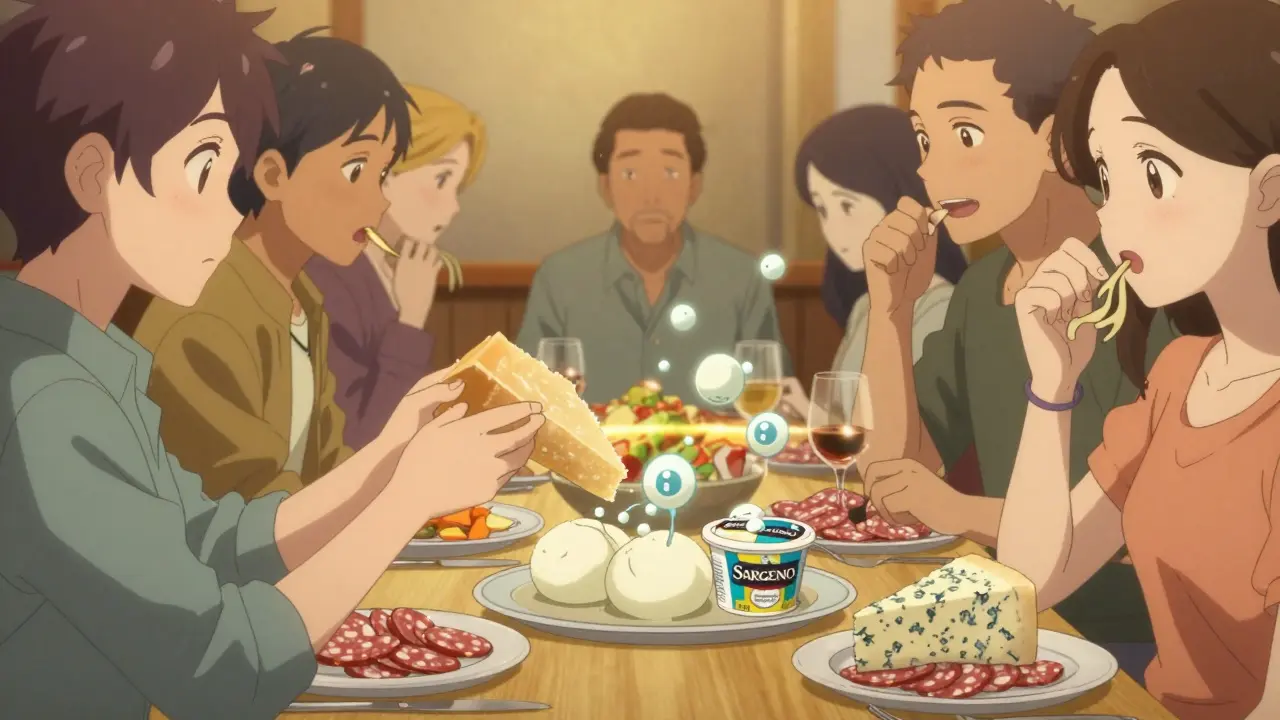
These are made from fresh pasteurized milk and aren’t aged. They’re your go-to options. Some cheese brands, like Sargento, now sell refrigerated mozzarella cups labeled as "MAOI-safe"-a direct response to this ongoing risk.
Processed Meats: The Silent Threat
If you think cheese is the only problem, think again. Processed meats are just as dangerous, often more so because they’re easier to overlook.High-risk meats:
- Dry summer sausages (300-900 mcg/g)
- Pepperoni (200-600 mcg/g)
- Salami (150-500 mcg/g)
These are fermented, dried, and cured-perfect conditions for tyramine to form. A small sandwich with pepperoni and aged cheese? That’s two high-risk items in one meal. A single 50g serving of salami could contain over 25 mg of tyramine. That’s enough to trigger a hypertensive emergency.
Moderate-risk meats:
- Bacon (75-250 mcg/g)
- Corned beef (60-180 mcg/g)
- Bologna (50-200 mcg/g)
These aren’t as bad as dry-cured meats, but they still carry risk. If you're borderline on your tolerance, even bacon on your toast could push you over the edge.
Safe meats: Freshly cooked chicken, turkey, beef, or fish-nothing cured, smoked, or aged. If you bought it raw from the butcher and cooked it yourself, you’re likely safe.
Other Hidden Sources You Might Not Know
Most people know about cheese and salami. Few realize how many everyday foods contain dangerous levels of tyramine.- Soy sauce: 1,000-2,500 mcg/g. A tablespoon can deliver over 20 mg.
- Miso: 800-2,000 mcg/g. Common in soups and marinades.
- Fish sauce: 1,200-3,000 mcg/g. Used in Thai and Vietnamese cooking.
- Peanuts: 75-200 mcg/g. Not as bad as cheese, but still risky if eaten in large amounts.
- Chocolate: 50-150 mcg/g. A small bar won’t hurt, but avoid large portions.
And here’s a surprise: bananas, yogurt, and pickled vegetables are generally safe. The old myth that you can’t eat bananas on MAOIs? That’s outdated. The real danger is in fermented and aged products.
Real Stories: What Happens When You Ignore the Warning
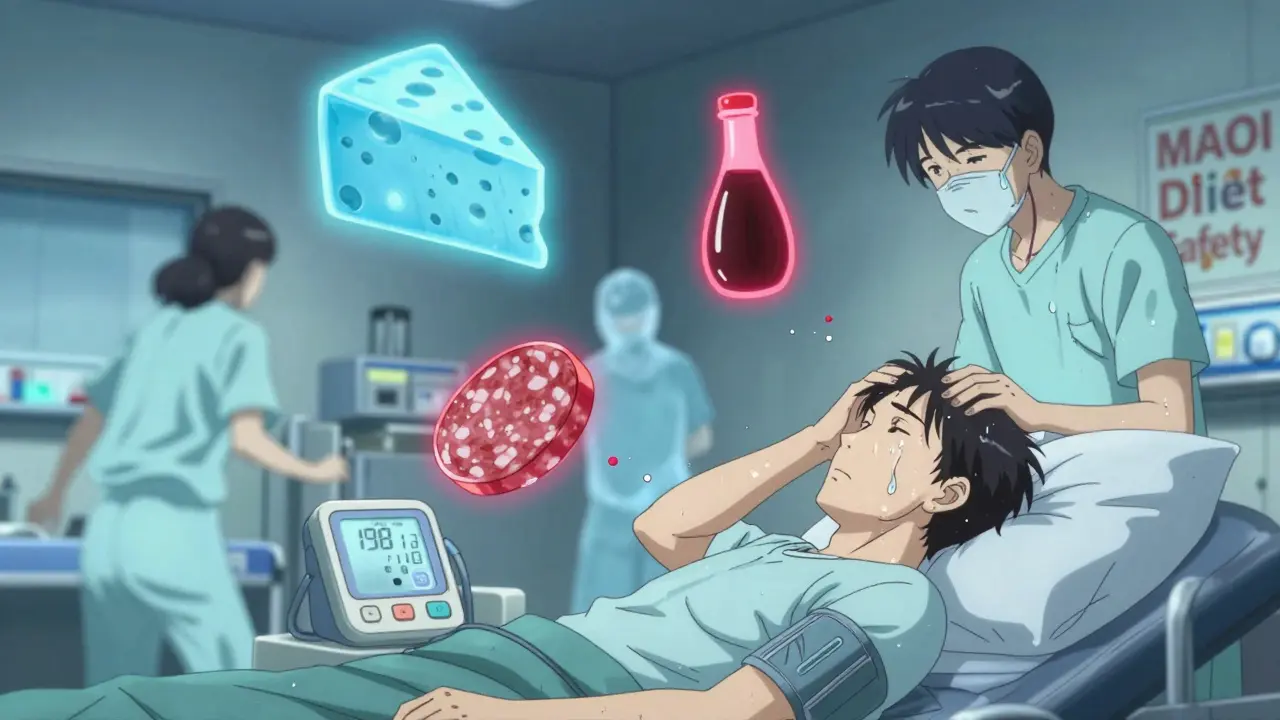
One user on Drugs.com described eating a Parmesan salad while on Nardil. Within 20 minutes, their blood pressure hit 198/112. They ended up in the ER with a pounding headache and chest pain. Another person on Reddit shared they’d been careful for five years-until they had a slice of aged cheddar at a friend’s dinner party. Their systolic pressure jumped to 185. They didn’t go to the hospital, but they had a migraine that lasted three days.According to the GoodRx interaction tracker, 68% of all MAOI-food emergencies involve cheese. Another 22% involve processed meats. The most common symptoms? Severe headache (92%), palpitations (76%), sweating (68%), and sensitivity to light (54%). All within 15 to 30 minutes of eating.
How Long Do You Need to Stay on This Diet?
You can’t just stop the medication and go back to eating salami. Your body needs time to rebuild its monoamine oxidase enzyme. That takes 14 to 21 days. So even after you stop taking your MAOI, you must continue avoiding high-tyramine foods for at least two weeks-sometimes three.Doctors often forget to mention this. Patients think once they’re off the drug, they’re free. They’re not. That delay is why some people have crises weeks after stopping treatment.
How to Manage This Diet in Real Life
This isn’t about perfection. It’s about awareness and smart choices.- Read labels: Look for words like "aged," "fermented," "cured," or "dry-cured." If it’s not fresh, assume it’s risky.
- Use fresh substitutes: Swap aged Parmesan for fresh mozzarella. Use grilled chicken instead of salami. Choose plain yogurt over miso soup.
- Carry an emergency card: Many hospitals now recommend carrying a card that says: "I am on an MAOI. Do not give me foods high in tyramine. Risk of hypertensive crisis."
- Monitor your blood pressure: The American Heart Association recommends checking your BP twice daily while on MAOIs. A sudden spike over 160/100 means stop eating and call your doctor.
- Use tech tools: The Mayo Clinic’s "MAOI Diet Tracker" app, launched in January 2023, scans barcodes and flags high-tyramine products. Beta users report 89% accuracy.
And yes-social situations are hard. Weddings, holidays, restaurant meals. But you’re not alone. In 2022, 78% of MAOI prescribers in the U.S. routinely discussed diet with patients. That means your doctor expects you to ask questions. Bring a list. Ask: "Is this cheese aged? Is this meat cured?"
What’s Changing in 2026?
The food and drug industries are responding. The FDA now requires MAOI packaging to include clear tyramine warnings. The European Union mandates tyramine labeling on aged cheeses. In the U.S., companies like Sargento have created dedicated "MAOI-safe" cheese lines that sold $14.7 million worth in 2022.Research is moving fast. A clinical trial funded by the NIH (NCT05214387) is testing a tyramine-metabolizing enzyme supplement that could neutralize the compound before it enters your bloodstream. Early results look promising. By 2025, we may see food labels with standardized tyramine content-just like calories or sodium.
Some scientists even predict genetically modified cheeses with reduced tyramine levels within five years. But until then, the rules are simple: avoid aged, cured, fermented. Stick to fresh. Check labels. Track your intake. And never assume "a little won’t hurt."
Can I eat cheese if I’m on an MAOI?
Only if it’s fresh and unaged. Avoid cheddar, blue cheese, Parmesan, Swiss, feta, and any cheese labeled "aged," "sharp," or "mature." Stick to fresh mozzarella, ricotta, cottage cheese, cream cheese, and American cheese-all of which contain less than 50 mcg/g of tyramine.
How much tyramine is dangerous?
For most people, 6 mg of tyramine is the threshold for triggering symptoms. But some individuals react to as little as 2 mg, while others tolerate up to 25 mg. A single 30g serving of aged cheddar can contain over 28 mg-enough to cause a hypertensive crisis. There’s no safe amount for everyone. When in doubt, skip it.
Do I need to avoid these foods forever?
Yes, as long as you’re taking the MAOI. Even after you stop, you must avoid high-tyramine foods for 14 to 21 days. That’s how long it takes your body to restore monoamine oxidase enzyme activity. Skipping this step can lead to delayed crises.
What should I do if I accidentally eat high-tyramine food?
If you feel a severe headache, rapid heartbeat, chest tightness, or blurred vision within 30 minutes, check your blood pressure immediately. If it’s above 160/100, call emergency services. Do not wait. These reactions can escalate quickly. Keep a blood pressure monitor at home if you’re on MAOIs.
Are there any new treatments to prevent this interaction?
Yes. A clinical trial is testing a supplement that breaks down tyramine before it enters the bloodstream. It’s still experimental, but early results show promise. In the near future, we may see food labels with tyramine content and genetically modified cheeses designed for MAOI users. But until then, strict diet control remains the only proven protection.
Bottom line: This isn’t a diet for weight loss or health trends. It’s a medical necessity. Aged cheese and processed meats aren’t "bad"-they’re dangerous when paired with MAOIs. Stay informed. Stay cautious. And when in doubt, choose fresh.
11 Comments
Alec Stewart Stewart
4 February, 2026Just wanted to say thanks for laying this out so clearly. I’ve been on Parnate for 3 years and honestly thought I was being overly paranoid about cheese. Turns out I wasn’t. 😅
Demetria Morris
6 February, 2026People who say "it’s just one bite" don’t understand how dangerous this is. This isn’t about willpower. It’s about biochemistry. If you’re on an MAOI, you don’t get to gamble with your life. Ever.
Geri Rogers
7 February, 2026YESSSS! 🙌 I work in a grocery store and I’ve started putting little sticky notes on the cheese aisle: "MAOI WARNING: Aged = Danger". My manager thought I was crazy-until a guy came in crying because he almost died after eating blue cheese. Now they’re on every shelf. 🧀🩸
Samuel Bradway
8 February, 2026I’ve been on Nardil since 2021. The hardest part isn’t the cheese-it’s explaining this to friends at dinner. "No, I can’t have that pizza. No, I can’t try your salami. No, I’m not being dramatic."
Caleb Sutton
9 February, 2026They’re lying. This is all a Big Pharma scam to sell more drugs. The FDA knows tyramine is harmless. They just want you scared so you keep buying MAOIs. Wake up.
Jamillah Rodriguez
10 February, 2026Wow. So much info. I’ll just stick to ramen. 🍜
Susheel Sharma
11 February, 2026While the medical data presented is largely accurate, one must question the underlying epistemological framework of dietary restriction as a primary intervention. Is the body truly a passive vessel, or are we witnessing a pathological reduction of complex neurochemistry into simplistic food binaries? The real crisis is not cheese-it is the medicalization of lived experience.
Roshan Gudhe
12 February, 2026There’s something deeply human here. We’re not just talking about enzymes and tyramine-we’re talking about isolation. The loneliness of not being able to share a meal with your family. The guilt of saying no at a birthday party. This isn’t just a medical guide. It’s a manual for surviving in a world that doesn’t see your invisible walls.
I’ve been on MAOIs for 12 years. I’ve missed three weddings. One funeral. My daughter’s first bite of pizza. I don’t blame anyone. But if you’re reading this? Hold your loved ones tighter. They’re carrying this burden too.
Rachel Kipps
13 February, 2026i just started nardil last month and i had no idea about any of this. i ate a slice of parmesan on my salad and felt like my head was going to explode. went to the er. they had no clue what was going on. thanks for this. i’ll be reading it again. 🙏
Prajwal Manjunath Shanthappa
14 February, 2026You’ve... meticulously... documented... the... terrifying... consequences... of... dietary... negligence... in... the... context... of... MAOI... therapy...-yet... you... have... failed... to... address... the... systemic... failures... of... pharmaceutical... education... in... primary... care... settings...-and... that... is... where... the... true... tragedy... lies...
Wendy Lamb
15 February, 2026My mom’s on Parnate. I started using the Mayo Clinic app. It saved us last week. She was about to buy a "sharp cheddar"-the app flagged it. We switched to mozzarella. She cried. Said it was the first time she felt heard. ❤️