
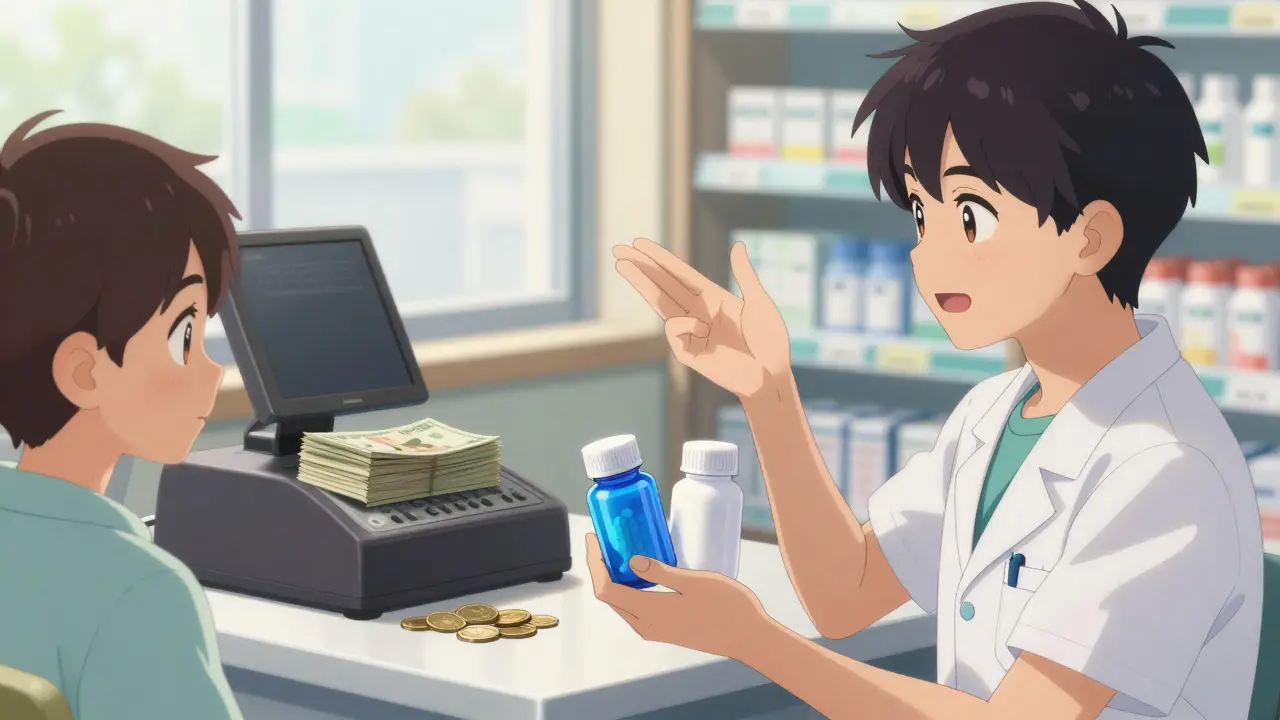
Did you know that 90% of prescriptions in the US are for generic medications? Yet these medications account for only 23% of total drug spending. Why? Because generics cost significantly less while providing the same therapeutic benefits as brand-name drugs. Let's explore why switching to generic medications makes sense for your health and wallet.
How Generic Drugs Work: The Science Behind the Savings
When the FDA approves a generic drug, it ensures the medication contains the same active ingredient, strength, dosage form, and route of administration as the brand-name version. This process follows the Abbreviated New Drug Application (ANDA) pathway established by the Hatch-Waxman Act of 1984. Crucially, generic drugs must meet strict bioequivalence standards. This means they deliver the same amount of active ingredient into your bloodstream at the same rate as the brand-name drug. For example, the generic version of Lipitor (atorvastatin) must match the original drug's pharmacokinetics within 80-125% range for both Cmax and AUC measurements. The FDA Center for Drug Evaluation and Research confirms this rigorous testing ensures safety and effectiveness.
Generic manufacturers don't repeat expensive animal and clinical trials already done for brand-name drugs. Instead, they prove their product works the same way through bioequivalence studies. This cuts development costs dramatically. The FDA requires generics to use the same manufacturing quality standards as brand-name drugs. Every batch undergoes testing for purity, potency, and stability before reaching pharmacies.
Massive Cost Savings for Patients and the Healthcare System
Switching to generics can save you hundreds of dollars each month. Take warfarin, a blood thinner. The brand-name version Coumadin costs over $300 for a 30-day supply, while the generic warfarin costs just $4. Similarly, Lipitor (atorvastatin) dropped from $130 per month to as low as $4 for the generic version at major pharmacies. Fexofenadine (generic for Allegra) costs about $10 for a 30-day supply versus $30 for the brand-name version. According to the Association for Accessible Medicines, generic drugs saved the US healthcare system $1.67 trillion from 2012-2022. The FDA reports that generics are typically 85% cheaper than brand-name drugs. When multiple generic manufacturers enter the market, prices drop even further-five or more competitors can slash prices by nearly 85%.
Insurance plans encourage generic use through lower copays. Humana data shows average copays of $1-$10 for generics versus $25-$75 for brand-name drugs. Medicare Part D beneficiaries pay $1.85 per generic prescription on average compared to $33.67 for brand-name drugs. This cost difference isn't just theoretical-it keeps people adhering to their treatment. A 2023 study found patients using generics were 68% less likely to skip doses due to cost.

Proven Safety and Effectiveness
Many patients worry that cheaper means lower quality, but research shows otherwise. A 2022 study in the Journal of Managed Care & Specialty Pharmacy analyzed cardiovascular medications and found no significant difference in effectiveness between generics and brand-name drugs for conditions like hypertension. Another study in the Journal of the American Heart Association examined 186,000 patients and confirmed identical outcomes for heart medications. The FDA states that adverse event reports for generics align with their market share (90% of prescriptions), meaning no elevated safety risks. As Dr. Janet Woodcock, former FDA director, explained: "Generic drugs undergo rigorous review to ensure they are as safe and effective as brand-name drugs."
For most medications, generics work identically to brand-name versions. The American Medical Association recommends prescribing generics when appropriate to reduce out-of-pocket costs without compromising care. Even for complex drugs like biologics, biosimilars (generic versions) are showing similar effectiveness. The FDA has approved 37 biosimilars as of December 2023, with potential to save $300 billion over the next decade.

Addressing Common Concerns
Some people notice differences in pill color or shape when switching to generics. This happens because inactive ingredients (like dyes or fillers) can vary, but these changes don't affect the drug's performance. The FDA confirms these cosmetic differences don't impact safety or effectiveness. For example, a patient might see a blue pill one month and a white pill the next-but the active ingredient remains identical.
For certain narrow therapeutic index (NTI) drugs like some antiepileptics, doctors may monitor patients closely during the switch. However, even here, FDA-approved generics meet strict bioequivalence standards. Dr. James Grogan, a neurologist at Mayo Clinic, notes: "While most generics are equivalent, for specific medications with narrow therapeutic windows, some patients may experience subtle differences requiring monitoring." This is rare, and the FDA's oversight ensures safety across all approved generics.
How to Switch to Generics
Switching is straightforward. Your doctor can prescribe the generic version directly. Pharmacists also play a key role-they're trained to explain generic equivalence and help navigate insurance formularies. Most insurance plans have lower copays for generics. If your pharmacy switches generic manufacturers (changing pill appearance), don't panic. The active ingredient remains the same. Always check the label for the drug name and strength. The FDA's Orange Book lists therapeutic equivalents, so you can verify your medication's status.
Most switches happen at prescription renewal with no adjustment period. Kaiser Permanente's member satisfaction survey from Q4 2023 showed 87% of members reported high satisfaction with generic medications, citing affordability as the top reason. If you're unsure about switching, ask your pharmacist or doctor. They can provide specific data about your medication's bioequivalence and cost savings.
Are generic drugs as safe as brand-name drugs?
Yes. The FDA requires generics to meet the same strict quality, safety, and efficacy standards as brand-name drugs. Adverse event reports for generics align with their market share (90% of prescriptions), showing no higher risk. Studies across multiple conditions confirm equivalent safety profiles.
Why do generic drugs look different?
Generics may differ in color, shape, or size because they use different inactive ingredients (like dyes or fillers). However, the active ingredient-the part that treats your condition-is identical. The FDA confirms these cosmetic differences don't affect the drug's performance or safety.
Can I trust generics for serious conditions like heart disease?
Absolutely. A 2022 study in the Journal of the American Heart Association examined 186,000 patients and found no difference in effectiveness between generic and brand-name heart medications. Doctors routinely prescribe generics for conditions like hypertension and heart failure because they work just as well. The American Medical Association recommends generics when appropriate to reduce costs without compromising care.
What if my insurance doesn't cover generics?
Most insurance plans strongly prefer generics. Humana's 2023 data shows average copays of $1-$10 for generics versus $25-$75 for brand-name drugs. If your plan has restrictions, ask your pharmacist about therapeutic alternatives. The FDA's Orange Book lists equivalent drugs, so your pharmacist can suggest alternatives if needed.
Do generics take longer to work than brand-name drugs?
No. The FDA requires generics to demonstrate bioequivalence, meaning they deliver the active ingredient at the same rate and extent as the brand-name version. For example, generic versions of blood pressure medications show identical absorption times in clinical studies. There's no evidence that generics act slower or less effectively.
Are there situations where I shouldn't switch to generics?
For most medications, switching is safe and beneficial. However, in rare cases involving narrow therapeutic index drugs (like some antiseizure medications), your doctor might recommend staying on a specific brand. The FDA's Orange Book identifies these cases clearly. Always consult your healthcare provider before switching-never change medications on your own. For the vast majority of patients, generics are an excellent choice.