
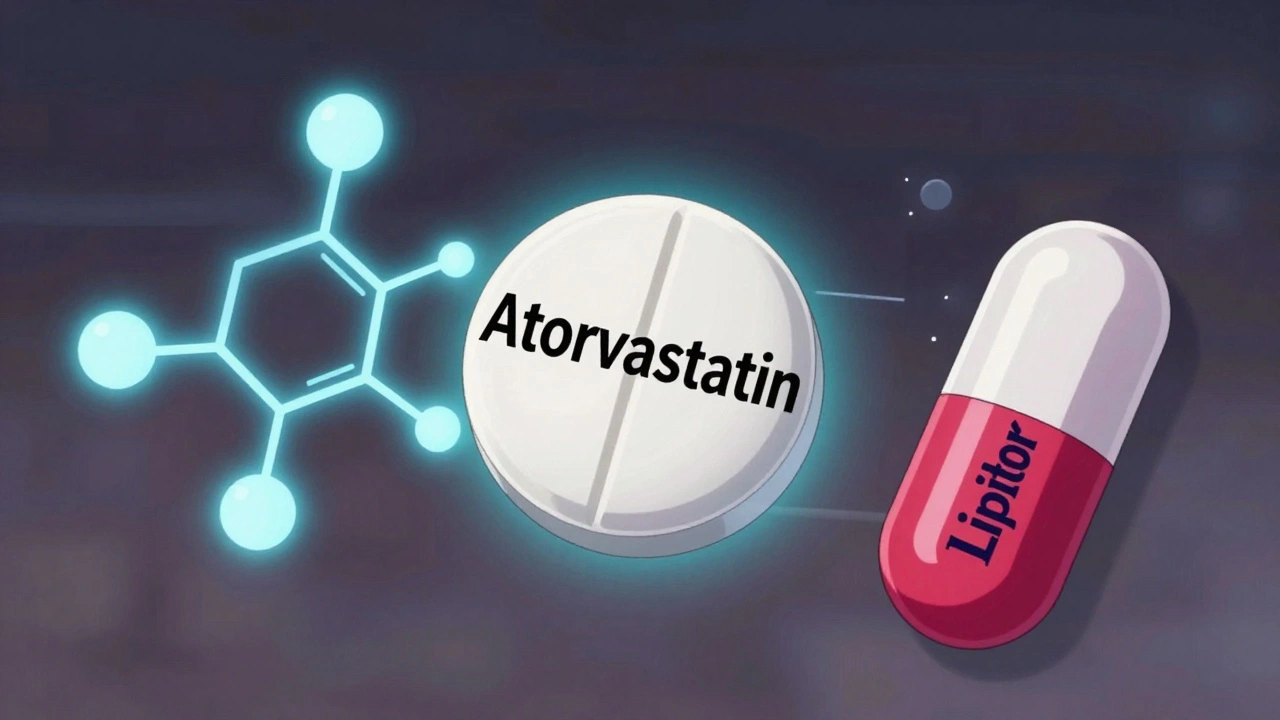
Ever picked up a prescription and wondered why the pill has three different names? You see generic on the label, Prozac on the box, and a long string of letters and numbers on the scientific sheet. It’s not a mistake. It’s drug nomenclature - a system designed to keep you safe.
Why Do Drugs Have So Many Names?
Every drug has three names because each one serves a different job. Think of it like a person: your legal name (generic), your nickname (brand), and your full birth certificate name (chemical). One’s for science, one’s for marketing, and one’s for safety. The system wasn’t always this organized. Back in the 1940s, drug companies made up names however they wanted. Some sounded like magic spells. Others sounded too similar to existing drugs. Patients got the wrong medicine. Doctors mixed up prescriptions. Hospitals saw a spike in errors. In 1950, the World Health Organization stepped in and created the International Nonproprietary Names (INN) program. That’s when the modern naming rules began. Today, over 10,000 standardized generic names exist. Around 200 new ones are added every year. And every single one follows strict rules to avoid confusion. Because when you’re taking medicine, a single letter out of place can be dangerous.Chemical Names: The Science Version
This is the most precise name a drug can have. It’s based on its molecular structure - the exact arrangement of atoms. The system used is called IUPAC nomenclature, named after the International Union of Pure and Applied Chemistry. For example, the chemical name for the heart drug propranolol is: 1-(isopropylamino)-3-(1-naphthyloxy)propan-2-ol. That’s 47 characters. Try saying that in a rush at 3 a.m. when you’re dizzy from a headache. Good luck. Chemical names are useful for chemists and researchers. They tell you exactly how the molecule is built. But they’re useless in a clinic. No pharmacist will write that on a label. No doctor will say it to a patient. That’s why we have generic names.Generic Names: The Safety Code
Generic names are the backbone of safe prescribing. They’re not random. They’re built with patterns. And those patterns tell you something important: what the drug does. Take the suffix -prazole. Omeprazole. Lansoprazole. Pantoprazole. Rabeprazole. All of them end in -prazole. That tells you instantly: this is a proton pump inhibitor. It reduces stomach acid. You don’t need to memorize each drug. You just need to know the stem. Same with -tinib: imatinib, sunitinib, dasatinib. These are tyrosine kinase inhibitors - cancer drugs that block specific signals in tumor cells. Even newer drugs follow this. -siran for RNA-based therapies. -dutide for peptide-drug conjugates. -tecan for targeted protein degraders (a new class expected to grow fast). The U.S. Adopted Names (USAN) Council and WHO’s INN team work together to make sure these stems are consistent worldwide. They reject about 30% of proposed generic names because they sound too similar to existing ones. A name like Clonazepam can’t become Clonazepan - the extra ‘a’ could lead to a fatal mix-up with Clonidine, a blood pressure drug. Dr. Robert M. Goggin, former head of the USAN Council, found that using stem-based naming cuts medication errors by 27%. That’s not a small number. It’s life-saving.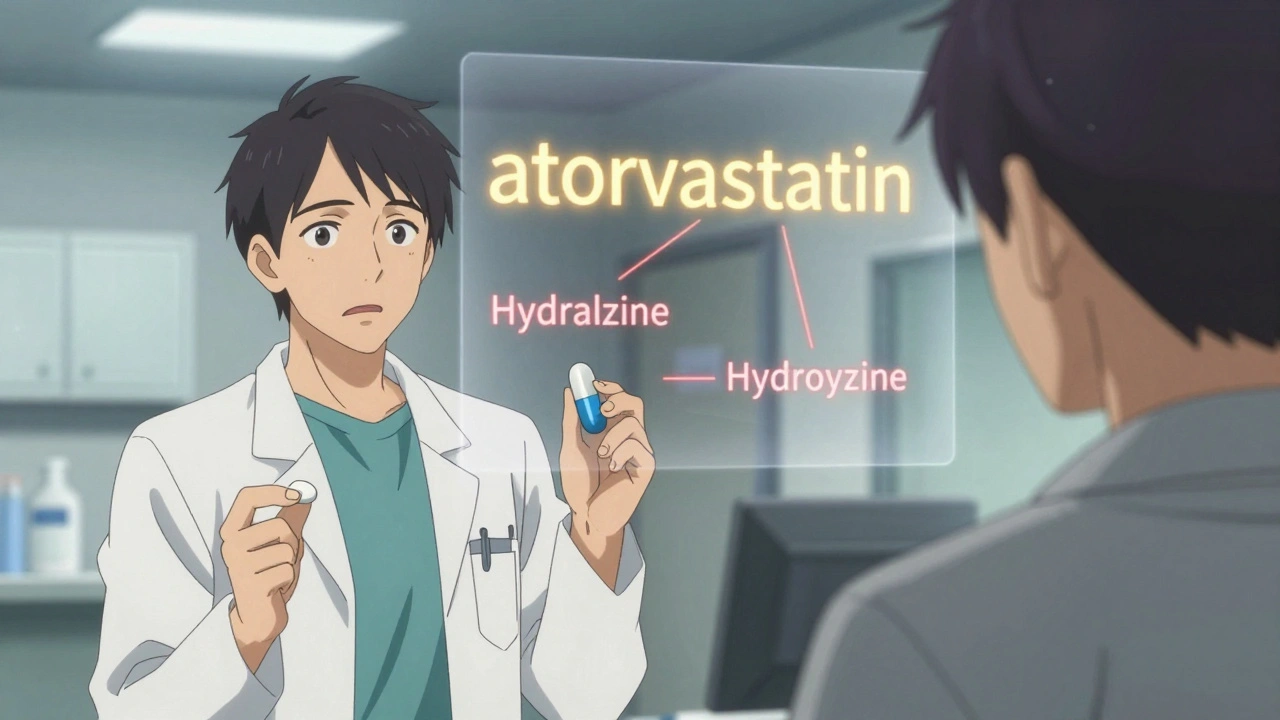
Brand Names: The Marketing Face
This is what you see on TV ads. Prozac. Lyrica. Humira. These are brand names - also called trade or proprietary names. They’re created by drug companies to stand out, sound memorable, and build trust. But they’re not free for the taking. Before a company can use a brand name, it must submit 150-200 options to the FDA. The FDA’s Division of Medication Errors reviews each one. About one in three get rejected. Why? Because names can’t:- Sound like other drugs (e.g., Zyrtec vs. Zyvox)
- Look too similar on paper (e.g., Hydralazine vs. Hydroxyzine)
- Make claims like “Cure-All” or “Fast Relief”
- Use the same first few letters as another drug
Generic vs. Brand: Are They the Same?
Yes and no. By law, generic drugs must contain the same active ingredient, strength, dosage form, and route of administration as the brand version. That means atorvastatin (generic) works the same as Lipitor (brand). The FDA requires bioequivalence - the body absorbs them at the same rate and amount. But here’s the catch: the inactive ingredients can be different. That’s why a generic pill might be a different color, shape, or size. It might have a different filler, dye, or flavoring. For most people, this doesn’t matter. But for some - like those with allergies to certain dyes or intolerances to lactose - it can. In 2022, the FDA recorded 347 medication errors linked to differences in pill appearance. A patient expected a white oval pill (brand) and took a blue capsule (generic) - and thought it wasn’t the right medicine. They stopped taking it. Their condition worsened. That’s why pharmacists are trained to explain the difference. And why the FDA now requires brand-name packaging to clearly display the generic name in bold.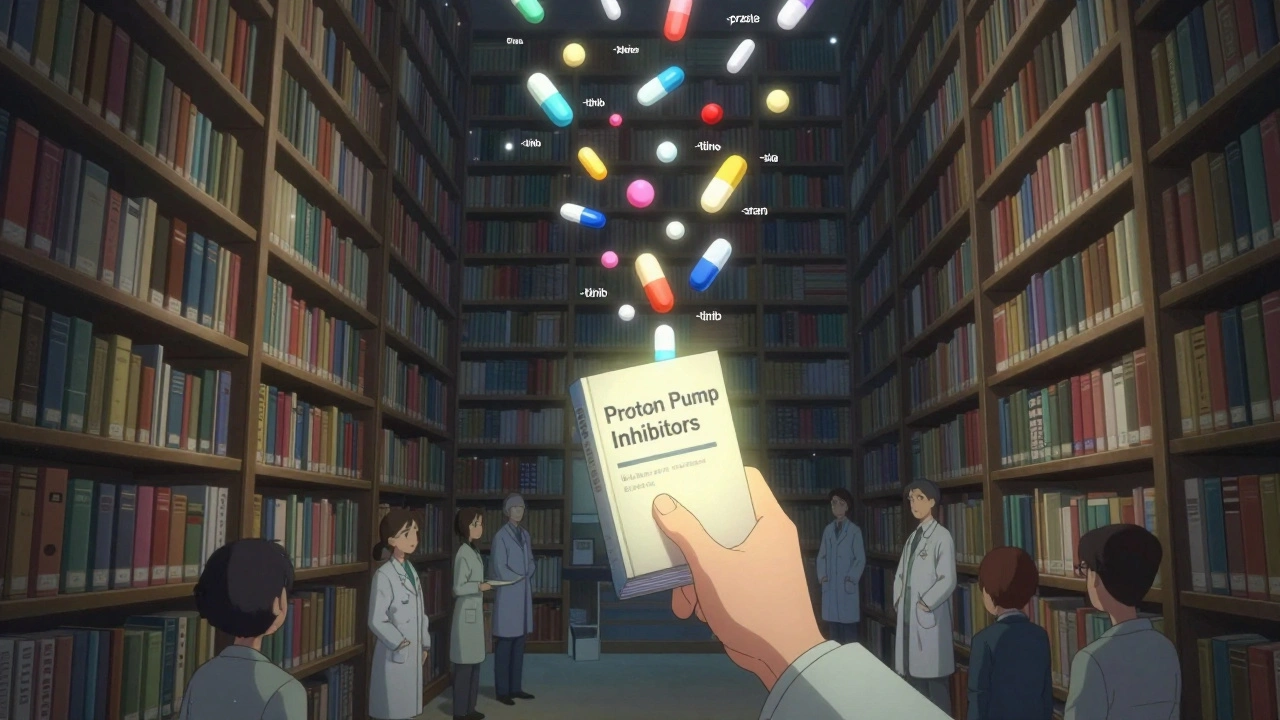
How the Naming Process Works
It’s not magic. It’s a long, careful process:- Company code: During early research, the drug gets an internal code like PF-04965842. Only the company knows it.
- Phase I trials: Around 2-3 years in, the company proposes a generic name to the USAN or WHO. The review takes 12-18 months.
- Brand name hunt: The company starts testing brand names with focus groups and linguistic experts. They check for trademark conflicts and global pronunciation issues.
- FDA review: The brand name goes to the FDA’s error prevention team. They use AI tools to scan over 15,000 existing drug names for similarities.
- Approval: About 6-12 months before launch, the final names are locked in.
Why This Matters to You
You might think this is just paperwork. But here’s the reality:- If you’re on a generic drug, you’re saving money - often 80% less than the brand.
- If you’re switching brands, you might need to relearn what your pill looks like.
- If you’re confused by a name, you’re not alone. In a 2022 FDA survey, 68% of patients said generic names were hard to pronounce or remember.
- But 83% of pharmacists said standardized naming made their job safer.
What to Do Next
If you’re taking any medication:- Know your generic name. Write it down. Keep it in your phone.
- Ask your pharmacist: “What’s the generic name?” and “What does the suffix mean?”
- If your pill looks different, don’t assume it’s wrong. Ask if it’s the same active ingredient.
- Use apps or websites like Drugs.com to look up names and compare brand vs. generic.
Why do generic drugs have such strange names?
Generic names aren’t random - they’re coded. The ending (suffix or stem) tells you the drug’s class and how it works. For example, drugs ending in ‘-prazole’ treat stomach acid, and those ending in ‘-tinib’ are cancer drugs. The beginning (prefix) makes each drug unique within its group. This system helps doctors and pharmacists avoid mix-ups.
Are generic drugs as effective as brand names?
Yes. By law, generic drugs must contain the same active ingredient, strength, and dosage form as the brand version. The FDA requires them to be bioequivalent - meaning your body absorbs them the same way. Differences in color, shape, or filler don’t affect how well they work. The only exceptions are rare cases involving allergies to inactive ingredients.
Can brand names be confusingly similar to other drugs?
Yes, and that’s why they’re heavily screened. The FDA rejects about one in three proposed brand names because they sound, look, or spell too similarly to existing drugs. For example, names like Zyrtec and Zyvox were flagged early because they’re easy to confuse. Even small differences - like one letter or a capitalization change - can lead to dangerous mistakes.
Why do some drug names have numbers in them?
Those are internal company codes used during development, like PF-04965842-01. They’re not meant for patients or public use. Once the drug is approved, it gets a standardized generic name (like abrocitinib) and a brand name (like Jyseleca). The code helps researchers track the exact chemical version during testing, especially when different salt forms or dosages are tested.
Do drug names change over time?
Rarely, but it happens. Sometimes a brand name gets pulled if it’s found to cause confusion after launch. In 2021, the FDA requested a name change for a diabetes drug because it was too similar to another. Generic names rarely change once approved, but new drug classes (like RNA therapies) get new naming stems added to keep up with science.
15 Comments
kevin moranga
11 December, 2025Man, I never thought about how much work goes into naming a drug. I just assumed it was some marketing guy picking a cool-sounding word. But the fact that they reject 30% of generic names just to avoid mix-ups? That’s insane. And honestly, it’s beautiful. It’s like they’re building a language of safety. I’ve had a cousin almost get the wrong med because of a similar-sounding name - it scared the hell out of us. This system? It’s not boring paperwork. It’s silent hero work.
Emma Sbarge
11 December, 2025Generic names are coded like secret agent IDs. -prazole = acid fighter. -tinib = cancer stopper. It’s not just science - it’s a survival hack for busy doctors. I wish every patient got a cheat sheet. We’re all just trying not to die from a typo.
Lauren Scrima
12 December, 2025So let me get this straight… the FDA spends millions to stop a drug from being called ‘CureAll’… but we still have ‘Lyrica’? Like… that’s not a name, that’s a spa treatment.
Jamie Clark
12 December, 2025This whole system is a monument to human arrogance. We invent molecules that rewrite biology, then we give them names so complex even chemists need a decoder ring. And we call it ‘safety’? No - it’s control. The system exists to make patients dependent on experts, to make them feel stupid when they ask, ‘Why does this pill have a name that sounds like a spaceship engine?’ We’ve turned medicine into a priesthood - and the incantations are designed to be unintelligible.
Himmat Singh
12 December, 2025While the article presents a commendable perspective, one must acknowledge the inherent epistemological limitations of the nomenclatural framework under consideration. The IUPAC nomenclature, while logically rigorous, is predicated upon a Cartesian reductionism that fails to account for the phenomenological experience of pharmacological intervention. Furthermore, the institutional hegemony of the WHO and USAN Council may inadvertently suppress indigenous pharmacopeial knowledge systems, particularly in non-Western contexts where traditional remedies are empirically validated yet linguistically incompatible with standardized nomenclature. The apparent efficiency of stem-based classification may thus be a form of epistemic violence masked as standardization.
Shelby Ume
14 December, 2025As someone who’s been a pharmacist for 22 years, I’ve seen this system save lives. I once caught a mix-up between ‘Metoprolol’ and ‘Metformin’ because a patient thought they were the same because both started with ‘Meto’. The stems saved us. And yes, the brand names are ridiculous - I’ve had patients ask if ‘Humira’ was a new kind of yoga pose. But the rules? They’re not perfect. They’re necessary. And they’re better than the chaos of the ‘70s.
Lara Tobin
15 December, 2025My grandma takes 7 meds. She cries every time she opens her pill organizer because they all look the same. I wish the colors were standardized by class - like, all heart meds are blue, all diabetes ones are green. Maybe then she wouldn’t be so scared to take them. ❤️
Tyrone Marshall
16 December, 2025It’s funny - we spend billions on AI to predict disease, but we still rely on a 70-year-old naming system to prevent death. The real innovation isn’t in the molecules - it’s in the humans who designed this. Someone had to sit in a room, look at 150 names for a new cancer drug, and say ‘nope, that sounds too much like ‘Zyvox’’. That’s the quiet genius of medicine. Not the lab. The bureaucracy.
Tom Zerkoff
18 December, 2025For those who think generic drugs are inferior - please, read the FDA’s bioequivalence guidelines. The active ingredient is identical. The excipients? Sometimes they cause issues, but those are documented. The real problem? We’ve been conditioned to equate price with quality. A $5 generic isn’t ‘cheap medicine’ - it’s democratized science. If you’re still skeptical, compare the clinical trial data. The numbers don’t lie.
Casey Mellish
19 December, 2025As an Aussie who’s had to navigate the US and UK pharmacy systems, I’m blown away by how consistent the naming is across borders. In Australia, we use INN names religiously - no brand name confusion. I once had a British nurse correct an American med student who thought ‘paracetamol’ was a brand. It’s a global language. And it works. We should be proud of this. Not just the science - the diplomacy.
Emily Haworth
19 December, 2025Wait… what if the FDA is being manipulated? What if big pharma plants fake names just to get their drugs approved under the radar? I read a paper once - not even published - that said the stems are secretly coded to track patients. Like, ‘-tinib’ means ‘this drug is monitored by the NSA’. 😳 I’m not crazy. They’ve been doing it since the 90s. Ask about the ‘S-17’ code in the 2008 FDA memo. They deleted it. Why?
Alvin Montanez
20 December, 2025Let’s be real - this whole thing is a corporate shell game. The ‘generic’ name isn’t free - it’s just a middleman between the patent and the brand. The company still owns the rights to the molecule. The government just gives them a label so they can charge $1000 for a pill that costs 2 cents to make. And you call that ‘safety’? No - it’s legalized theft dressed up in Latin and IUPAC jargon. The only thing that’s saving lives is the fact that generics exist at all - not the naming system. The naming system is just the glitter on the coffin.
Richard Ayres
21 December, 2025I appreciate the depth of this post. It’s rare to see public discourse on pharmaceutical nomenclature that doesn’t devolve into memes or conspiracy theories. The stem-based system is elegant in its simplicity - it’s linguistic engineering at its finest. What’s often overlooked is that these names are designed for global use. A doctor in Nairobi, a nurse in Tokyo, and a pharmacist in Chicago can all recognize ‘-prazole’ and know exactly what they’re dealing with. That’s not just science - that’s global solidarity. We should celebrate this system more. It’s one of the few things in modern medicine that actually works across borders, languages, and cultures.
Yatendra S
21 December, 2025So… the chemical name for propranolol is 47 characters? 😭 I can’t even say ‘supercalifragilisticexpialidocious’ without tripping. How do pharmacists remember this? Do they have flashcards? Do they chant it in the shower? I’m just trying to survive my anxiety meds, and I’m already lost. 🤯
Scott Butler
22 December, 2025Who gave the WHO the right to dictate how we name medicine? This is American innovation, American science - and now some UN committee is telling us what to call our drugs? We’re not some third-world country. We built this. We should name our own drugs. ‘Jyseleca’? Sounds like a brand of yoga pants. ‘Abrocitinib’? That’s not a name - that’s a typo. We need American names. Strong names. Like ‘Patriotin’ or ‘Freedomase’.