
Have you ever wondered why some drugs have two different names? One that sounds like a chemical code, and another that’s easy to remember-like Advil or Lipitor? It’s not random. Behind every pill, injection, or inhaler is a carefully planned naming system designed to keep you safe. This isn’t just about branding-it’s about stopping mistakes that could cost lives.
Why Generic Names Matter More Than You Think
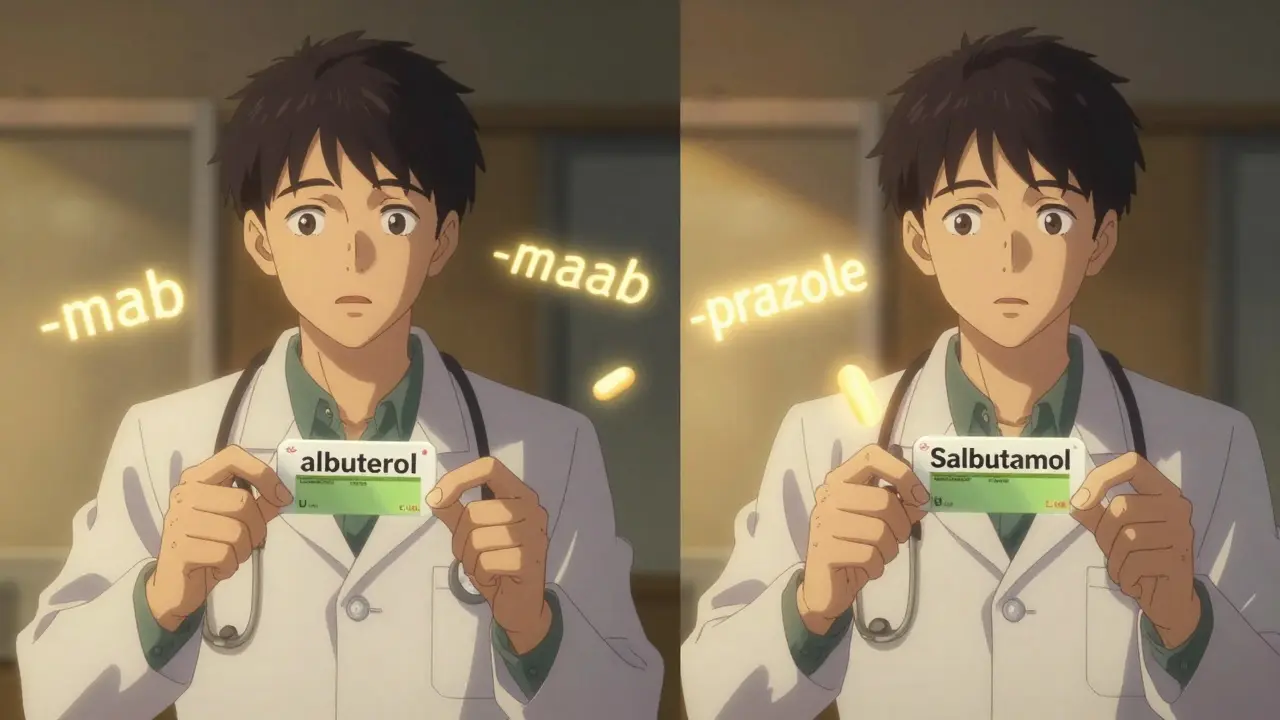
When you pick up a prescription, the doctor writes the generic name-not the brand name. That’s because the generic name tells you what the drug actually is. It doesn’t change based on who makes it. Whether it’s made by Pfizer, Teva, or a generic lab in India, if it’s the same chemical, it gets the same generic name. That’s where USAN and INN come in. They’re the two big systems that decide what those generic names should be. USAN stands for United States Adopted Names. INN stands for International Nonproprietary Names. They’re not competitors-they’re partners. About 95% of the time, they agree on the same name. But when they don’t, it can cause real problems. Take albuterol and salbutamol. They’re the same asthma inhaler. In the U.S., it’s albuterol. Everywhere else, it’s salbutamol. A doctor in Australia prescribing salbutamol to a patient who only knows albuterol? That’s a recipe for confusion. There have been documented cases where patients got the wrong dose or missed treatment because of this mismatch.How USAN and INN Work-The Stem System
Both USAN and INN don’t just make up random names. They use a smart, science-based system built on stems. A stem is the ending part of a drug name that tells you what kind of drug it is. For example:- -mab = monoclonal antibody (like adalimumab)
- -prazole = proton pump inhibitor (like omeprazole)
- -statin = cholesterol-lowering drug (like atorvastatin)
- -virdine = HIV drug (like abacavir)
The Naming Process-It’s Not Quick or Easy
Pharmaceutical companies don’t just pick a name and go. They go through a long, strict process. First, they come up with 5 to 6 name options. Then they check every single one against existing drug names-both generic and brand-to make sure there’s no confusion. A name that sounds like “Zyrtec” but ends in “-prazole”? That’s a no-go. Even if the drug is for a different condition, if it could be misread, it’s rejected. Then they submit the top choice to both USAN and INN. The USAN Council reviews it for U.S. use. The WHO’s INN team checks it for global use. If they agree, great. If not, they negotiate. Sometimes, the company has to go back and try again. On average, 15 to 20 names are tossed out before one sticks. The whole process takes 18 to 24 months. That’s longer than most Phase 2 clinical trials. So companies start naming early-often before they even know if the drug will work. If the drug fails in trials, the name still gets approved. That’s because other companies might use the same chemical later.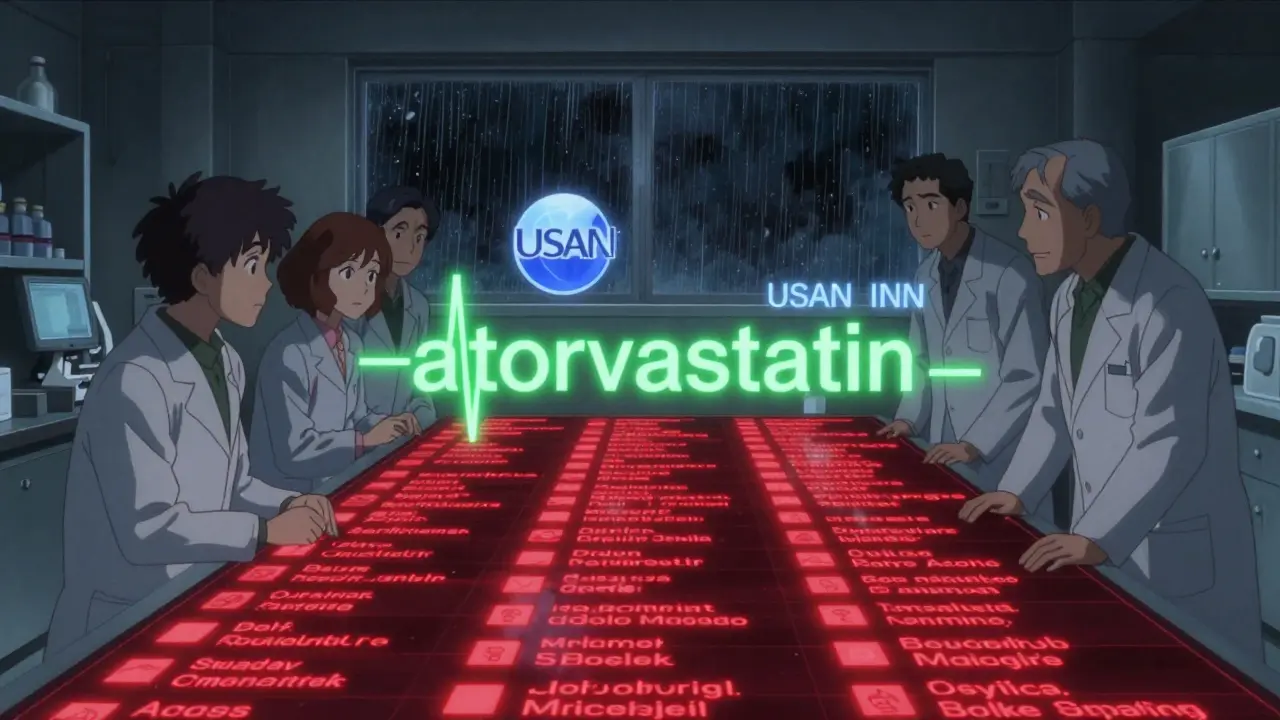
Why the U.S. Has Its Own System
You might wonder: why not just use INN everywhere? Why does the U.S. bother with USAN? The answer is history and practice. Some names stuck in the U.S. before INN became global. Acetaminophen is the U.S. name. Everywhere else, it’s paracetamol. Both are the same drug. But in the U.S., doctors, pharmacists, and patients have used “acetaminophen” for decades. Changing it would cause chaos. The USAN Council says it doesn’t treat INN as the official standard. It makes its own decisions based on U.S. medical culture. That’s why you’ll see differences like:- Rifampin (USAN) vs. Rifampicin (INN)
- Albuterol (USAN) vs. Salbutamol (INN)
- Etanercept (USAN/INN) - this one matched
Brand Names vs. Generic Names-What’s the Difference?
Brand names are marketing tools. They’re catchy, memorable, and trademarked. Think of “Lipitor,” “Zoloft,” or “Humira.” Only one company can use them. Once the patent expires, anyone can make the drug-but they can’t use the brand name. They have to use the generic name. Generic names are public. Anyone can use them. They’re not owned by anyone. That’s why you see “atorvastatin” on the bottle from Walmart, CVS, or a tiny pharmacy in Manila. They’re all the same drug. But here’s the twist: brand names are often designed to sound like the generic. “Lipitor” sounds like “lipid” (fat) and “inhibitor.” “Zoloft” sounds like “serotonin” and “lift.” That’s not accidental. Marketers want you to subconsciously link the brand to the drug’s function.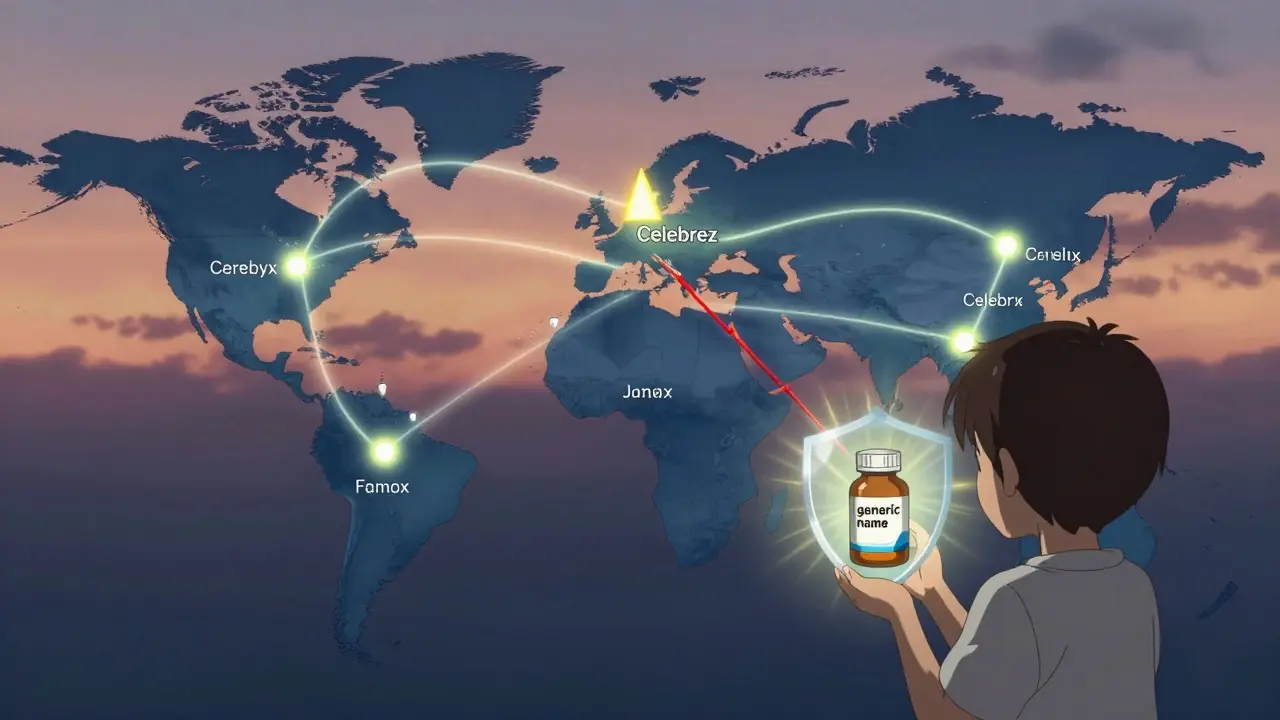
What Happens When Naming Fails?
It’s rare, but it happens. In 2002, a drug called “Zyrtec” and another called “Zytex” were confused. Zytex was a blood thinner. Zyrtec is an allergy pill. A patient got the wrong one. The FDA later changed Zytex’s name to “Zytex” to “Zytex” - wait, no. They changed it to “Zytex” to “Zytex” - actually, they changed it to “Zytex” to “Zytex.” No, that’s not right. The real example? In 2004, a drug called “Cerebyx” (an anticonvulsant) was confused with “Celebrex” (an anti-inflammatory). One caused seizures if misused. The other caused stomach bleeding. The mix-up led to patient harm. That’s why naming authorities now test names with real doctors and pharmacists. They show them similar-looking names and ask: “Which one is which?” If even one person gets confused, the name gets rejected.The Future of Drug Naming
New kinds of drugs are changing the game. Gene therapies. RNA treatments. Antibody-drug conjugates. These don’t fit neatly into the old “-mab” or “-prazole” boxes. The WHO updated its monoclonal antibody naming rules in 2021 to handle new types. But what about CRISPR-based therapies? Or personalized cancer vaccines? There’s no stem for that yet. USAN and INN are working on it. They’re forming expert panels. They’re watching clinical trials. They’re waiting for enough data to create new stems. But they won’t rush it. A bad stem could cause confusion for decades. Meanwhile, the cost of getting it wrong is high. The U.S. spends about $2.4 billion a year on medication errors linked to confusing names. That’s not just money-it’s lives.What You Need to Know
You don’t need to memorize all the stems. But here’s what you should do:- Always check the generic name on your prescription. Don’t assume “the blue pill” is the same as your friend’s.
- If you travel, ask your doctor: “Is this drug called something different outside the U.S.?”
- When you get a new drug, write down both the brand and generic name. Keep it in your phone or wallet.
- If a name looks too similar to another drug you take, speak up. Ask your pharmacist: “Could this be confused with something else?”
12 Comments
Emma #########
18 January, 2026I never realized how much thought goes into drug names until now. It’s wild that something so small can prevent life-threatening mistakes. I’ll definitely double-check generic names from now on, especially when traveling. Thanks for this eye-opening post.
Also, I had no idea albuterol and salbutamol were the same thing-my cousin in Canada was confused when I gave her my inhaler. Now it makes sense.
Generic names are quiet heroes.
Andrew Short
19 January, 2026This is why America is better. USAN is superior because we don’t bow to global bureaucracy. INN sounds like a UN committee that can’t even spell ‘pharmaceutical’ right. Salbutamol? That’s just lazy. We fixed it to albuterol-clearer, shorter, American. If you can’t handle it, move to a country that doesn’t have FDA oversight.
Also, why are we letting WHO dictate our medicine? Who elected them?
christian Espinola
21 January, 2026Correction: The post says 'Zytex' was changed to 'Zytex'-that’s not a change. That’s a typo. Or worse, a lie. The real example was Cerebyx vs. Celebrex, which the author *correctly* mentions, but then botches the Zytex reference. If you’re going to write about precision in naming, at least get your own facts right.
Also, 'acetaminophen' is not 'the U.S. name'-it’s the *only* name that should exist. Paracetamol is a British relic. We fixed this decades ago. The rest of the world is just behind.
And no, 'etanercept' doesn't 'match'-it's the same because the WHO caved. They always do.
Grammar check: 'It’s not random.' → 'It is not random.' You’re welcome.
Chuck Dickson
22 January, 2026Hey everyone-this is such a cool deep dive! Seriously, if you’ve ever been confused by a prescription, this explains why. I’m a nurse, and I’ve seen patients mix up drugs because of similar names. This system? It’s not perfect, but it’s the best we’ve got.
Pro tip: If you’re on multiple meds, write down the generic names on a sticky note. I give this to all my patients. It’s saved lives.
And hey-shoutout to the naming committees. They’re the unsung heroes of pharmacology. No applause, no pay raises, but they stop people from dying. Respect.
👏👏👏
Robert Cassidy
23 January, 2026They’re controlling our medicine. The WHO, the FDA, the big pharma lobby-they all have one goal: make you dependent. Why do you think they made up these stupid stems? So you can’t understand what you’re taking. So you need the doctor. So you need the pharmacy. So you need the system.
Albuterol? Salbutamol? Same drug. But now you’re confused. That’s not an accident. That’s control.
And don’t get me started on how they patent the *name* before the drug even works. That’s not science. That’s corporate wizardry.
Wake up. They’re naming your pills to keep you docile.
Naomi Keyes
24 January, 2026Wait-so you’re telling me that the pharmaceutical industry, which has been caught lying about side effects, manipulating trials, and bribing doctors, is now being trusted to propose drug names? And then we have a council that ‘reviews’ them? With what criteria? Who funds them? What conflicts of interest exist? Are there any public records? Have you checked? Have you even asked? Because if you haven’t, you’re not being informed-you’re being manipulated.
Also, ‘-mab’? Really? That’s not a stem-it’s a marketing gimmick disguised as science. And ‘prazole’? Sounds like a brand of laundry detergent. You’re being sold a fantasy of order. There is none.
Dayanara Villafuerte
25 January, 2026OMG I love this so much 🤩 I’m a pharmacy tech and I’ve literally laughed out loud at some of these names. Like ‘abacavir’-sounds like a spaceship from Star Trek. And ‘omeprazole’? I always imagine someone saying ‘Oh no, I need my OME-prazole!’ like it’s a magical spell.
But seriously-this system is genius. I had a patient come in asking for ‘the blue pill that starts with an A’-turned out they meant alprazolam, not amoxicillin. We almost gave them the wrong thing. Stems saved us.
Also-USAN vs INN? I just tell my international patients: ‘In the US, it’s albuterol. Elsewhere? Salbutamol. Same magic. Different accent.’ 😎
Andrew Qu
27 January, 2026This is one of those posts that makes you appreciate how much behind-the-scenes work goes into something you take for granted. I used to think generic names were just boring-now I see they’re like a secret language for safety.
One thing I wish more people knew: if your doctor writes a brand name on the script, you can always ask for the generic. It’s the same drug, cheaper, and just as effective. No shame in it.
And if you’re ever confused? Ask your pharmacist. They love this stuff. I’ve seen them light up explaining stems like it’s a puzzle they cracked.
Thanks for sharing this. It’s the kind of info that actually helps.
kenneth pillet
28 January, 2026cool post
didn't know about the stems
albuterol vs salbutamol is wild
also why is it called 'prazole' like that's a word
anyway thanks for the info
Jodi Harding
29 January, 2026Names are power.
They control perception.
They hide truth.
And now they’re deciding what you take to stay alive.
That’s not science.
That’s mythology.
And we’re all believers.
Danny Gray
31 January, 2026Wait, so if the WHO and USAN agree 95% of the time, then why do we even have two systems? Isn’t that just bureaucratic redundancy? Or is this just another way for the U.S. to assert cultural dominance under the guise of ‘medical safety’?
Also, if ‘-mab’ means monoclonal antibody, why isn’t there a ‘-vax’ for vaccines? That’d be logical. But nope. We’re still stuck with ‘COVID-19 Vaccine’ like it’s a product line.
Someone’s not thinking this through.
Kristin Dailey
2 February, 2026USAN > INN. End of story. America doesn’t follow foreign rules. We lead. Our names are clearer. Our standards are higher. If you can’t handle it, don’t come here.