
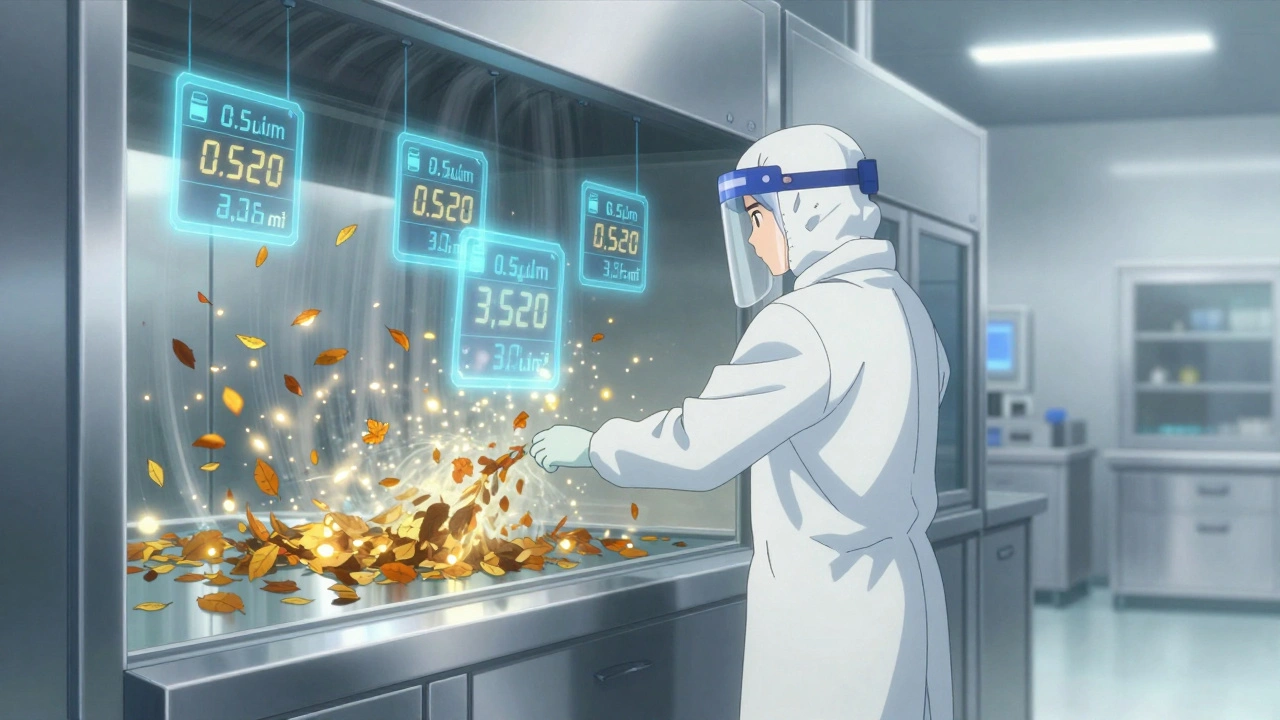
When you take a generic pill, you expect it to work just like the brand-name version. But behind that simple promise is a complex system of environmental controls you never see - cleanroom standards that keep airborne particles, microbes, and human error from ruining the drug’s safety and effectiveness. For generic drug manufacturers, these standards aren’t optional. They’re the difference between a life-saving medication and a dangerous batch.
Why Cleanrooms Matter More for Generic Drugs
Generic drugs are cheaper because they don’t need to repeat expensive clinical trials. But they must prove they’re bioequivalent to the original drug. That means the active ingredient must dissolve at the same rate, reach the same blood levels, and deliver the same clinical effect. If even a tiny bit of contamination gets into the product - say, a particle from a worker’s sleeve or a mold spore from humid air - the drug could fail. That’s why cleanrooms are non-negotiable.The FDA and other global regulators don’t just care about what’s in the pill. They care about how it’s made. A 2022 FDA report found that 42% of complete response letters for sterile generic drugs cited environmental monitoring failures. That’s up from 31% in 2018. The message is clear: regulators are watching the air as closely as the chemistry.
The Four Levels of Cleanroom Grades
Pharmaceutical cleanrooms aren’t all the same. They’re divided into four grades, each with strict particle and microbial limits. These are based on the ISO 14644-1 standard, which counts particles as small as 0.5 micrometers - smaller than a human hair.- Grade A (ISO Class 5): This is where sterile products are filled - like injectables or eye drops. No more than 3,520 particles ≥0.5μm per cubic meter are allowed during operations. Airflow is unidirectional, like a silent waterfall, pushing contaminants away from the product. Temperature stays between 18-26°C, humidity between 30-60%. Microbial limits? Just 1 colony-forming unit (CFU) per settle plate.
- Grade B (ISO Class 5 at rest, ISO Class 7 during operation): This is the background environment for Grade A. It’s where operators prepare materials before they enter the critical zone. Particle limits jump to 3,520,000 during operations, but continuous monitoring is required. Air changes? At least 40 per hour.
- Grade C (ISO Class 7 at rest, ISO Class 8 during operation): Used for less critical steps like mixing powders or packaging non-sterile products. Particle limit: up to 35,200,000 during operation. Minimum 20 air changes per hour.
- Grade D (ISO Class 8 at rest): The lowest classification. Used for initial processing or storage. Only 35,200,000 particles allowed at rest. No operational limit. Just 10 air changes per hour.
These aren’t arbitrary numbers. They’re based on decades of contamination incidents. For example, the 2012 fungal meningitis outbreak linked to contaminated steroid injections killed 64 people and sickened over 750. The root cause? A cleanroom that wasn’t clean enough.
Regulatory Differences: FDA vs. EU vs. ICH
Not all rules are written the same way. The FDA’s cGMP regulations (21 CFR Parts 210 and 211) focus on outcomes: prevent contamination. They don’t spell out ISO classes. The European Union’s EudraLex Volume 4, Annex 1 (updated August 2023), does. It explicitly ties Grade A to ISO Class 5, Grade B to ISO Class 7, and so on.This creates a challenge for global manufacturers. A company making a generic drug for both the U.S. and EU markets must meet both sets of requirements. The U.S. might accept a facility with strong procedures but no continuous particle monitor. The EU will demand real-time sensors logging every particle count, every hour.
Then there’s ICH Q7, the international guideline for active pharmaceutical ingredients (APIs). It’s less strict than GMP for finished products, but still requires controlled environments. Japan’s Pharmaceutical Affairs Law adds another layer - requiring monitoring at 1.0μm particle size, not just 0.5μm.
Costs and Challenges for Generic Manufacturers
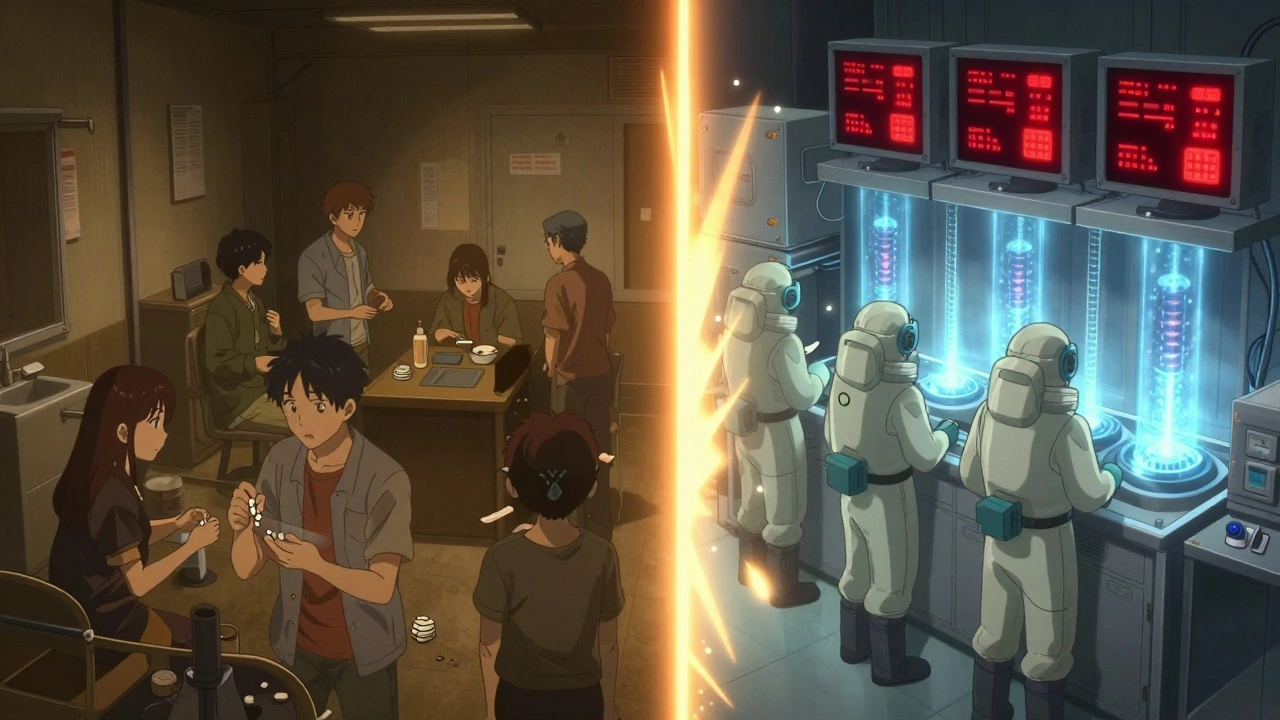
Building a Grade A cleanroom costs between $250 and $500 per square foot. For a 5,000-square-foot facility, that’s over $1.25 million just for the room. Add HVAC systems, HEPA filters, monitoring equipment, and staff training - and you’re looking at $3-5 million upfront.And that’s just the start. Operating costs are high too. HEPA filters need replacing every 2-5 years. Continuous monitoring systems cost $50,000-$100,000 per room. Personnel gowning takes 40-60 hours of training per employee. In tropical climates like India or Southeast Asia, humidity control adds 20-30% to HVAC costs.
Generic manufacturers operate on 15-20% gross margins. Innovators? 70-80%. That gap makes cleanroom compliance a financial tightrope. One small generic maker on Reddit said maintaining Grade A for a $0.50-per-unit heparin syringe made the product unprofitable after three FDA inspections flagged minor particle spikes.
But the cost of failure is worse. In 2022, Aurobindo Pharma paid $137 million to recall sterile injectables after failing Grade B monitoring. That’s not just a recall - it’s a loss of trust, market share, and regulatory credibility.
Success Stories: How Some Companies Got It Right
Not all stories are about cost and risk. Some show what’s possible with smart investment.Teva’s generic version of Copaxone (glatiramer acetate) was rejected twice by the FDA due to contamination events. After upgrading to advanced isolator technology in Grade A areas and installing real-time particle counters, contamination dropped from 12 events per year to just 2. The product was approved - and now sells globally.
A Pfizer facility manager described upgrading from Grade C to Grade B for a generic oncology drug. The $2.3 million HVAC upgrade took 14 months. But it prevented 17 out-of-spec batches annually - worth $8.5 million in lost product and rework.
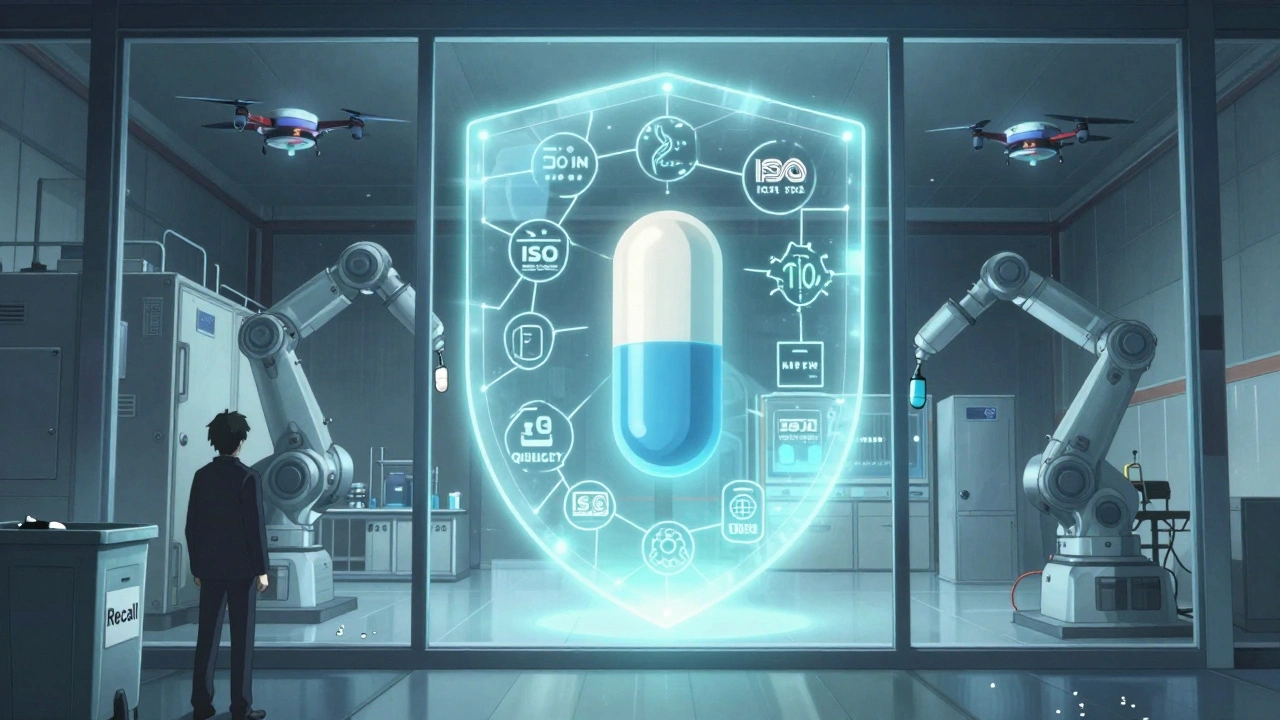
These aren’t luck stories. They’re examples of risk-based decision-making. When the product is injectable, sterile, or life-critical, the cleanroom isn’t a cost center. It’s a quality shield.
Where the Standards Are Falling Short
Not everyone agrees that every cleanroom needs to be Grade C or higher. Dr. Paul K. S. Shin, editor of the PDA Journal, argued in a 2021 editorial that Grade C requirements for oral solids (like pills and capsules) add cost without measurable benefit. A 2020 study showed identical dissolution profiles between products made in Grade D and Grade C rooms.The FDA agrees - to a point. For non-sterile oral products, they don’t require Grade C. But many manufacturers still build them anyway, out of caution or because their facility also makes sterile products.
Another blind spot: inhalers. These complex generics need precise particle size control and low moisture. Standard cleanroom specs don’t cover them well. The FDA’s 2020 guidance on budesonide inhalation suspension points out that airflow and humidity controls for inhalers need custom design - not just a Grade C room.
What’s Changing in 2025 and Beyond
Cleanroom standards aren’t frozen in time. The EU’s 2023 Annex 1 revision requires continuous monitoring, not just periodic sampling. The FDA has signaled it will align with this. That means more sensors, more data, and more pressure on manufacturers to act on real-time alerts.Automation is coming. Robotics for material transfer, AI-powered monitoring systems, and single-use components are reducing human error. McKinsey projects automation could cut cleanroom operational costs by 25-30% by 2028.
And the demand is rising. The FDA expects 50% of new generic drug applications by 2025 to require Grade A or B environments - up from 35% in 2022. That’s mostly because more generics are now injectables, biologics, or complex formulations like inhalers and implants.
Regulators are also stepping up. The FDA’s GDUFA III (2023-2027) allocates $15 million just to train inspectors on cleanroom audits. This isn’t a temporary push. It’s a long-term shift in how quality is enforced.
What Generic Drug Makers Need to Do Now
If you’re making generics, here’s what matters:- Match the cleanroom grade to the product. Don’t overbuild for oral solids. Don’t underbuild for injectables.
- Invest in continuous monitoring. One-time air sampling isn’t enough. Real-time data lets you catch problems before they become recalls.
- Train personnel like they’re performing surgery. Gowning, movement, and behavior in cleanrooms are the #1 source of deviations. 42% of manufacturers say this is their biggest challenge.
- Document everything. FDA inspectors look for 15-20 SOPs covering environmental monitoring, gowning, equipment cleaning, and calibration.
- Use validated tools. Don’t guess at airflow or humidity. Use calibrated sensors and follow ISO 14644-2 for testing.
There’s no shortcut. But there is a path: treat your cleanroom like the first line of defense - because it is.
What is the difference between Grade A and Grade B cleanrooms?
Grade A is the highest classification, used for sterile filling operations like injectables. It allows no more than 3,520 particles ≥0.5μm per cubic meter during operation, with unidirectional airflow and strict microbial limits (1 CFU/plate). Grade B is the surrounding environment - it supports Grade A. At rest, it meets Grade A standards, but during operations, it allows up to 3,520,000 particles per cubic meter. Continuous monitoring is required in Grade B, but airflow isn’t always unidirectional.
Do all generic drugs need a Grade A cleanroom?
No. Only sterile products - like injections, eye drops, and IV solutions - require Grade A for the final filling step. Oral tablets, capsules, and creams typically only need Grade C or even Grade D. The cleanroom grade must match the product’s risk level. For example, a pill that’s swallowed doesn’t need the same air quality as a shot that goes directly into the bloodstream.
How often are cleanrooms inspected by regulators?
Inspections happen every 2-3 years for most facilities, but can be unannounced. If a company has had past violations, inspections can occur annually or even more frequently. The FDA’s 2022 report showed a 35% increase in environmental control-related observations since 2018, meaning inspectors are now focusing more on air quality, gowning, and monitoring systems than ever before.
Can a generic drug be approved without meeting EU Annex 1 standards?
Yes, if it’s only being sold in the U.S. The FDA doesn’t require EU Annex 1 compliance. But if you want to sell in Europe, you must meet Annex 1 - including continuous monitoring and revised microbial limits. Many global manufacturers choose to build to Annex 1 from the start, even for U.S.-only products, to avoid costly rework later.
What happens if a cleanroom fails an inspection?
The regulator issues a Form 483 listing observations. If issues aren’t fixed, a warning letter follows. Severe or repeated failures can lead to import alerts (blocking shipments), consent decrees, or product recalls. In extreme cases, like Aurobindo Pharma’s 2022 case, recalls can cost over $100 million. The facility may be shut down until it passes a re-inspection - which can take months or even years.
10 Comments
Tommy Watson
12 December, 2025so like... uhh... cleanrooms cost WHAT?!?!? $500 A SQUARE FOOT?!?!? i thought generic pills were supposed to be cheap?? now i get why my blood pressure med costs $40 a month lol
Sheldon Bird
13 December, 2025Really appreciate this breakdown. 🙌 It’s easy to take meds for granted, but this stuff is literally life-or-death engineering. Props to the folks keeping it clean behind the scenes.
Karen Mccullouch
13 December, 2025USA still leads the world in pharma quality. Europe? Their rules are ridiculous. Why do we need real-time sensors for EVERY particle? We’re not launching rockets, we’re making pills. #AmericaFirst
Shelby Ume
15 December, 2025As someone who’s worked in GMP labs for 15 years, I can tell you: the cleanroom isn’t about perfection-it’s about control. Every SOP, every gowning step, every air change? It’s a buffer between you and disaster. One tiny lapse in training, and you’re not just risking a recall-you’re risking lives. This isn’t bureaucracy. It’s responsibility.
Jade Hovet
17 December, 2025OMG I had no idea!! 😱 So that’s why my mom’s insulin got recalled last year?? This is wild. Also-HEPA filters every 2-5 years?? 😳 I’m gonna start thanking my pharmacist now 🙏💛
Himmat Singh
18 December, 2025While the data presented is statistically significant, the underlying assumption that particle count correlates directly with clinical efficacy remains unproven. The ISO 14644-1 standard was developed for semiconductor manufacturing, not pharmacology. The extrapolation is methodologically flawed.
Jamie Clark
20 December, 2025You people are naive. This isn’t about safety-it’s about control. Big Pharma and the FDA use cleanroom standards to crush small manufacturers. Why? So they can keep prices high. The ‘life-saving’ narrative? A distraction. The real goal is monopoly.
Michael Gardner
21 December, 2025Wait, so if a pill is swallowed, why does it need a Grade C room? My grandma takes 12 pills a day and she’s fine. The whole thing feels like overkill. Let’s focus on actual bioequivalence, not air pressure.
Willie Onst
22 December, 2025Just think about it-this is how science works in the real world. Not flashy labs, not viral TikToks. Just quiet people in bunny suits making sure your medicine doesn’t kill you. Respect. 🌍✌️
Ronan Lansbury
23 December, 2025Ever wonder why the FDA suddenly cares about cleanrooms? Coincidence that it happened right after China started dominating generic exports? The ‘contamination’ narrative is a smokescreen. They’re protecting American profits, not your health. The sensors? Just digital surveillance in a lab coat.