

Heartburn during pregnancy isn’t just annoying - it’s incredibly common. Up to 80% of pregnant people experience it, especially in the second and third trimesters. Your stomach is getting squeezed, hormones are relaxing the valve between your esophagus and stomach, and acid is backing up where it shouldn’t be. It’s not a sign of something wrong - it’s just how pregnancy works for many. But when the burn won’t quit, you start wondering: Can I take something for this? And if so, what’s actually safe?
First-Line Defense: Antacids Like Tums
When it comes to heartburn relief in pregnancy, calcium carbonate antacids like Tums are the go-to. Why? Because they work fast and give you something your body actually needs: calcium. Your baby’s bones are building fast, and you’re sharing your calcium supply. Tums don’t just neutralize acid - they help refill your reserves. A single tablet usually has 200-400 mg of calcium carbonate. You can take up to 500-1500 mg every 4 to 6 hours as needed, but don’t go over 10 tablets a day without checking with your provider. Other safe antacids include Rolaids (calcium carbonate + magnesium hydroxide) and Mylanta (aluminum hydroxide, magnesium hydroxide, and simethicone). These work quickly, often within minutes, and last 1-2 hours. But watch out for ones that contain aluminum or magnesium trisilicate - those aren’t recommended. Aluminum can cause constipation, and magnesium trisilicate has unclear safety data in pregnancy. And here’s the big one: never take Pepto-Bismol. It contains bismuth subsalicylate, which breaks down into aspirin-like compounds. Aspirin during pregnancy can affect fetal development and increase bleeding risks during delivery. Even if the bottle says “for upset stomach,” skip it.Second-Line: H2 Blockers Like Pepcid
If antacids aren’t cutting it - maybe you’re waking up at 3 a.m. with a burning throat - your doctor might suggest an H2 blocker. These reduce how much acid your stomach makes, instead of just neutralizing what’s already there. The most commonly used and safest option is famotidine (Pepcid). It starts working in about an hour and lasts up to 12 hours. That means one dose can get you through the night. Ranitidine (Zantac) used to be a top choice, but it was pulled from the U.S. market in April 2020 because of a cancer-causing contaminant called NDMA. Even if you still have some lying around, don’t use it. Stick with famotidine. It’s been studied in thousands of pregnant women and shows no increased risk of birth defects or complications. Side effects are rare but can include mild headaches or dizziness in about 3-5% of users. Don’t take more than the recommended dose. If you’re using it daily for more than two weeks, talk to your provider. You might need a different approach.Third-Line: PPIs Like Prilosec
If you’re still struggling after trying antacids and H2 blockers, your doctor may consider a proton pump inhibitor (PPI). These are the strongest acid blockers available over the counter. Omeprazole (Prilosec), lansoprazole (Prevacid), and pantoprazole (Protonix) all work by shutting down the acid pumps in your stomach lining. They take longer to kick in - 1 to 4 hours - but their effects last 24 hours or more. Omeprazole is the most studied PPI in pregnancy. Multiple studies, including large ones published in journals like JAMA Pediatrics, haven’t found a clear link to major birth defects. But here’s the catch: one 2019 study did find a small association between first-trimester PPI use and childhood asthma. That doesn’t mean PPIs cause asthma - it just means the data isn’t perfect. Because of that, doctors only recommend PPIs when other options have failed and your heartburn is severe enough to interfere with eating or sleeping. Long-term use of PPIs - even outside pregnancy - can affect how well your body absorbs calcium, magnesium, and vitamin B12. That’s why they’re not meant for daily, indefinite use unless absolutely necessary. If you’re on a PPI during pregnancy, your provider will likely monitor you closely and try to taper you off after delivery.
What to Avoid Completely
Not all heartburn meds are created equal. Some are outright dangerous in pregnancy:- Pepto-Bismol - contains aspirin-like ingredients
- Ranitidine (Zantac) - withdrawn due to NDMA contamination
- Aluminum-containing antacids - like Alka-Seltzer (aspirin + aluminum)
- Magnesium trisilicate - found in some older antacid formulas
- Herbal remedies - like licorice root or chamomile - their safety in pregnancy isn’t proven
Timing Matters - Especially in the First Trimester
The first 14 weeks of pregnancy are the most sensitive period for fetal development. That’s when organs are forming. Most experts - including the Northeast Georgia Physicians Group and Cleveland Clinic - recommend avoiding all non-essential medications during this time. That includes antacids, H2 blockers, and PPIs. If you’re having heartburn early on, focus on lifestyle changes:- Eat smaller, more frequent meals instead of three big ones
- Avoid spicy, fatty, fried, or acidic foods - citrus, coffee, chocolate, and tomatoes are common triggers
- Don’t lie down for at least 3 hours after eating
- Wear loose clothing - tight waistbands put pressure on your stomach
- Elevate your head while sleeping with an extra pillow or wedge
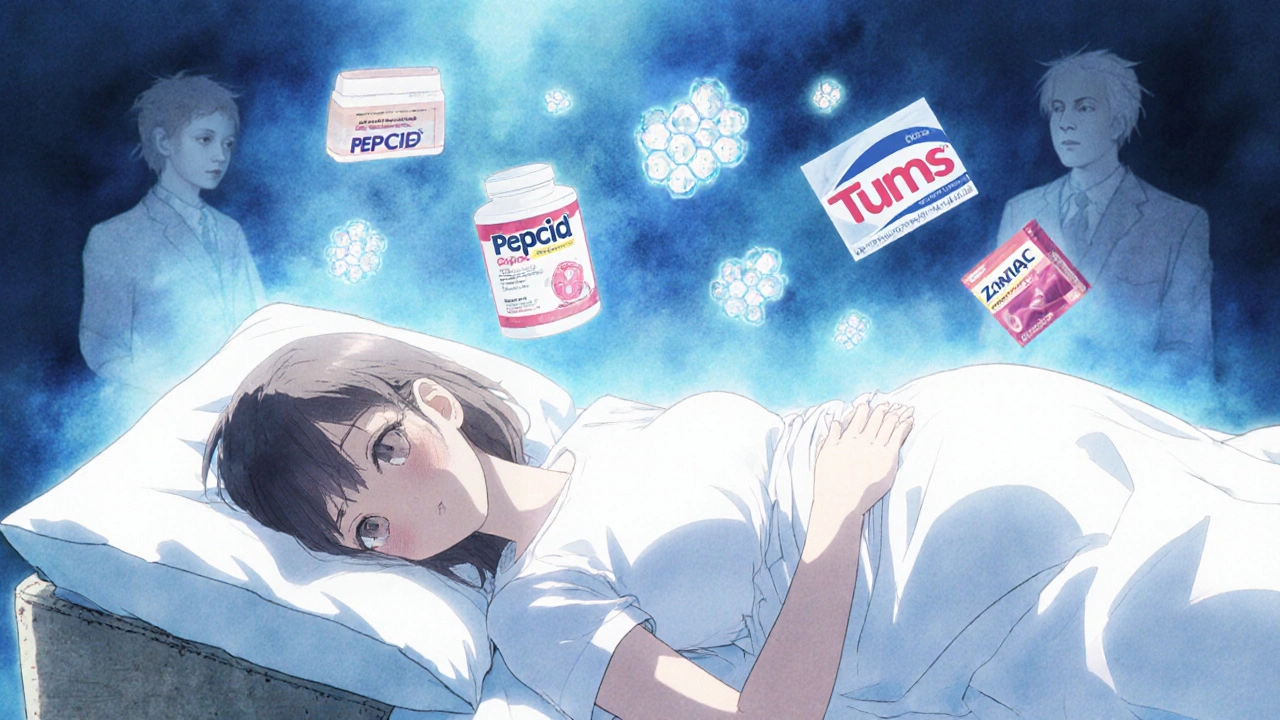
When to Call Your Doctor
Heartburn is normal. But some symptoms aren’t. Call your provider if you have:- Heartburn that doesn’t improve with medication or lifestyle changes
- Difficulty swallowing or pain when swallowing
- Vomiting blood or black, tarry stools
- Unexplained weight loss
- Chest pain that radiates to your arm, jaw, or back
What About Breastfeeding?
Good news: most of these medications are safe while breastfeeding. Calcium carbonate passes into breast milk in tiny amounts and won’t affect your baby. Famotidine and omeprazole also enter breast milk in very low levels, and no adverse effects have been reported in nursing infants. The American Academy of Pediatrics considers both safe for use during lactation. Still, if you’re taking these long-term while nursing, keep an eye on your baby for unusual fussiness, diarrhea, or poor feeding. It’s rare, but worth noting.Bottom Line: What to Do
- First trimester: Try lifestyle changes only. Avoid meds unless absolutely necessary. Talk to your provider. - Second and third trimesters: Start with calcium carbonate antacids (Tums). If that’s not enough, move to famotidine (Pepcid). Only consider omeprazole if symptoms are severe and other options failed. - Always: Check with your OB/GYN before taking anything - even something you think is “harmless.” - Never: Use Pepto-Bismol, Zantac, or unapproved herbal remedies. Heartburn doesn’t have to rule your pregnancy. With the right tools - and the right timing - you can find relief without risking your baby’s health. The safest path isn’t always the fastest one. But it’s the one that gets you to the finish line with both of you healthy.Is Tums safe during pregnancy?
Yes, Tums (calcium carbonate) is considered one of the safest heartburn medications during pregnancy. It neutralizes stomach acid quickly and provides extra calcium, which your baby needs for bone development. You can take up to 10 tablets per day, but always check with your provider before using it long-term.
Can I take Pepcid while pregnant?
Yes, famotidine (Pepcid) is generally safe for short-term use during pregnancy. It’s often recommended when antacids like Tums aren’t enough. It reduces acid production and lasts up to 12 hours. Avoid long-term daily use without medical supervision.
Is omeprazole safe in pregnancy?
Omeprazole (Prilosec) is considered safe when other treatments fail, but it’s not a first-line option. It’s the most studied PPI in pregnancy and hasn’t been linked to major birth defects. However, a 2019 study found a possible link to childhood asthma when used in the first trimester, so doctors only prescribe it if the benefits clearly outweigh the risks.
Why can’t I take Pepto-Bismol while pregnant?
Pepto-Bismol contains bismuth subsalicylate, which breaks down into salicylates - similar to aspirin. Aspirin during pregnancy can increase bleeding risks, affect fetal development, and lead to complications during delivery. Even small amounts aren’t worth the risk. Always choose safer alternatives like Tums or Pepcid.
What’s the best way to prevent heartburn during pregnancy?
The best prevention is lifestyle changes: eat smaller meals, avoid trigger foods like spicy or fatty items, don’t lie down for 3 hours after eating, wear loose clothing, and sleep with your head slightly elevated. These steps often reduce or eliminate heartburn without needing medication.
10 Comments
saurabh lamba
18 November, 2025another day, another medical guideline that feels like it was written by a robot who’s never had a burning throat at 3 a.m. while trying to sleep on a pile of pillows like a human pretzel. i get the science, but sometimes you just need a pill to not scream into your pillow for the 17th time this week. 🤦♂️
Shannon Hale
18 November, 2025STOP. RIGHT. NOW. if you’re even THINKING about taking a PPI in the first trimester without consulting your OB, you’re one bad Google search away from a lawsuit and a traumatized baby. i’ve seen it. i’ve seen the charts. i’ve seen the tears. omeprazole is NOT a snack. it’s a last-resort nuclear option. Tums? Fine. Pepcid? Maybe. But don’t you dare play doctor with your fetus.
Holli Yancey
18 November, 2025i just wanted to say that the lifestyle tips are actually really helpful. i didn’t realize how much my tight leggings were contributing to the burn. switching to maternity yoga pants and eating dinner at 5 p.m. instead of 8 p.m. made a huge difference. no meds needed. just… common sense and comfy clothes. 🙏
Deb McLachlin
20 November, 2025While the article provides a thorough overview of pharmacological options, it’s worth noting that the clinical evidence supporting the safety of famotidine and omeprazole in pregnancy is largely derived from observational cohort studies, which are inherently subject to confounding variables. The 2019 JAMA Pediatrics association with childhood asthma, while not causal, warrants caution in early gestational exposure. Furthermore, the pharmacokinetic changes during pregnancy-including increased gastric pH, delayed gastric emptying, and altered CYP450 enzyme activity-may influence drug metabolism in ways not fully accounted for in current guidelines. A more nuanced risk-benefit analysis should be individualized, particularly for patients with comorbid conditions such as obesity or pre-eclampsia.
Jessica Healey
21 November, 2025ok but why does everyone act like Tums are magic? i took like 8 a day last trimester and my poop turned into cement. also my dentist said my enamel is thinning now. so yeah, calcium is great but i’m not a human antacid dispenser. also pepto-bismol is evil but so is my life right now.
Gordon Mcdonough
21 November, 2025IN INDIA WE JUST DRINK COOL MINT WATER AND SIT IN THE DARK AND PRAY TO GANESH AND IT WORKS BETTER THAN ALL THESE WESTERN PILLS. WHY DO WE EVEN LISTEN TO AMERICAN DOCTORS? THEY GIVE YOU DRUGS FOR EVERYTHING EVEN A STOMACH ACHING. MY GRANDMA NEVER TOOK A SINGLE PILLS AND HAD 7 KIDS AND NEVER HAD HEARTBURN. THIS IS ALL CORPORATE MEDICINE. TUMS? MORE LIKE TUMBS FOR YOUR HEALTH.
Levi Hobbs
23 November, 2025Just wanted to add that if you’re using Pepcid daily, it’s worth asking your provider about checking your magnesium levels - I had a friend who got really weak and crampy after 6 weeks of daily use. Also, the calcium from Tums is great, but if you’re already on a prenatal with iron, take them at least 2 hours apart - iron and calcium fight each other and neither gets absorbed well. Small thing, big difference.
Eric Healy
24 November, 2025why is everyone so scared of ppi’s? i took prilosec for 8 months pregnant and my kid is now 4 and runs like a cheetah. the asthma study? correlation not causation. also who even reads the label on pepto anymore? its right there on the box. if you cant read it dont be a parent.
henry mariono
26 November, 2025Thanks for laying this out clearly. I appreciate the distinction between trimesters. I’m in my first and have been avoiding everything - just eating bananas and sleeping upright. It’s hard, but knowing there’s a safe path later helps.
Kiran Mandavkar
27 November, 2025You people are hilarious. You treat pregnancy like a fragile porcelain doll that needs to be wrapped in bubble wrap and whispered to in Sanskrit. The body is not a lab rat. It evolved to handle acid reflux, hunger, and sleepless nights for millennia. You’re not ‘protecting’ your baby - you’re infantilizing yourself. If you need a pill to survive a meal, take it. The world didn’t end when your great-grandmother took aspirin. The real danger isn’t omeprazole - it’s the paralyzing fear of doing anything right.