
When you pick up a generic pill at the pharmacy, you expect it to work just like the brand-name version. You’re not just saving money-you’re trusting that the FDA has made sure it’s just as safe and effective. But how does the FDA actually make sure that a $5 generic version of a $100 brand drug is just as good? It’s not magic. It’s a detailed, science-driven system built on inspections, strict rules, and constant monitoring.
How Generic Drugs Get Approved Without Full Clinical Trials
Most people think drug approval means running new clinical trials on thousands of patients. That’s true for brand-name drugs. But for generics, the FDA uses a shortcut-called the Abbreviated New Drug Application, or ANDA. This isn’t a loophole. It’s a smart, science-backed process.
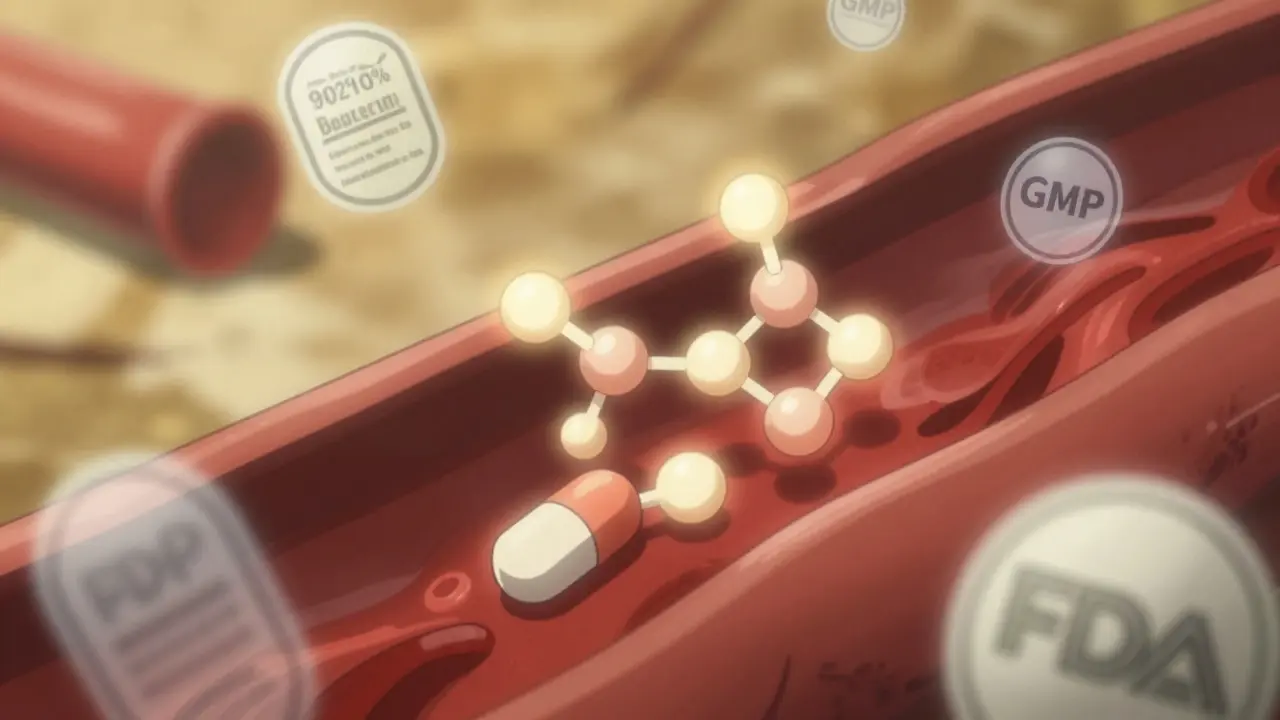
Before a generic drug can be approved, the manufacturer must prove it’s bioequivalent to the brand-name drug. That means the generic releases the same amount of active ingredient into your bloodstream at the same rate. The FDA requires this range: 90% to 110% of the brand’s performance. If it’s outside that window, it doesn’t get approved.
And here’s the key: the FDA already confirmed the safety and effectiveness of the original brand drug. So the generic doesn’t need to prove that again. It just needs to prove it’s the same in the body. That’s why a generic can be approved in months instead of years-and why it costs so much less.
The Three Pillars of Manufacturing Quality
Approval isn’t just about the final pill. It’s about how it’s made. The FDA requires every generic manufacturer to follow Current Good Manufacturing Practices, or cGMP. These aren’t suggestions. They’re legal requirements.
There are three non-negotiable systems every factory must have:
- Raw material control - Every ingredient, from the active drug to the coating, is tracked from the moment it arrives. No untested batches. No unknown suppliers.
- Process controls - Every step of production has written procedures. Temperature, mixing time, pressure-all monitored and recorded. If a machine runs too hot, the batch is rejected.
- Lab testing - Every batch is tested before it leaves the factory. The FDA validates the methods used. No shortcuts. No guesswork.
These aren’t just paperwork. They’re physical systems built into the factory. The FDA doesn’t just read reports-they send inspectors to watch the process in real time.
Inspections: The FDA’s Eyes on the Ground
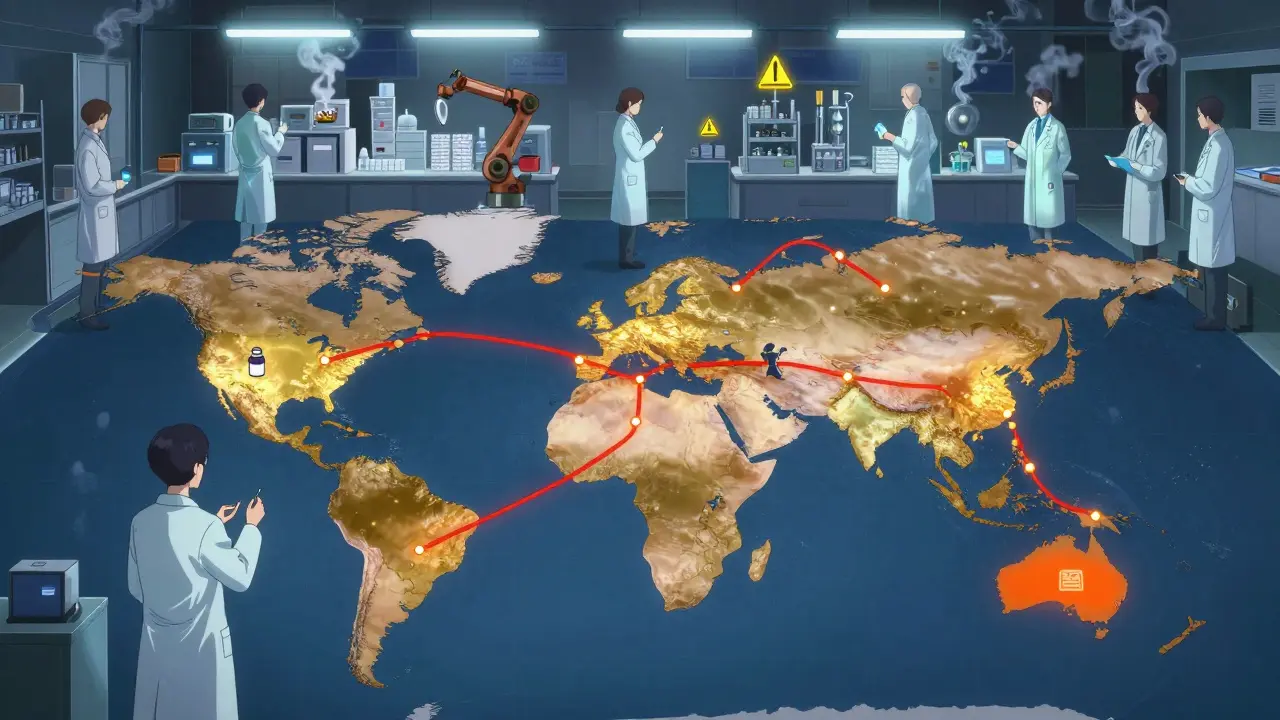
Before a generic drug gets approved, the FDA inspects the manufacturing site. That’s true for factories in the U.S. and overseas. In 2021, the FDA conducted over 1,000 inspections worldwide. By 2025, they’re aiming for 1,500.
But inspections aren’t random. The FDA uses a risk-based system. Factories with past violations, complex products, or those in countries with a history of quality issues get priority. In 2019, 15% of foreign facilities had serious quality problems. Only 8% of U.S. facilities did.
That’s why the FDA spends more time overseas. Under GDUFA III (2022), the agency got $1.1 billion through 2027 to boost foreign inspections. It’s not just about checking boxes-it’s about preventing bad drugs from ever reaching U.S. shelves.
What Happens After Approval?
Approval isn’t the end. It’s the start of ongoing surveillance. The FDA doesn’t just sit back and wait for problems. They’re watching all the time.
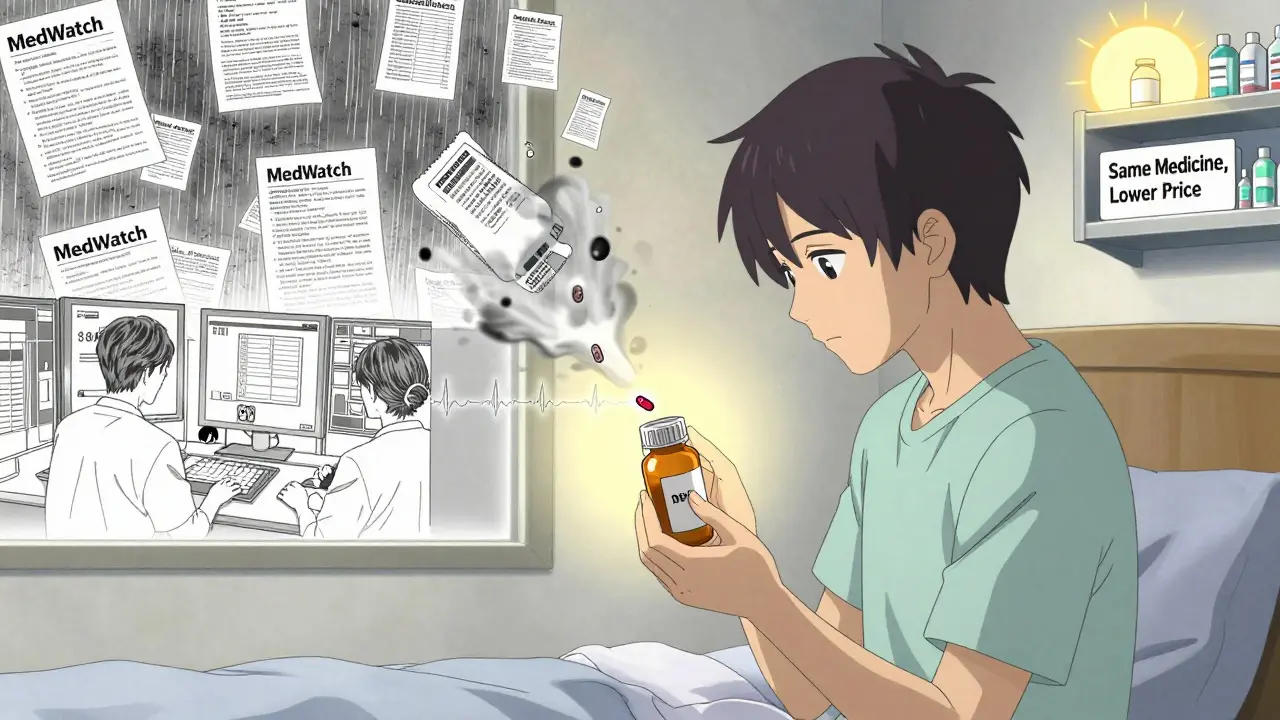
Every adverse reaction reported by doctors, pharmacists, or patients goes into MedWatch. In 2023, over 1.3 million reports came in. The FDA’s Division of Clinical Safety and Surveillance uses data tools to spot patterns. If a specific generic version starts showing more side effects than others, they dig in.
When they find a problem, they act. That could mean:
- Issuing a warning letter to the manufacturer
- Updating the drug’s label with new safety info
- Requesting a voluntary recall
- Blocking future shipments
One example: in 2020, the FDA found elevated levels of a cancer-causing impurity in some generic blood pressure pills. They pulled them from shelves within weeks and required all manufacturers to test for it.
How the FDA Keeps Up with Complex Drugs
Not all generics are created equal. Simple pills are easy to copy. But inhalers, injectables, and topical creams? Those are much harder. The active ingredient might be the same, but how it’s delivered matters.
That’s why the FDA launched the Complex Generic Drug Products Initiative in 2018. They’ve created specific guidance for over 2,800 drugs-up 40% since 2018. For inhalers, they now require tests that mimic how a patient actually uses the device. For topical creams, they check how the drug penetrates the skin.
These aren’t theoretical guidelines. They’re enforced. If a manufacturer can’t meet them, their application gets rejected.
Why This System Works-And Why It’s Under Pressure
Over 90% of prescriptions in the U.S. are filled with generics. They save the healthcare system $313 billion a year. That’s huge.
But the system is under strain. In 2012, it took an average of 30 months to approve a generic. Today, 95% are approved within 10 months-thanks to the Generic Drug User Fee Amendments (GDUFA). That’s because manufacturers pay fees that fund FDA reviewers, inspectors, and labs.
Still, challenges remain. Some factories cut corners. Some countries lack the resources to enforce quality. And as drug complexity increases, so does the need for better tools and more trained staff.
The FDA’s response? GDUFA III, launched in 2022, is pushing for real-time data sharing, faster lab testing, and more inspectors. It’s not perfect-but it’s getting better.
What You Can Do
You don’t need to be a scientist to help keep generics safe. If you notice something off-like a pill that looks different, or new side effects-you can report it. Visit MedWatch and file a report. Your input helps the FDA spot problems faster.
And remember: generics aren’t second-rate. They’re held to the same standard. The FDA doesn’t cut corners on safety just because the price is lower. They’ve built a system that makes sure you get the same medicine-whether it’s branded or generic.
Are generic drugs really as safe as brand-name drugs?
Yes. The FDA requires generics to have the same active ingredient, strength, dosage form, and route of administration as the brand-name drug. They must also prove bioequivalence-meaning they work the same way in your body. The safety profile is identical. The only differences are in inactive ingredients like color or filler, which don’t affect how the drug works.
Why do some generic pills look different from the brand version?
By law, generics can’t look exactly like the brand-name drug-that would violate trademark rules. So they might be a different color, shape, or size. But the active ingredient, dose, and how it works in your body are the same. If you’re unsure, check the label or ask your pharmacist.
Does the FDA inspect foreign drug factories as often as U.S. ones?
The FDA aims to inspect foreign and domestic facilities at the same rate. In 2021, they completed 74% of foreign inspections within their performance goals. With GDUFA III funding, they plan to increase foreign inspections to 1,500 per year by 2025-up from 1,082 in 2021. The goal is parity, and they’re making progress.
What happens if a generic drug fails an FDA inspection?
If a facility fails, the FDA can refuse to approve the drug or issue a warning letter. If the problem is serious, they may block imports or request a recall. The manufacturer must fix the issue and pass a follow-up inspection before production can resume. In some cases, the facility is placed on an import alert, meaning all products from that site are automatically detained at the border.
How does the FDA know if a generic drug is causing side effects after it’s on the market?
The FDA monitors reports through MedWatch, a system where doctors, pharmacists, and patients can report adverse events. They use data analysis tools to spot unusual patterns-like a sudden spike in complaints about a specific generic. If a trend emerges, they investigate the manufacturer, review production records, and may require changes to labeling or even a recall.
Can a generic drug be pulled from the market after approval?
Yes. If new safety data shows a risk-like contamination, unexpected side effects, or manufacturing flaws-the FDA can require a recall. This has happened multiple times, including with certain blood pressure, diabetes, and sleep aid generics. The agency doesn’t wait for widespread harm; they act on early warning signs.
What Comes Next
The FDA’s goal is simple: every generic drug on the shelf should be as safe and effective as the brand. That’s not just a slogan-it’s the standard they enforce daily. With more funding, better tools, and global cooperation, the system is becoming more proactive, not reactive.
For patients, that means peace of mind. For the system, it means staying ahead of risks before they become crises. The next time you choose a generic, know this: behind that low price tag is one of the most rigorous drug safety systems in the world.
14 Comments
Darren McGuff
9 January, 2026Man, I used to think generics were just cheap knockoffs-until my grandma started taking them for her BP meds. Same results, same side effects, but half the price. The FDA’s system is way more rigorous than most people realize. They don’t just slap a label on and call it a day. Real science. Real oversight. I’m glad someone’s actually watching the store.
Ashley Kronenwetter
10 January, 2026The regulatory framework governing generic drug approval is a model of evidence-based efficiency. The bioequivalence standard, coupled with cGMP enforcement, ensures therapeutic equivalence without redundant clinical trials. This is not merely cost-saving-it is rational pharmacoeconomics at its finest.
Heather Wilson
11 January, 2026Let’s be real-most of these ‘generic’ factories are in India and China, and we all know how ‘quality control’ works over there. The FDA says they inspect, but 1,500 inspections a year across thousands of facilities? That’s like sending one cop to watch a city of 10 million. And don’t even get me started on the impurities they keep missing. This is a house of cards.
Jeffrey Hu
12 January, 2026Actually, the bioequivalence window is 80%–125% for AUC and Cmax-not 90%–110%. That’s a common misconception. The FDA uses 90% CI for 80–125%, not a fixed range. Also, ‘same active ingredient’ doesn’t mean same excipients, and some people are allergic to fillers like lactose or dyes. You think you’re getting the same drug, but your body might not agree. And yeah, I’ve read the GDUFA guidelines. All of them.
Matthew Maxwell
13 January, 2026People need to stop being so naive. The FDA isn’t protecting you-they’re protecting Big Pharma’s profits by letting generics flood the market. You think a $5 pill is safe? Tell that to the families who lost loved ones to contaminated valsartan. This isn’t oversight-it’s corporate convenience dressed up as science. And you’re all just happy to get your discount drugs while the system crumbles.
Angela Stanton
13 January, 2026Okay but have y’all seen the MedWatch data? 🤯 In 2023, 1.3M reports-but less than 1% get investigated. That’s a 99% drop-off rate. The FDA’s ‘surveillance’ is basically a glorified suggestion box. And don’t even get me started on the lack of real-time analytics. We’re still using 2010-era software to track drug safety. This is like using a flip phone to run a rocket launch. #PharmaFail #FDAWakeUp
Kiruthiga Udayakumar
14 January, 2026My cousin in Mumbai works at a generic pharma plant. He says they make 10x more pills per shift than the FDA allows. They skip tests, reuse containers, and sometimes mix batches. The FDA sends inspectors? They get a tour of the clean room while the real production happens in the basement. This isn’t safety-it’s a global scam. And Americans are fine with it because it’s cheap. Sad.
Patty Walters
15 January, 2026i’ve been taking generic metformin for 8 years. never had an issue. but i did notice once the pills looked different and i was kinda worried so i called my pharmacist-they said it’s totally normal, just a different maker. they even showed me the FDA’s website that says it’s fine. so yeah, i trust it. also, typos? yeah, i’m tired. sorry.
Phil Kemling
16 January, 2026What does ‘same effectiveness’ even mean? Is it the molecule? The experience? The placebo effect of knowing it’s cheaper? We reduce drugs to chemical formulas, but the body isn’t a test tube. Maybe the real question isn’t whether generics work-but whether we’ve lost something in our faith in medicine by making everything a commodity.
Diana Stoyanova
17 January, 2026Y’ALL. Let me tell you something that blew my mind. The FDA doesn’t just check pills-they simulate how a patient actually uses inhalers with robotic lungs. They test topical creams by measuring how deep the drug goes into skin layers like it’s a science fair project on steroids. 🧪 And they do this for over 2,800 drugs?! That’s not bureaucracy-that’s superhero-level dedication. So next time you think ‘generic = low quality,’ remember: someone’s running a lab marathon so you can breathe, heal, and live. Go generics. 💪❤️
Elisha Muwanga
19 January, 2026Foreign inspections? Please. The FDA is out here doing PR tours while Chinese and Indian plants churn out pills with lead and mold. We’re letting our healthcare be outsourced to countries that don’t even have clean water in some regions. And you call this ‘safety’? This isn’t oversight-it’s national surrender. We need American-made generics. Or nothing at all.
Gregory Clayton
19 January, 2026Bro, I took a generic version of my anxiety med and I swear I felt like I was floating through a fog for two days. Called my doc, he said ‘it’s bioequivalent’-yeah, but my brain didn’t get the memo. Now I pay extra for the brand. Why risk it? I’m not a lab rat.
Catherine Scutt
19 January, 2026I’ve seen the reports. The FDA approves generics with known impurities because they’re ‘below the threshold.’ But thresholds change. And people die. And then they say ‘it’s rare.’ Rare doesn’t mean ‘not you.’ You think your life is worth a few cents saved? Wake up.
Alicia Hasö
19 January, 2026To everyone who’s scared of generics: you’re not alone. But here’s the truth-you’re not alone in this system either. The FDA has inspectors in over 40 countries. They’ve shut down plants that shipped tainted meds. They’ve forced recalls before symptoms even spread. This isn’t perfect, but it’s the most transparent, science-backed system we’ve ever had. And if you report weird side effects? You’re not just protecting yourself-you’re protecting someone’s mom, their kid, their best friend. That’s power. Don’t underestimate it.