
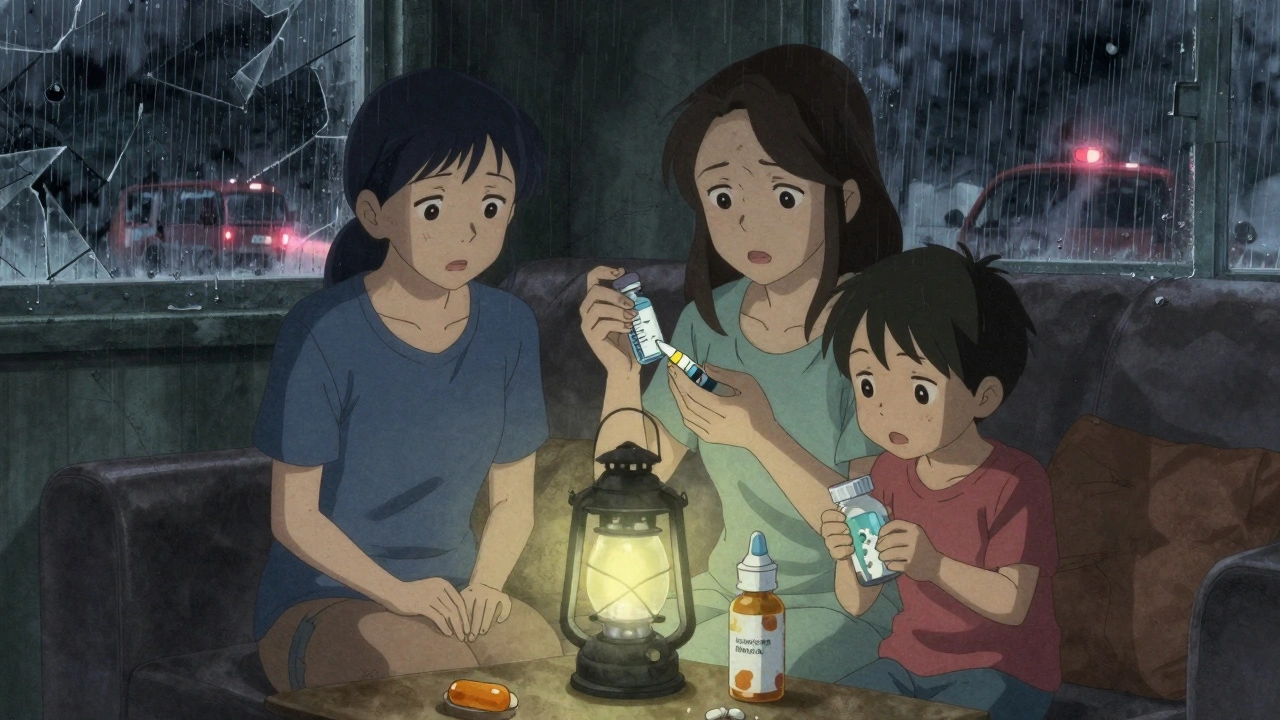
When a disaster hits-whether it’s a hurricane, wildfire, or power grid failure-your usual access to medicine can vanish overnight. Pharmacies close. Delivery routes break down. And if you’re out of your prescription, you’re left staring at that bottle on the shelf with a faded expiration date. Should you take it? Can you? Expired medication isn’t just a question of potency-it’s a life-or-death calculation in emergencies. The truth isn’t black and white. Some expired pills are still safe and effective. Others can fail you when you need them most. Knowing how to talk about this, make smart choices, and communicate risks is critical.
What Expired Really Means
Expiration dates aren’t arbitrary. They’re the last day the manufacturer guarantees the drug will work at full strength under proper storage conditions. That doesn’t mean it suddenly turns toxic on the next day. The FDA’s Shelf Life Extension Program tested over 120 drugs stored in ideal military conditions and found 88% were still stable years past their expiration. But here’s the catch: those were sealed, climate-controlled stockpiles. Your medicine, sitting in a bathroom cabinet or a hot car during a power outage, is a different story.
Stability depends heavily on the drug form and storage. Tablets like ibuprofen or acetaminophen often retain 90%+ potency for 1-5 years after expiration if kept dry and cool. Liquid antibiotics? They degrade fast. Epinephrine auto-injectors lose 2-4% potency per month after expiration. Insulin? It drops 10% per month at room temperature. And if your meds got wet during a flood? Forget it. Ninety-two percent of medications exposed to floodwater for 24 hours showed bacterial contamination.
Which Medications Are Risky to Use After Expiration?
Not all expired drugs are created equal. Some are fine. Others are dangerous. The difference comes down to criticality and degradation patterns.
High-risk expired medications:
- Insulin: A 6-month-old expired vial may deliver only 60% of the intended dose. That’s not just ineffective-it’s deadly for diabetics.
- Epinephrine: Used in anaphylaxis. If it’s expired by more than 6 months, its effectiveness drops sharply. One pharmacist on Reddit reported 60% effectiveness with 6-month-old epinephrine-but stressed doubling the dose if possible.
- Warfarin: Even small potency changes can throw off blood clotting. Studies show INR levels become unpredictable after expiration, raising stroke or bleeding risk.
- Nitroglycerin: Used for heart attacks. Loses 50% potency within 3 months of opening the bottle. If it’s expired, it may do nothing when you need it most.
- Tetracycline: Expired tetracycline can break down into toxic compounds linked to kidney damage. There are 17 documented cases since 2000.
Lower-risk expired medications:
- Acetaminophen and ibuprofen: Retain 95%+ potency up to 4 years past expiration in stable conditions.
- Amoxicillin: FDA data shows 80% efficacy up to 1 year past expiration when stored properly.
- Antihistamines: Like loratadine or diphenhydramine. Usually stable for years.
During Hurricane Maria, 42% of Puerto Ricans used expired meds. For pain or allergies, 78% reported relief. For chronic conditions like diabetes or heart disease? 22% had treatment failure. That’s the gap between safe and risky.
When It’s Okay to Use Expired Medication
There’s no universal rule. But there is a decision framework backed by emergency medical guidelines.
The FDA’s 2023 guidelines suggest a 5-step check:
- Look at the pill. If it’s discolored, cracked, crumbly, or smells off-throw it out. Over 70% of degraded meds show visible signs.
- Check storage history. Was it exposed to heat above 86°F (30°C) for more than 48 hours? Or to water? If yes, discard. Heat speeds chemical breakdown by 15-25%.
- Ask: Is this life-saving? If it’s for a chronic condition like epilepsy, heart failure, or asthma-don’t risk it. If it’s for a headache or mild allergy? Probably fine.
- How long past expiration? For non-critical meds, 1-2 years is often acceptable. For critical ones, even 6 months can be too long.
- Can you get advice? Telehealth access is rare in disasters, but if you can reach a pharmacist or doctor-even by text-ask. In 2022, only 38% of rural disaster zones had telehealth access. Don’t wait for it. Use your judgment.
Emergency guidelines from the American Pharmacists Association allow pharmacists in 48 states to dispense up to a 72-hour emergency supply without a prescription during declared emergencies. That’s your best backup plan. Know your local pharmacy’s policy.
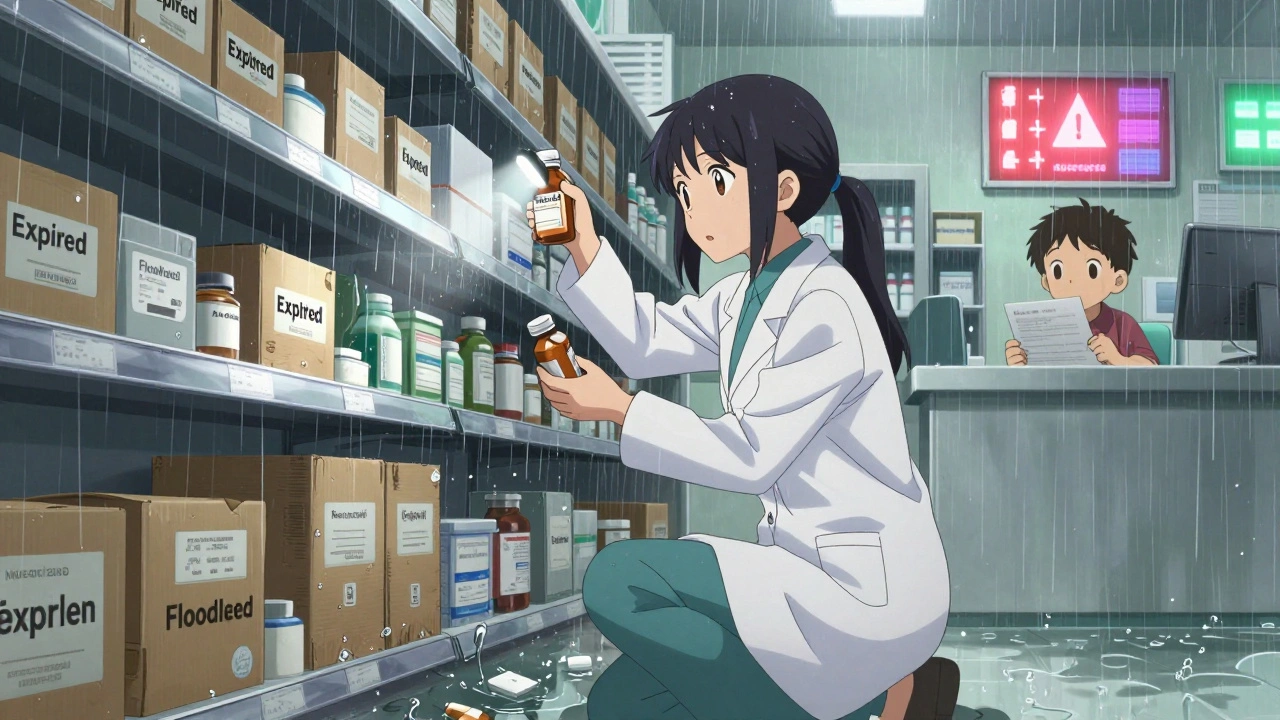
Real Stories from the Field
After the 2020 California wildfires, 63% of evacuees used expired meds. Most had no issues with painkillers. But 37% of those taking expired lisinopril for high blood pressure saw no improvement. One man’s systolic pressure spiked to 190 after taking a 14-month-old pill. He ended up in the ER.
In Hurricane Ida, 47 cases were documented where expired albuterol inhalers were used. Half to 70% of patients got relief-if the inhaler was less than a year past expiration. Beyond that? No effect. One woman with asthma went into respiratory distress because her 2-year-old inhaler didn’t work. She survived, but barely.
And then there’s the dark side. A 2023 Johns Hopkins study found that 28% of people who used expired antibiotics developed resistant infections-compared to just 8% with fresh ones. That’s not just ineffective treatment. That’s creating superbugs.
What You Can Do Before Disaster Strikes
Waiting until the storm hits to think about this is too late. Here’s how to prepare:
- Rotate your stock. Use the oldest meds first. Don’t just stash them away. Check expiration dates every 6 months.
- Store properly. Keep meds in a cool, dry place-not the bathroom. A locked drawer in a bedroom closet is ideal.
- Keep a list. Write down what you have, when it expires, and what it’s for. Include dosages. Give a copy to a family member.
- Know your critical meds. If you take insulin, warfarin, or epinephrine, keep a 30-day extra supply. Talk to your doctor about getting a prescription for an emergency stash.
- Find your local emergency pharmacy. Call ahead. Ask if they participate in emergency dispensing programs. Know their rules.
The pharmaceutical industry is starting to respond. In October 2023, major drugmakers pledged to extend shelf lives of critical meds by 6-12 months through better packaging. That’s promising. But it won’t help you today. Your best defense is preparation.
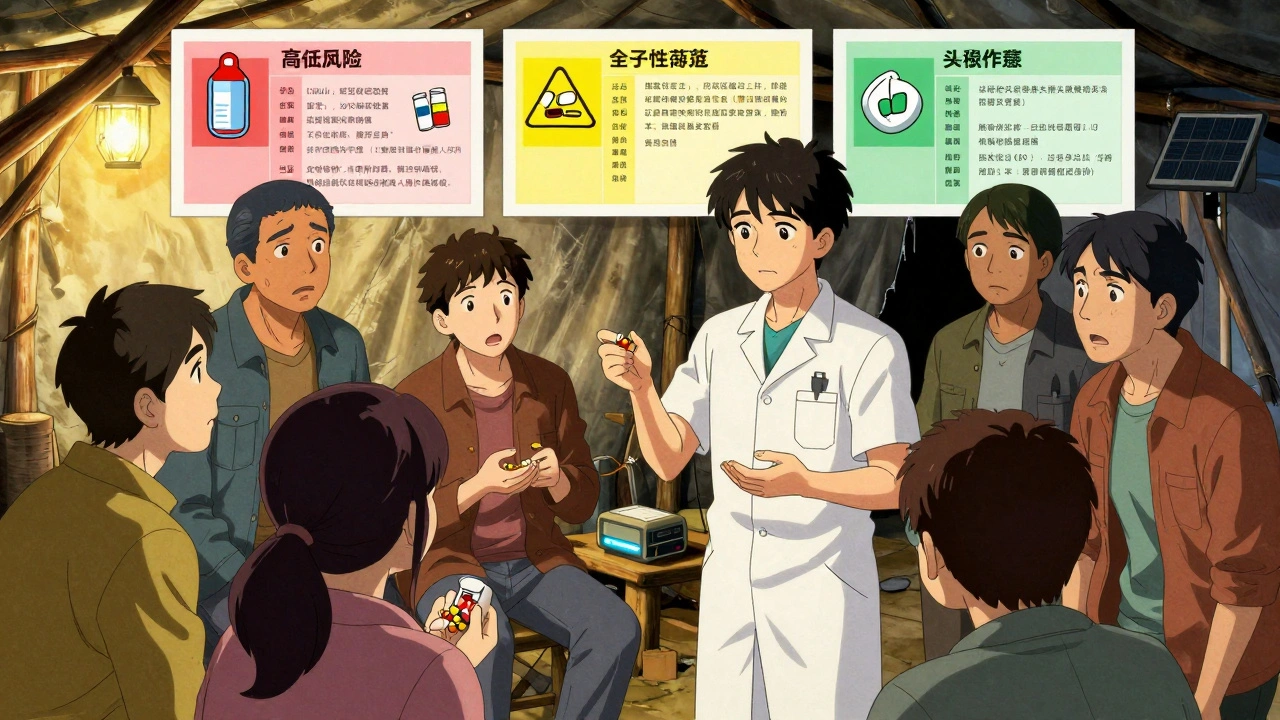
How to Talk About It Without Causing Panic
When you’re in a crisis, people panic. Someone might grab an expired insulin pen and say, “It’s better than nothing.” And they’re right-sometimes it is. But saying that out loud without context can lead to disaster.
Instead, use clear, calm language:
- “This insulin expired 8 months ago. It might not work right. Let’s try to find a new one before we use it.”
- “This amoxicillin is 2 years old, but it’s sealed and stored in the dark. It’s probably fine for this infection. But if you don’t feel better in 2 days, we need help.”
- “I know this epinephrine is expired, but if you’re having trouble breathing, we use it anyway. Then we call 911 immediately.”
Don’t say, “It’s fine.” Don’t say, “Never use it.” Say, “Here’s what we know. Here’s the risk. Here’s what we’ll do next.”
Emergency responders and community health workers need training on this. Only 61% of U.S. community pharmacists have completed the required 4-hour emergency response training. That’s not enough. If you’re a caregiver, a teacher, or a neighbor who helps others-learn the basics. Know the difference between a painkiller and a life-saver.
What’s Coming Next
The CDC is rolling out a new color-coded decision matrix in January 2024 to help first responders and families quickly assess expired meds. The NIH is funding a $4.7 million project to build portable devices that can test drug potency in under 5 minutes-like a breathalyzer for pills. Prototype testing starts this hurricane season.
But until then, the tools you have are your eyes, your knowledge, and your judgment. Expired medication isn’t a yes-or-no question. It’s a layered decision based on what the drug is, how long it’s been out, how it was stored, and what happens if you don’t use it.
Disasters don’t wait for perfect conditions. Neither should your preparedness.
Is it safe to take expired antibiotics during a disaster?
It depends. For non-life-threatening infections like sinusitis or ear infections, antibiotics like amoxicillin may still be effective up to 1 year past expiration if stored properly. But for serious infections like pneumonia or sepsis, don’t risk it. Expired antibiotics can fail, leading to worsening illness or antibiotic resistance. Studies show 28% of people who used expired antibiotics developed resistant infections. Always prioritize fresh meds if available.
Can expired insulin still work?
Expired insulin loses potency quickly-at about 10% per month at room temperature. A 6-month-old vial may deliver only 60% of the required dose. For someone with diabetes, that’s dangerous. Blood sugar can spike dangerously high or crash without warning. Never rely on expired insulin unless it’s a last resort with no other option, and even then, seek medical help immediately after use.
What should I do if my medication got wet in a flood?
Throw it away. Medications exposed to floodwater for more than 24 hours are highly likely to be contaminated with bacteria, mold, or sewage. The FDA found 92% of flooded meds showed signs of contamination. Even if the pill looks fine, it’s not safe. Water damage is not reversible. Replace it as soon as possible.
Can I use expired epinephrine in an allergic reaction?
If you’re having a severe allergic reaction and have no other option, yes-use the expired epinephrine. It’s better than nothing. But effectiveness drops significantly after 6 months. One pharmacist reported 60% effectiveness with a 6-month-old auto-injector. Use it, then call 911 immediately. Do not delay emergency care.
How do I know if a pill is still good after expiration?
Check three things: appearance, storage, and time. If the pill is discolored, cracked, sticky, or smells strange-discard it. If it was stored in heat, humidity, or sunlight for over 48 hours, discard it. If it’s more than 2 years past expiration and it’s a critical drug (like insulin or warfarin), don’t use it. For simple pain relievers like ibuprofen under 2 years expired and stored properly, it’s likely still effective.
Are there legal issues with using expired medication in an emergency?
No, not if it’s for personal use during a declared emergency. The 2022 PREP Act allows pharmacists to dispense emergency supplies without prescriptions, and individuals are protected under Good Samaritan principles when using expired meds out of necessity. However, giving expired meds to others or using them for non-emergency reasons could carry legal risk. Use only for yourself or immediate family in a true crisis.
11 Comments
James Kerr
3 December, 2025Honestly? I’ve used expired ibuprofen after a hurricane. Still worked like a charm. Don’t panic, just check if it looks weird.
Ignacio Pacheco
4 December, 2025So let me get this straight - the FDA says 88% of drugs are fine in a climate-controlled bunker, but your bathroom cabinet is basically a science experiment? Thanks for the update, Captain Obvious.
Makenzie Keely
6 December, 2025I appreciate how thorough this is - especially the breakdown of which meds are risky versus which are just... kinda old. But can we talk about how few people actually rotate their medicine cabinet? I’ve seen people with pills from 2012 labeled 'for anxiety' - and they still take them. Like, no, Karen, that’s not a charm.
Chloe Madison
7 December, 2025This is the kind of info every parent, teacher, and community leader needs to know. I printed this out and taped it to my fridge. If you’re reading this and you’ve got insulin, epinephrine, or warfarin - go check your expiration dates. Right now. Don’t wait for the power to go out.
Kara Bysterbusch
9 December, 2025The cultural dimension here is fascinating - in many low-resource communities, expired pharmaceuticals are not merely a matter of convenience but of survival. In parts of rural Appalachia and the Deep South, where pharmacy access is limited and transportation is unreliable, the decision to use an expired medication is not negligence - it is pragmatism. We must not pathologize this behavior; we must address the systemic failures that make it necessary. The FDA’s guidelines, while scientifically sound, are written for a world where refrigeration, clean water, and telehealth are guaranteed - they are not, and never have been, universal.
Joykrishna Banerjee
9 December, 2025LMAO at the 'FDA says 88% are fine' narrative. You realize those were stored in military-grade vaults, right? Meanwhile, my cousin in Texas kept his insulin in a car during a 110°F heatwave. He's alive today because he's dumb, not because the pill was 'stable'. This whole post reads like a pharmaceutical ad disguised as public service.
Vincent Soldja
10 December, 2025The data is solid. The tone is excessive. Just give me the bullet points.
Kidar Saleh
10 December, 2025In the UK, we have a national medicine take-back scheme - expired or unused drugs are collected and safely disposed of. We don’t rely on citizens making life-or-death decisions based on whether a pill looks 'crumbly'. This isn’t preparedness - it’s a failure of public infrastructure. And yet, here we are, telling people to judge their insulin by its smell.
Katherine Gianelli
12 December, 2025I’ve been a paramedic for 18 years. I’ve seen people use expired epinephrine and survive. I’ve also seen people die because they waited for a 'perfect' dose. The truth? A little bit of epinephrine is better than none. A little bit of insulin is better than none. But you need to know your limits. And you need to call 911 immediately after. Don’t be proud. Don’t be stubborn. Just act.
Francine Phillips
12 December, 2025I’ve got a 3-year-old amoxicillin in my drawer. It’s been in a drawer. It looks fine. I’m not using it. Not because I’m scared - because I’m lazy. And honestly? That’s the real problem.
Jim Schultz
14 December, 2025Let’s be real - this whole article is just a fancy way of saying 'use your judgment.' But you know what? Most people don’t have judgment. They have Google. And Google says 'expired = poison.' So they throw it out. And then they go to the ER and pay $1,200 for a $2 pill. Meanwhile, the pharmaceutical industry is laughing all the way to the bank because they just made you buy a new bottle. The real crisis isn’t expired meds - it’s the profit-driven healthcare system that makes you dependent on them.