
Keeping a clear, up-to-date list of every medication you take isn’t just a good habit-it’s a lifesaver. Nearly 7,000 people in the U.S. die each year from preventable medication errors, and a shocking number of those happen because doctors and pharmacists simply didn’t know what you were taking. It’s not just about prescriptions. It’s the aspirin you grab for a headache, the fish oil you swallow with breakfast, the magnesium you take at night, or that herbal tea your aunt swears by for sleep. If it’s in your medicine cabinet, it belongs on your list.
Why Your Medication List Matters More Than You Think
Think about the last time you visited a new doctor, went to the ER, or got discharged from the hospital. How many times did they ask, “What meds are you on?” You probably rattled off the big ones-the blood pressure pill, the diabetes medicine, maybe the antidepressant. But what about the ibuprofen you take twice a week? The vitamin D? The melatonin? If you leave those out, you’re leaving gaps that can lead to dangerous drug interactions. A 2023 study in the Annals of Internal Medicine found that when pharmacists reviewed accurate medication lists, they cut adverse drug events by over 31%. That’s not a small number. That’s thousands of hospital stays, ER visits, and even deaths avoided every year. The Joint Commission, which sets safety standards for hospitals across the U.S., now requires medication reconciliation at every transition of care. That means every time you move from hospital to home, from one doctor to another, your meds need to be checked and confirmed. And that starts with you.What to Include on Your Medication List
Don’t just write down names. You need details. A vague list like “blood pressure medicine” won’t help anyone. Here’s exactly what to include for every medication:- Drug name-both brand and generic (e.g., Lisinopril, also sold as Zestril)
- Strength and dose-how much you take (e.g., 10 mg)
- Frequency-how often (e.g., once daily, twice a week)
- Route-how you take it (e.g., by mouth, patch, inhaler)
- Purpose-why you’re taking it (e.g., “for high blood pressure,” “for joint pain”)
- Last time taken-especially important if you’ve missed a dose
- Prescribing provider-who wrote the script (e.g., Dr. Chen, Cardiology)
Choose the Right Format for You
There’s no one-size-fits-all way to keep your list. Pick the method that fits your life. Paper list-simple, reliable, no batteries needed. The FDA’s free “My Medicines” template is a great starting point. Print it out, fill it in, and keep a copy in your wallet, purse, or phone case. But here’s the catch: paper gets outdated fast. A 2022 study in JAMA Internal Medicine found that 43% of paper lists were wrong or incomplete. If you use paper, update it every time you change a dose or start a new drug. Smartphone apps-apps like Medisafe, MyTherapy, and CareZone let you scan barcodes, set reminders, and even share your list with family or doctors. They’re great for people who are tech-savvy or want alerts for missed doses. A 2023 study in BMJ Open showed users of these apps missed 28% fewer doses. But here’s the problem: only 35% of adults over 65 regularly use them. If you’re not comfortable with phones, this isn’t your best bet. EHR portals-if your doctor uses Epic, MyChart, or another electronic health record system, you may already have a digital list built into your patient portal. These are powerful because they sync with your pharmacy and doctor’s office. But they’re only as good as the data entered. If your doctor didn’t add your fish oil, it won’t show up. Always double-check. Brown bag method-this is a simple trick: once a year, or after any hospital stay, gather every pill bottle, capsule, and supplement jar in a brown paper bag. Bring it to your doctor. They’ll lay everything out, compare it to your list, and fix any mistakes. It’s old-school, but it works. Eighty-two percent of geriatric pharmacists in a 2023 survey recommend this.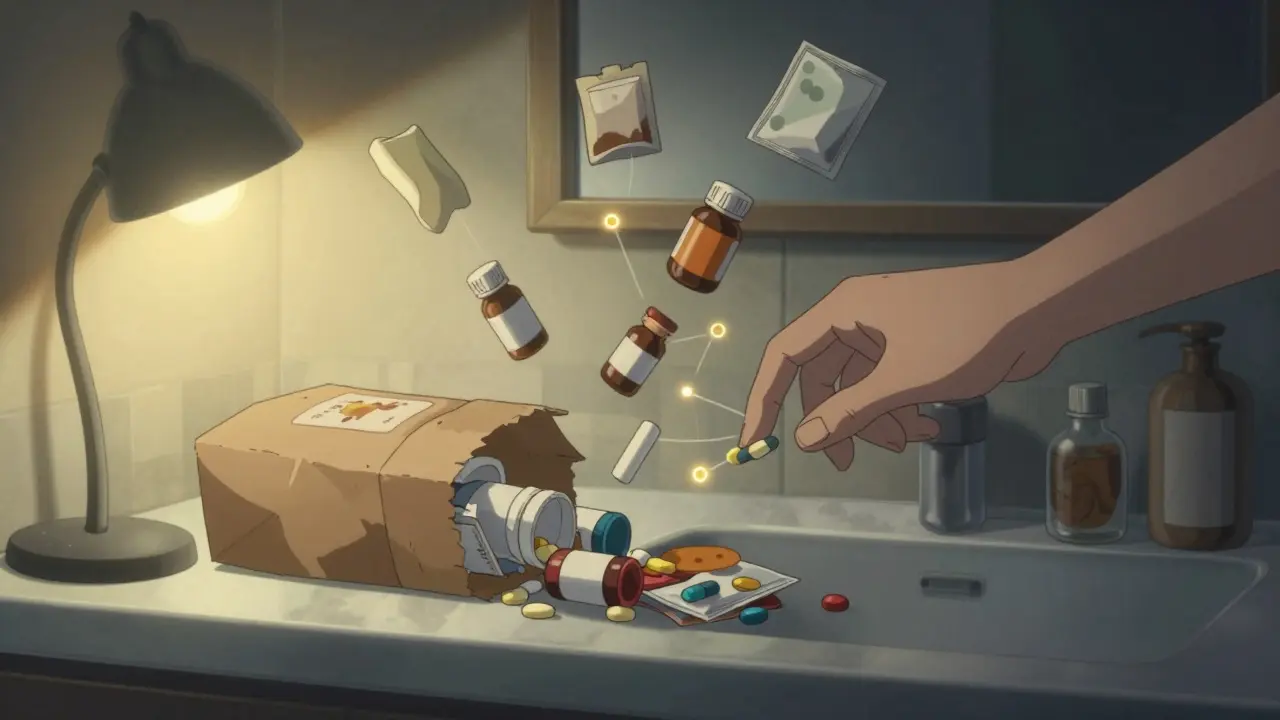
When to Update Your List
Don’t wait for your annual checkup. Update your list after every change:- After a hospital stay or ER visit
- When a doctor adds, removes, or changes a dose
- When you stop taking something-even if it was just for a cold
- When you start a new supplement or OTC drug
- After a pharmacy refill if the pill looks different
Share It With the Right People
A list that sits in your drawer isn’t helping anyone. Give copies to:- Your primary care doctor
- Any specialist you see (cardiologist, neurologist, etc.)
- Your pharmacist
- A trusted family member or caregiver
Common Mistakes to Avoid
Even people who try hard to keep lists make these errors:- Forgetting supplements-they’re not “real medicine,” but they can be just as powerful.
- Using vague names-“pain pill” isn’t enough. Is it acetaminophen? Naproxen? Tramadol?
- Not including doses-“I take two pills a day” doesn’t say if each is 5 mg or 50 mg.
- Keeping outdated lists-if you stopped a drug last month but it’s still on your paper list, that’s a red flag.
- Trusting memory alone-a 2021 study found 56% of patient-reported lists had critical errors.
Tools and Resources to Help
You don’t have to start from scratch:- FDA’s “My Medicines” template-free, printable, includes allergy sections and emergency contacts.
- American Heart Association’s medication tracker-simple worksheet for tracking doses and refills.
- Medicare Part D-many pharmacies offer free medication therapy management. Ask your pharmacist. They can review your list, spot interactions, and help you organize.
- MyChart, MyTherapy, Medisafe-digital tools with reminders and sharing features.
Final Thought: Your List Is Your Power
You don’t need to be a medical expert to keep your medication list accurate. You just need to be consistent. This isn’t about perfection. It’s about reducing risk. Every time you update your list, you’re protecting yourself from a bad reaction, a dangerous interaction, or a hospital stay. You’re also helping your doctors make better decisions faster. The system isn’t perfect. Electronic records don’t always talk to each other. Doctors are rushed. Pharmacists are overloaded. But your list? That’s something you control. Keep it current. Share it. Use it. It’s one of the simplest, most powerful tools you have for your own safety.What should I do if I can’t remember all my medications?
Start by checking your pill bottles, pharmacy labels, or any prescription receipts. Call your pharmacy-they can print a complete list of everything you’ve filled in the last year. You can also ask your doctor’s office for a copy of your medication history through your patient portal. If you’re still unsure, use the brown bag method: gather every bottle you have at home and bring them to your next appointment.
Is it okay to keep my medication list on my phone?
Yes, if you’re comfortable with it and your phone is always with you. Apps like Medisafe or MyTherapy are secure and let you share your list with caregivers. But always have a backup-print a copy or keep a paper version in your wallet. Phones can die, get lost, or crash. In an emergency, first responders may not have time to unlock your device.
Do I need to list vitamins and supplements?
Absolutely. Supplements like fish oil, St. John’s Wort, ginkgo, and even high-dose vitamin C can interact with prescription drugs. For example, St. John’s Wort can reduce the effectiveness of blood thinners, birth control, and antidepressants. Your doctor needs to know everything you’re taking-even if you think it’s “just a natural remedy.”
How often should I review my medication list?
Update it immediately after any change-new prescription, stopped drug, or dose adjustment. At minimum, review it every six months and bring it to every doctor’s visit. If you take five or more medications, aim for a full review with your pharmacist every three months. Medicare Part D covers free medication therapy management visits for people with complex regimens.
Can my pharmacist help me with my medication list?
Yes, and they’re trained to do it. Pharmacists can spot drug interactions, check for duplicates, and help you organize your pills. Many offer free Medication Therapy Management (MTM) services under Medicare Part D. Ask your pharmacist to review your list during your next refill. It takes 15-20 minutes and could prevent a serious problem.
What if I see a new doctor who doesn’t have my list?
Bring it with you. Print a copy or show it on your phone. Don’t assume they’ll have it from another provider-health systems often don’t share data. In fact, only 37% of U.S. providers can access complete medication histories across all care settings. Your list is your best tool to ensure continuity of care.
16 Comments
Kelly Weinhold
31 January, 2026OMG this is such a game-changer. I used to just rely on my memory and ended up doubling up on my blood pressure med once-scary stuff. Now I keep a laminated card in my wallet and update it every Sunday with my pill organizer. It’s so simple but it saved me from a hospital trip last year. Seriously, if you’re on more than 3 meds, stop being lazy and make a list. Your future self will thank you.
Also, St. John’s Wort? Yeah, I took that with my antidepressant for ‘natural vibes’-turns out it tanked my meds. Learned the hard way. Never again.
Kimberly Reker
31 January, 2026Love this. I’m a nurse and I see patients come in with lists that say ‘pain pill’ or ‘that blue thing.’ It’s frustrating. But this guide? Perfect. Clear, practical, no fluff. I print this out and hand it to new patients. Even my 72-year-old mom uses the brown bag method now. She brought in 17 bottles last time-turned out she was taking two different versions of the same supplement. We fixed it before it caused a problem.
Just remember: if it’s in your cabinet, it belongs on the list. Even that ‘herbal tea’ your cousin swears by.
calanha nevin
1 February, 2026Medication reconciliation is a cornerstone of patient safety. Failure to maintain accurate lists contributes significantly to preventable adverse drug events. The Joint Commission mandates this process at every care transition. Yet compliance remains inconsistent due to patient non-engagement and fragmented health information systems. A comprehensive, standardized, and regularly updated medication list is not optional-it is a clinical imperative.
Recommendation: Use electronic health record portals where available, but always cross-reference with physical pill bottles. Do not rely on memory or unverified apps. Verify with your pharmacist quarterly.
Lisa McCluskey
2 February, 2026Been doing the brown bag thing for years. Took my whole medicine cabinet to my cardiologist last month. Turned out I’d been taking two different blood thinners because one bottle label was faded. He caught it. No big deal. But it could’ve been.
Also, don’t forget the OTC stuff. I used to think ibuprofen didn’t count. Wrong. It does. Now I list everything. Even the magnesium. Even the gummy vitamins. Just write it down. Takes five minutes.
owori patrick
3 February, 2026This is really important. In my country, many people don’t even know they need to keep a list. We think only pills matter. But supplements? Herbs? They can hurt you too. I told my uncle-he was taking garlic pills with his blood thinner. He didn’t know it was dangerous. Now he has a list. He says he feels safer. Thank you for sharing this.
Claire Wiltshire
3 February, 2026Excellent, comprehensive guide. As a healthcare professional, I can’t emphasize enough how critical accurate medication lists are. The data cited here-31% reduction in adverse events-is not anecdotal. It’s evidence-based. I encourage every patient I see to use the FDA’s My Medicines template. It’s free, accessible, and includes space for allergies and emergency contacts.
Also, if you’re on polypharmacy (five or more medications), schedule a Medication Therapy Management (MTM) session with your pharmacist. It’s covered under Medicare Part D and takes less than 20 minutes. Worth every second.
Russ Kelemen
4 February, 2026There’s something deeply human about this. We’re told to trust the system-to trust doctors, pharmacists, tech-but the truth is, the system is broken. It’s fragmented. It’s slow. It’s overwhelmed.
So what do we do? We take back control. Not with grand gestures, but with small, stubborn acts: writing down a pill name. Updating a list. Bringing a brown bag to the doctor. These aren’t chores. They’re acts of self-respect. They’re how we say: I am not a case number. I am a person who deserves to be seen.
This list? It’s not just paper. It’s your voice in a room where you’re often not heard.
Sheila Garfield
5 February, 2026My nan used to say ‘if you can’t remember it, it’s not important.’ Turns out she was wrong. I got her to start the brown bag thing after she ended up in A&E with a bad reaction. Turned out she was taking three different sleep aids and didn’t realize they all did the same thing.
Now she has a little notebook. She writes in it like a diary. ‘Monday: took the blue pill. Tuesday: forgot. Wednesday: took it again.’ It’s sweet. And it works. I keep a copy in my phone. Just in case.
Shawn Peck
6 February, 2026Y’all are making this way too complicated. Just write down your meds on a sticky note. Done. No apps. No templates. No brown bags. You’re not a pharmacist. Stop overthinking it. If you forget one, you forget one. Big deal. People have been surviving without lists for centuries.
Also, St. John’s Wort isn’t dangerous-it’s just a plant. You’re scared of nature now? LOL. Get over it.
Niamh Trihy
7 February, 2026One thing people overlook: the purpose field. Not just ‘for blood pressure’-but ‘for stage 2 HTN since 2020.’ That context helps the provider assess whether the med is still needed. I had a patient who was still on a beta-blocker prescribed after a panic attack 15 years ago. No one asked why. She was fine, but the med was causing fatigue. We tapered it. Life improved.
Details matter. Don’t skip the ‘why.’
Sarah Blevins
8 February, 2026The statistics cited here are misleading. The 31% reduction in adverse events comes from a single-center study with selection bias. The Joint Commission mandates reconciliation, but enforcement is inconsistent. Most patients do not maintain accurate lists. The real problem is systemic underfunding of pharmacy services and poor interoperability between EHRs. This article romanticizes individual responsibility while ignoring structural failure.
Do not mistake personal diligence for systemic safety.
Jason Xin
8 February, 2026So you’re telling me I have to write down my melatonin and my CBD gummies because some doctor might not know what I’m taking… but they still won’t look at the list? I’ve had three ER visits. Every time, they asked for meds. I gave them the list. They glanced at it and ordered a CT scan anyway.
It’s performative safety. We’re being asked to do the work of underpaid pharmacists while the system keeps chugging along like nothing happened.
Still, I keep the list. Just in case someone actually reads it one day.
Yanaton Whittaker
9 February, 2026AMERICA NEEDS TO TAKE BACK MEDICATION SAFETY! THIS IS A LIBERAL TRICK TO MAKE US DEPENDENT ON APPS AND GOVERNMENT TEMPLATES! I TAKE MY MEDS AND I DON’T NEED NO LIST! I’M A TRUE AMERICAN! 🇺🇸💪
Also, vitamin D is a hoax. The FDA is lying to you. I get my sun from my window. That’s enough. 🌞
Kathleen Riley
10 February, 2026The epistemological foundation of the medication list rests upon the Cartesian assumption that the self can be objectively known and represented through externalized notation. Yet the very act of inscription introduces a hermeneutic gap between lived pharmacological experience and its textual abstraction. The brown bag, then, becomes a ritual of ontological verification-a phenomenological reclamation of bodily sovereignty against the algorithmic governance of the electronic health record.
One must ask: Is the list a tool of liberation-or a new form of biopolitical discipline?
Beth Cooper
10 February, 2026Okay but have you considered that the whole medication list thing is just a ploy by Big Pharma to make you think you need more pills? I checked my list and realized I’ve been taking the same 3 things for 10 years. But now I’m supposed to update it every time I take a gummy? What’s next? A QR code on my toothbrush?
Also, my cousin’s friend’s neighbor’s dog got sick after someone gave it fish oil. Coincidence? I think not. The government wants us to track everything so they can control us. I only list the meds they force me to take. Everything else? I trust my gut. 🐶💊
Kelly Weinhold
11 February, 2026Shawn, I get you. I used to think the same. Then my mom had a stroke and they found out she was taking turmeric with her blood thinner. No one knew. She was fine, but it could’ve gone sideways.
It’s not about trusting Big Pharma. It’s about trusting yourself enough to know what’s in your body. I don’t care if it’s a gummy or a pill. If it’s in my cabinet, it’s on the list. That’s not paranoia. That’s being smart.