

Taking the right pills at the right time sounds simple, but for anyone managing a chronic condition, it often feels like a second full-time job. Whether it's forgetting a dose during a busy workday or feeling overwhelmed by a complex regimen, the gap between a doctor's instructions and daily reality is where many health plans fail. In fact, non-adherence costs the U.S. healthcare system roughly $300 billion every year, and most of that stems from the struggle to turn a medical plan into a sustainable habit. The secret to closing this gap isn't more willpower-it's better goal-setting.
When you move away from vague intentions like "I'll try to remember my meds" and start using structured frameworks, the results change. Using structured goal setting can increase adherence in chronic care programs by up to 35%. By turning abstract medical advice into concrete, trackable milestones, you stop guessing and start managing. Here is how to actually make that happen.
Key Takeaways
- Use the SMART or B-SMART frameworks to turn vague intentions into clear actions.
- Identify "Barriers" first to prevent goals from failing before they start.
- Combine low-tech tools (pill counts) with high-tech options (smart bottles) for 98% accuracy.
- Focus on "small wins" and visual progress charts to maintain long-term motivation.
The Blueprint for Goals That Actually Work
Most people fail at their health goals because they are too broad. "Being healthier" isn't a goal; it's a wish. To get real results, you need a system. The most effective method used in healthcare today is the SMART framework, a structured approach to goal setting that ensures objectives are Specific, Measurable, Achievable, Relevant, and Time-bound. It transforms a vague desire into a checklist.
To make a goal SMART, you have to answer these five questions:
- Specific: What exactly am I doing? (e.g., "I will take my blood pressure medication every morning at 8 AM with a glass of water.")
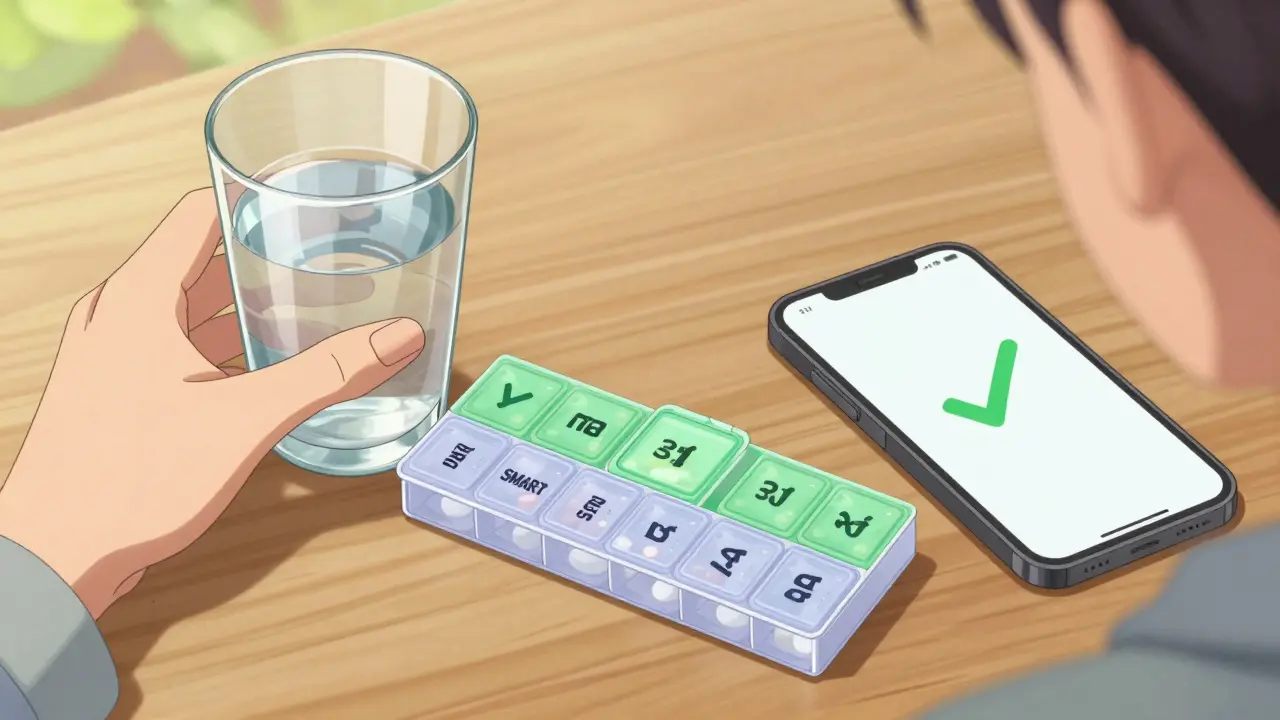
- Measurable: How do I prove I did it? (e.g., "I will check off my pill box each day.")
- Achievable: Is this realistic? If you struggle to wake up early, an 8 AM goal might be too hard; 9 AM might be better.
- Relevant: Why does this matter? (e.g., "Doing this will lower my risk of stroke.")
- Time-bound: When will I review my progress? (e.g., "I'll track this for 30 days and then check my blood pressure readings.")
For those facing more complex challenges, the B-SMART framework, developed by the NCPA, which adds the identification of 'Barriers' as the primary step before setting the goal is even better. This version forces you to ask: "What is actually stopping me?" Is it the cost of the drug? Forgetfulness? Fear of side effects? By addressing the barrier first-like setting a phone alarm to combat forgetfulness-the goal becomes significantly easier to reach.
Choosing Your Tracking Method
You can't manage what you don't measure. The problem is that self-reporting is notoriously unreliable. Research shows that people often overestimate their adherence by 30-40% because of recall bias-we simply forget the doses we missed. To get an honest picture of your progress, you need a verification system.
Depending on your comfort level with technology, you can choose from several tracking layers:
| Method | Reliability | Best For... | Main Pro |
|---|---|---|---|
| Manual Logs/Checklists | Low-Medium | Simple regimens | No cost, total privacy |
| Pharmacy Refill Records | Medium | Long-term trends | Zero effort for patient |
| Smart Pill Bottles | Very High (98%) | High-risk meds | Real-time alerts |
| Digital Pens/Inhalers | Excellent (99%+) | Diabetes/Asthma | Precise dose tracking |
If you prefer digital tools, Medisafe a popular medication management app that provides reminders and tracking for users is a great entry point. For those with severe conditions, sensor-based tools like the NovoPen Echo an e-injection pen that records dosing history with high accuracy can reduce missed doses by as much as 34% by removing the guesswork entirely.
Overcoming Common Roadblocks
Even with a perfect plan, life happens. The most common reason goals fail isn't a lack of effort, but a lack of adjustment. If you find yourself missing doses, don't view it as a failure; view it as a data point. If you consistently miss your 8 AM dose because you're rushing to get kids to school, the Achievable part of your SMART goal is broken. Move the goal to 10 AM or tie it to a different habit, like brushing your teeth.
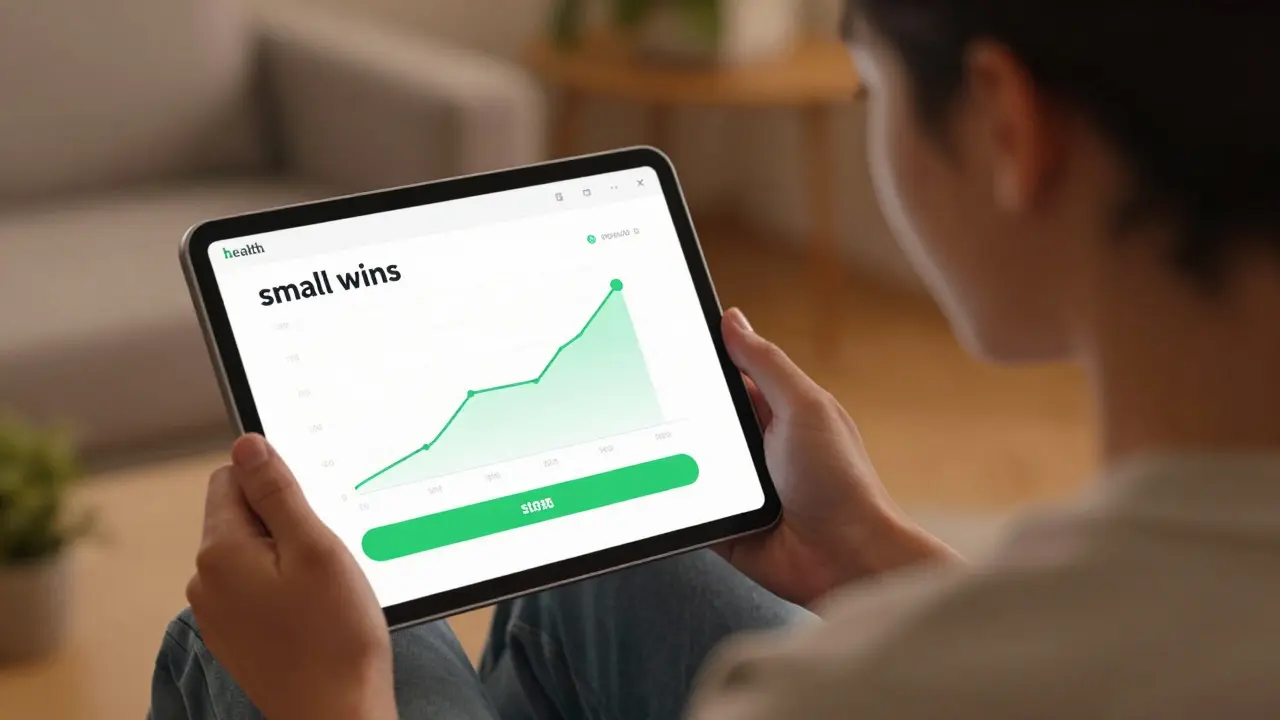
Another major hurdle is the "all-or-nothing" mentality. Many patients feel that if they miss one day, the whole week is ruined. To fight this, use the "small win" strategy. Instead of focusing on a 100% perfect month, celebrate a 3-day streak. This creates a positive feedback loop. One diabetes educator noted that celebrating a small initial weight loss with a simple sticker chart actually increased a patient's weigh-in frequency from two days a week to five.
For those using Electronic Health Records digital versions of a patient's paper chart, used by providers to track health data and goals like Epic or Cerner, you can request that your provider integrate your goals directly into your patient portal. This allows you to see your progress visually, which is preferred by 78% of chronic disease patients over simple text updates.
Advanced Strategies for Long-Term Success
Once you've mastered the basics, you can move toward more sophisticated management. This involves shifting from simple adherence to outcome-based tracking. This means you stop just asking "Did I take the pill?" and start asking "Is the pill working?"
This is where Patient-Reported Outcome Measures standardized questionnaires that allow patients to report their health status and symptoms directly (PROMs) come into play. By tracking your symptoms alongside your medication adherence, you can see the direct correlation between taking your meds and feeling better. For example, someone with asthma might use a peak flow meter to see that their lung function improves exactly when their adherence to their inhaler goal hits 90%.
We are also seeing the rise of AI-powered adaptive goals. New systems can now predict adherence failures up to 14 days in advance by recognizing patterns in your behavior. While these aren't in every clinic yet, the trend is moving toward "adaptable SMART" goals-plans that change based on your current resources, stress levels, and health data.
What if I can't afford my medication, making my goal unattainable?
This is a primary "Barrier" in the B-SMART framework. In this case, your goal should shift from "taking the med" to "finding a way to access the med." This might include goals like "Call my doctor to ask for a generic alternative by Friday" or "Research two pharmaceutical assistance programs by next Tuesday." Once the cost barrier is solved, you can reset your adherence goal.
How often should I review and change my adherence goals?
For the first month, a weekly check-in is ideal to iron out the kinks. After your routine stabilizes, moving to a bi-weekly or monthly review is usually sufficient. If you notice a dip in your metrics (like a rise in HbA1c levels for diabetics), that's a signal to revisit your SMART goals immediately.
Do I really need a digital app to track my meds?
No, but the tool should match your struggle. If you forget to take the pill, an app with reminders is a game-changer. If you take the pill but forget if you did it, a physical pill organizer (pill box) is more effective. The best system is the one you actually use consistently.
What is the 'Medication Possession Ratio' and why does it matter?
The Medication Possession Ratio (MPR) is a way pharmacies and doctors measure how often you have the medication on hand. It's calculated by dividing the number of days the medication was supplied by the number of days in the period. If your MPR is low, it means you're running out of meds too early or not refilling them on time, which is a clear indicator that your 'Time-bound' or 'Achievable' goals need adjusting.
How can I help a family member who struggles with these goals?
Focus on shared decision-making. Instead of telling them what to do, ask "What makes it hard to take this pill?" Use the B-SMART approach to identify the barrier together. If they are older adults, avoid forcing complex apps, as over 50% of seniors abandon them within 30 days. Stick to visual aids and simple checklists.
Next Steps for Different Needs
If you are a beginner: Start with one single medication. Set a SMART goal for just that one drug for 14 days. Use a simple calendar and put a big checkmark every day you succeed. Don't overcomplicate it until the first habit sticks.
If you are managing multiple chronic conditions: Use a "clustering" technique. Group your medications by time of day and create a single goal for the "Morning Cluster." This reduces the mental load from five separate goals to one combined routine.
If you are a caregiver: Focus on the environment. Instead of nagging, help the patient set up a "medication station" near something they do every day, like the coffee maker. Use a shared tracking sheet so both of you can see the progress without the patient feeling monitored.