
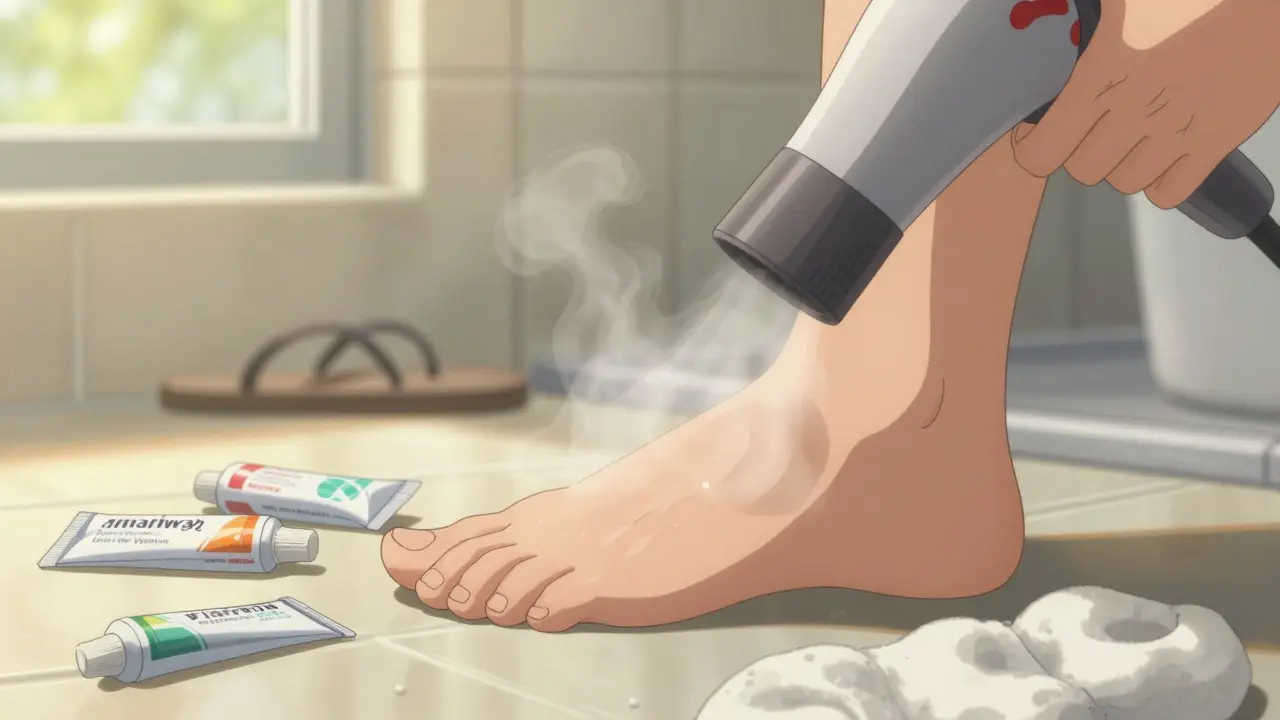
Most people think athlete’s foot is just a itchy, flaky problem you get after the gym or a trip to the pool. But if you’ve had it before, you know it’s more than that. It can come back again and again - even after you think it’s gone. The good news? Over-the-counter (OTC) antifungal treatments work well for most cases, terbinafine being the most reliable. But only if you use them right.
What’s Really Causing Your Foot Itch?
Athlete’s foot, or tinea pedis, isn’t caused by poor hygiene alone. It’s a fungal infection, usually from dermatophytes like Trichophyton rubrum. These fungi thrive in warm, damp places - your sweaty socks, your locker room floor, your closed sneakers. You don’t need to be an athlete to get it. Anyone who wears tight shoes for hours, walks barefoot in public showers, or shares towels is at risk. Around 1 in 5 people have it at any given time, especially in humid climates like Sydney’s summer months.OTC Treatments: What’s Actually in the Bottle?
You’ll find dozens of OTC creams, sprays, and powders on the shelf. But not all are created equal. The active ingredients matter more than the brand name.- Terbinafine (Lamisil AT): Fungicidal - kills the fungus. One application a day for 1 to 2 weeks. Works fast: most people see improvement in 3-5 days, full clearance in 7-14 days. Cure rate: 83%.
- Clotrimazole (Lotrimin Ultra): Fungistatic - stops growth. Needs twice-daily use for 2-4 weeks. Good for mixed infections (yeast + fungus). Cure rate: 74%.
- Miconazole (Micatin): Similar to clotrimazole. Also twice daily. Works well for itching and redness.
- Tolnaftate (Tinactin): Older option. Only 60-65% effective. Best for mild cases between toes. Often sold as powder.
- Undecylenic acid: Found in powders. Less potent. Often used for prevention.
Terbinafine stands out because it doesn’t just slow the fungus - it kills it. That’s why it’s the top pick for most podiatrists. Clotrimazole is a solid second, especially if your skin is irritated or you have other types of fungi mixed in.
Which Formulation Should You Choose?
Creams, sprays, powders - each has a role.- Creams (65% of use): Best for dry, cracked, scaly skin on the sole or sides of the foot. Easy to apply, stays put.
- Sprays (20%): Great for hard-to-reach areas, sweaty feet, or if you hate sticky residue. Convenient for daily use. Many users prefer them because they’re quick and mess-free.
- Powders (10%): Ideal for moist, soggy skin between the toes. Also excellent for preventing recurrence. Sprinkle inside shoes and socks daily. Tolnaftate powder costs under $9 and lasts months.
- Gels and liquids: Rarely needed unless you have nail involvement. Stick with creams or sprays for skin.
If you’re active, use a spray during the day and a cream at night. If you’re older or have trouble gripping bottles, once-daily terbinafine cream is easier to stick with than twice-daily options.
How to Use It Right - The 5-Step Rule
Using the product isn’t enough. How you use it makes all the difference. Most people fail because they skip these steps.- Wash and dry thoroughly. Use soap and water. Then - and this is critical - dry your feet completely, especially between the toes. Use a hairdryer on cool for 30 seconds. Moisture is the enemy.
- Apply to the infected area AND a 1-inch border around it. Fungi spread invisibly. Don’t just treat the red patch. Extend the treatment beyond what you can see.
- Apply only a thin layer. Thick globs don’t work better. They just sit on top. A pea-sized amount covers both feet.
- Use it every day, no exceptions. Skip one day? You risk letting the fungus bounce back. Set a phone reminder.
- Keep going after it looks gone. For terbinafine, use it for the full 1-2 weeks. For clotrimazole, 4 weeks. Stopping early is why 63% of cases come back.
A user on Drugs.com shared: “Terbinafine cleared my mild case in 6 days - but I had to dry my feet with a hairdryer every time. Missed one day, and it took 2 extra days to fix.” That’s the rule.
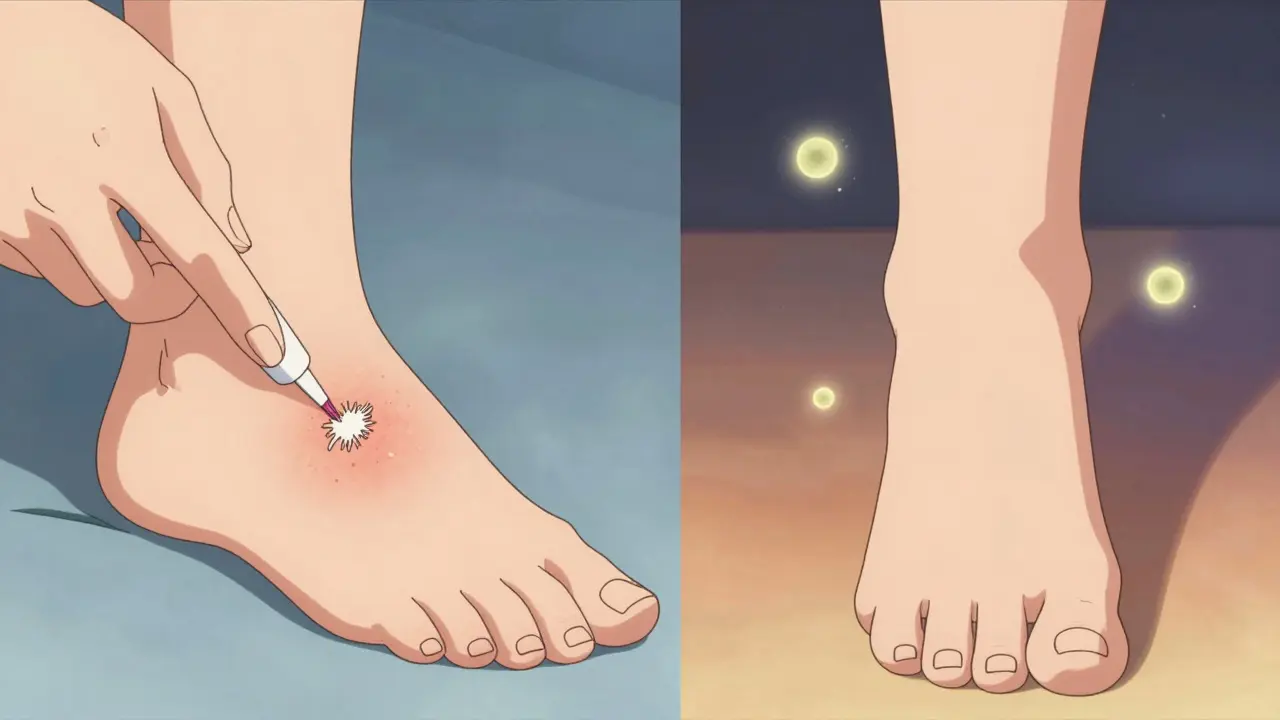
What to Avoid - Common Mistakes
People make the same mistakes over and over. Here’s what not to do:- Don’t treat just one foot. Even if only one foot looks infected, apply treatment to both. Fungi hide.
- Don’t wear the same socks or shoes. Change socks daily - cotton is best. If you’re sweating a lot, change twice.
- Don’t ignore your shoes. Fungi live in your sneakers. Spray them daily with antifungal powder or use UV shoe sanitizers. Rotate shoes so each pair gets 48 hours to dry out.
- Don’t use the same towel for your feet and body. Use a separate towel, wash it after each use, and dry it completely.
- Don’t use expired products. Antifungals lose potency after 1-2 years. Check the expiration date.
When to See a Doctor
OTC treatments work for 85% of cases. But if you’re in this group, you need help:- Your skin is cracked, bleeding, or oozing pus.
- The infection spreads beyond your feet to your nails or hands.
- You’ve used two different OTC treatments for 2 weeks with no improvement.
- You have diabetes, weak immunity, or poor circulation.
Diabetics are at high risk. A small cut with fungus can turn into a serious infection. If you’re diabetic and have any foot changes, see a podiatrist immediately.
Prescription options include oral terbinafine (250mg daily for 2 weeks), itraconazole, or topical ciclopirox. These are stronger, faster, and better for stubborn cases. But they’re not needed for most people.
Prevention Is the Real Win
The best treatment is the one you never need. Prevention cuts recurrence by 63%.- Wear flip-flops in gyms, pools, and locker rooms.
- Use antifungal powder in shoes every morning - even when you’re not infected.
- Choose moisture-wicking socks (merino wool or synthetic blends), not cotton.
- Let your feet breathe. Wear open sandals when you can.
- Wash your feet daily and dry them like your life depends on it.
Most people stop prevention as soon as the itch goes away. That’s when the fungus sneaks back. Stay consistent. It’s not glamorous, but it works.

Real Results - What Users Say
On Reddit, 74% of users who used Lamisil AT consistently reported full recovery in under 2 weeks. On Amazon, Lotrimin Ultra has 4.2 stars from over 14,000 reviews. Common praise: “Itching gone in 24 hours.” Common complaint: “Didn’t work because I stopped too soon.”One user wrote: “I used clotrimazole twice a day for 3 weeks. My skin looked normal at day 10. I stopped. Two weeks later - back again. This time, I finished the full 4 weeks. Still clean 8 months later.”
That’s the pattern. Speed isn’t the goal. Completion is.
What’s Next in Treatment?
New products are coming. Some now combine antifungals with dimethicone to create a moisture barrier. Others use nano-emulsions to deliver the drug deeper into the skin - potentially cutting treatment time to just 3-5 days. But these aren’t widely available yet.One warning: Antifungal resistance is rising. Terbinafine resistance in Trichophyton rubrum has jumped from 0.2% in 2010 to 1.7% in 2023. That’s why using the right drug, correctly, matters more than ever.
Can I use athlete’s foot cream on my hands?
Yes, if you have the same fungal infection on your hands (tinea manuum). But don’t use the same cream on your feet and hands without washing your hands first. Fungi can spread from foot to hand. If you’re unsure, treat them separately.
Is athlete’s foot contagious?
Yes. It spreads through direct contact with infected skin or contaminated surfaces like shower floors, towels, or shoes. It’s not airborne, but sharing socks or walking barefoot in public areas increases your risk.
Why does my athlete’s foot keep coming back?
Mostly because you stopped treatment too early or didn’t clean your shoes and socks. Fungal spores can survive for months in footwear. Even if your skin looks fine, the fungus might still be hiding. Use antifungal powder daily in shoes and change socks twice a day.
Can I wear socks after applying antifungal cream?
Yes, but wait 10-15 minutes after applying to let it absorb. Wear clean, dry socks - preferably cotton or moisture-wicking. Don’t reuse socks from the day before. Dirty socks reintroduce fungus.
Is terbinafine safe for long-term use?
Topical terbinafine is safe for the short term (1-4 weeks). It’s not meant for daily, long-term use. For prevention, use antifungal powder instead. Oral terbinafine (pills) requires medical supervision due to potential liver effects, but the cream form doesn’t enter your bloodstream in significant amounts.
Can children use OTC athlete’s foot treatments?
Yes, but check the label. Most OTC antifungals are approved for adults and children over 2 years. For younger kids, talk to a doctor first. Use the smallest amount needed and avoid getting it near the eyes or mouth.