
Rhodiola-Antidepressant Interaction Risk Checker
Risk Assessment Tool
This tool assesses your risk of serotonin syndrome when combining rhodiola with antidepressants or other medications. Based on information you provide, it will give you a risk level and specific recommendations.
Risk Assessment Result
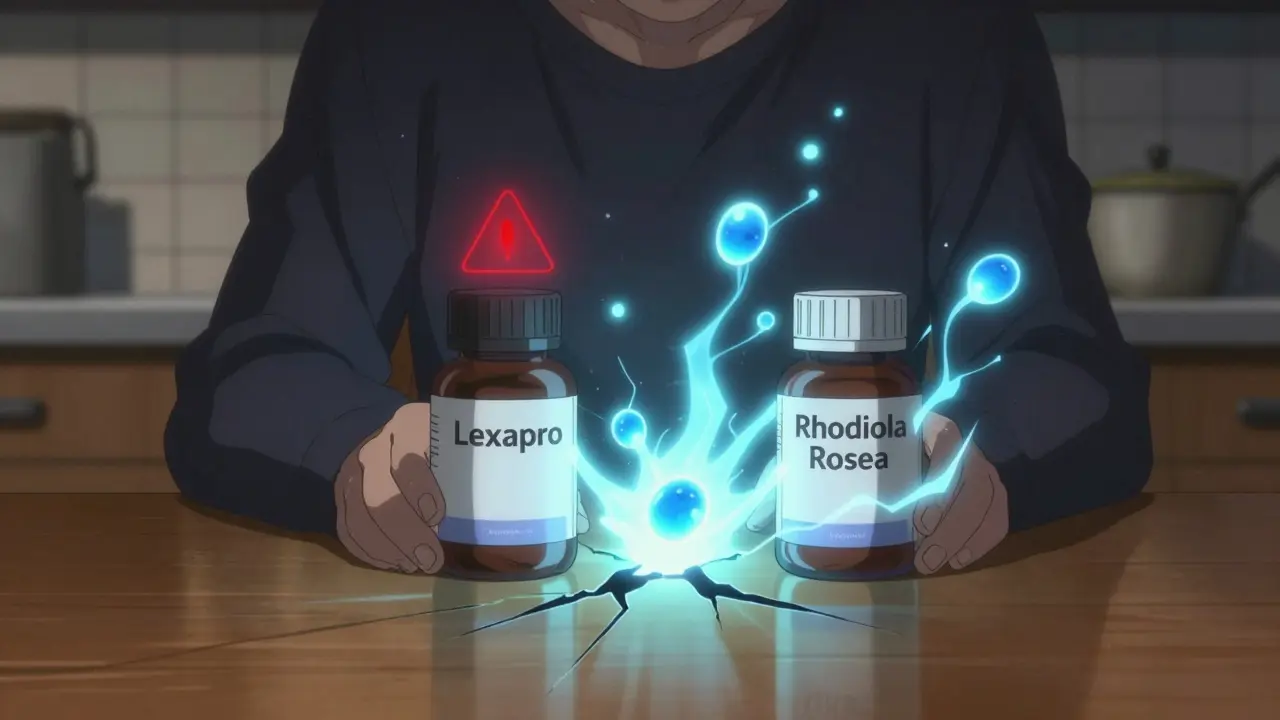
When you're struggling with low mood or burnout, it's tempting to reach for something natural. Rhodiola rosea, a plant used for centuries in cold climates, is marketed as a gentle fix for stress and mild depression. But if you're already taking an antidepressant-like Lexapro, Zoloft, or Paxil-adding rhodiola could be dangerous. This isn't theoretical. Real people have ended up in emergency rooms because they didn't know the risk.
What Rhodiola Actually Does in Your Brain
Rhodiola isn't just another herbal tea. It contains active compounds like salidroside and rosavin that affect brain chemistry. Specifically, it blocks enzymes called monoamine oxidase A (MAO-A) and COMT. These enzymes normally break down serotonin, norepinephrine, and dopamine. When they're inhibited, those mood-related chemicals build up in your brain.That sounds good-until you're already taking a drug that does the same thing. SSRIs and SNRIs stop your brain from reabsorbing serotonin, so it stays active longer. Rhodiola does the opposite: it stops serotonin from being broken down in the first place. Together, they create a double hit. Your brain gets flooded with serotonin, faster than it can handle.
Studies show rhodiola can raise serotonin levels in the brain by 20-30% in just 30 minutes. That’s not a small bump. It’s enough to push you over the edge if you're already on an antidepressant.
The Real Danger: Serotonin Syndrome
Serotonin syndrome isn’t a mild side effect. It’s a medical emergency. Symptoms include:- High fever (over 101°F)
- Shivering or muscle rigidity
- Rapid heartbeat (over 130 bpm)
- Confusion, agitation, or hallucinations
- Loss of coordination, seizures
A 2014 case report in PubMed details a 69-year-old woman who developed full-blown serotonin syndrome after taking rhodiola alongside paroxetine. She was hospitalized. She nearly died. That’s not an outlier.
On Reddit, a user wrote about adding rhodiola to their fluoxetine routine. Within 72 hours, they had a fever of 103.1°F, muscle spasms, and confusion. They went to the ER. The diagnosis: serotonin toxicity. That story isn’t rare. Amazon reviews are full of similar accounts-people describing tremors, panic attacks, and ER visits after mixing rhodiola with SSRIs.
Why This Keeps Happening
Most people don’t know rhodiola can interact with antidepressants. A 2021 survey found 63.7% of supplement users taking rhodiola with antidepressants had no idea it was risky. Why? Because labels don’t warn you.The FDA found that only 22% of rhodiola products in 2021 included any warning about antidepressant interactions. Compare that to prescription MAOIs-those come with black box warnings. Rhodiola, sold as a supplement, doesn’t have to follow the same rules.
Even worse, many products don’t even contain what they claim. A 2018 study tested 42 rhodiola supplements. Only 13.2% had the labeled amount of salidroside. Some had none. Others had contaminants. You can’t trust the bottle.

It’s Not Just Depression Medications
Rhodiola doesn’t just mess with antidepressants. It can also interfere with:- Blood pressure meds: It can lower systolic pressure by 8-12 mmHg. If you’re on lisinopril or metoprolol, that drop can make you dizzy or faint.
- Diabetes drugs: It lowers blood sugar by 15-20 mg/dL. That’s dangerous if you’re on insulin or metformin.
- Autoimmune conditions: It can boost immune activity by increasing TNF-alpha. If you have rheumatoid arthritis or lupus, this could trigger a flare.
There’s no safe combo here. Even if you’re not on an antidepressant, rhodiola isn’t harmless. It’s a potent substance with real physiological effects.
What the Experts Say
Dr. Jun J. Mao from Memorial Sloan Kettering, a leading integrative medicine expert, calls rhodiola a high-risk herb when combined with antidepressants. His team includes it in their official herb-drug interaction database with a red flag.The American Psychiatric Association’s 2022 supplement database labels rhodiola as Category X: Avoid Combination for all serotonergic antidepressants. That’s the highest warning level.
Even the European Medicines Agency added rhodiola to its monitoring list in January 2023. By 2025, all supplements sold in the EU must carry a warning about SSRI interactions.
There’s no credible medical group that says it’s safe to mix these. Not the APA. Not the ACM. Not the FDA. Not even the NIH. The only exception? A 2015 review that suggested *maybe*, under strict supervision, a very low dose (200 mg/day) could be tried for treatment-resistant depression. But even that was theoretical-no trials have proven it.
What Should You Do?
If you’re on an antidepressant and thinking about trying rhodiola:- Stop. Don’t start.
- Talk to your doctor. Not a supplement store clerk. Not a Reddit thread. Your prescriber.
- If you’ve already taken both and feel off-racing heart, fever, confusion-go to the ER immediately.
- If you want to stop your antidepressant to try rhodiola, don’t quit cold turkey. Taper under medical supervision. Then wait at least two weeks before starting rhodiola. Paroxetine, for example, stays in your system for 21 days.
There’s no shortcut here. Rhodiola isn’t a safer version of an SSRI. It’s a different kind of drug with the same dangerous potential.
What About Using Rhodiola Alone?
If you’re not on any antidepressants, rhodiola may help with fatigue, stress, or mild low mood. Studies show it can improve mental clarity and reduce burnout symptoms. One user on ConsumerLab.com said 200 mg daily eliminated their burnout without the dry mouth they got from Zoloft.But even then, be cautious. Quality matters. Look for USP-verified products. Avoid anything claiming to be a “natural antidepressant”-that’s not a legal claim. The FDA has issued 14 warning letters to rhodiola brands for making illegal health claims.
And if you have high blood pressure, diabetes, or an autoimmune condition? Talk to your doctor first. Rhodiola isn’t harmless just because it’s natural.
The Bigger Picture
The rhodiola market is growing fast-$287 million in 2022, up 41% year-over-year. More people are turning to it because they’re tired of side effects from prescription drugs. But they’re not being warned. The industry profits from ambiguity.The FDA is finally stepping in. In 2023, they documented 127 cases of serotonin syndrome linked to rhodiola and antidepressants-up from 43 in 2020. By Q3 2024, all U.S. supplements must include a black box warning about this interaction.
Until then, you’re on your own. Don’t assume natural means safe. Don’t assume a label means accurate. And don’t assume your doctor knows everything about supplements-many don’t. Be the one who asks the hard questions.
Can I take rhodiola with SSRIs like sertraline or fluoxetine?
No. Combining rhodiola with SSRIs or SNRIs can cause serotonin syndrome-a life-threatening condition. Rhodiola inhibits enzymes that break down serotonin, while SSRIs prevent its reabsorption. Together, they cause dangerous serotonin buildup. There are no safe doses confirmed by clinical trials. Avoid this combination entirely.
What are the signs of serotonin syndrome from rhodiola and antidepressants?
Symptoms include high fever (over 101°F), rapid heart rate (over 120 bpm), muscle rigidity, tremors, confusion, agitation, hallucinations, and loss of coordination. These can appear within hours to days of combining rhodiola with an antidepressant. If you experience any of these, seek emergency care immediately. Serotonin syndrome can be fatal if untreated.
Is rhodiola safer than St. John’s Wort for depression?
No. Both carry the same serotonin syndrome risk when mixed with antidepressants. St. John’s Wort has been studied longer, but rhodiola is becoming more popular because people wrongly believe it’s safer. In reality, both are high-risk. Neither should be combined with SSRIs or SNRIs. Neither is approved as a treatment for clinical depression.
How long should I wait after stopping an antidepressant before taking rhodiola?
Wait at least two weeks, but ideally three to four weeks, especially if you were on paroxetine or fluoxetine. These drugs have long half-lives and linger in your system. Memorial Sloan Kettering recommends a 14-day washout period, but for safety, extend it. Always consult your doctor before switching or adding anything.
Can I take rhodiola if I have high blood pressure or diabetes?
Rhodiola can lower blood pressure by 8-12 mmHg and blood sugar by 15-20 mg/dL. If you’re on medication for either condition, this could cause dangerous drops. You could end up with dizziness, fainting, or hypoglycemia. Talk to your doctor before using rhodiola if you have these conditions-even if you’re not on antidepressants.
Are there any verified, safe rhodiola supplements?
Look for products verified by USP (United States Pharmacopeia). Only 13.2% of tested rhodiola supplements met their label claims in a 2018 study. USP-verified products ensure accurate salidroside content and absence of contaminants. Even then, verify with your doctor before use, especially if you’re on any medications.
8 Comments
Lydia H.
20 January, 2026Been on sertraline for five years and tried rhodiola out of curiosity last winter. Didn’t know any better. Ended up with a 102.5 fever, shaky hands, and this weird buzzing in my skull that felt like my brain was trying to escape. ER said serotonin syndrome. I’m lucky I didn’t lose a day of my life. Now I tell everyone I know who’s into supplements: if it’s not on your prescription list, assume it’s a landmine.
Astha Jain
21 January, 2026fr tho why do ppl even take this stuff like its tea?? rhodiola is basically a sneaky ssri with a hippie vibe. you think ur being natural but ur just playing russian roulette with your neurochemistry. also lol at the amazon reviews where people say ‘it fixed my anxiety’ - bro you were just high on serotonin tsunami
Phil Hillson
21 January, 2026so like… the whole thing is just a scam? herbal stuff is just pharma’s ugly cousin that doesn’t have to pass any tests? i mean i get it people want out of pills but this is just giving people false hope and then almost killing them. why does the FDA let this slide? because big herb makes more money than big pharma? lol
Aman Kumar
23 January, 2026The pharmacodynamic synergy between MAO-A inhibition and SERT blockade is not merely additive-it’s multiplicative. Rhodiola’s rosavin and salidroside modulate synaptic monoamine kinetics in a manner that renders the pharmacokinetic profile of SSRIs pathologically unstable. The absence of regulatory oversight in nutraceuticals constitutes a systemic failure of harm reduction infrastructure. This is not anecdotal-it’s a predictable consequence of deregulated neuropharmacological exposure.
Jake Rudin
24 January, 2026Let me just say-this is exactly why I stopped trusting anything labeled “natural.” It’s not just rhodiola. It’s turmeric, ashwagandha, ginkgo… all of them. People think “natural” means “safe,” but the body doesn’t care if something comes from a plant or a lab-it only cares about the chemical structure. And rhodiola? It’s a potent enzyme inhibitor. That’s not a supplement. That’s a drug. And drugs need warnings. Not marketing.
Valerie DeLoach
25 January, 2026I’m a therapist who works with a lot of people trying to quit SSRIs because they think herbal stuff is “cleaner.” I’ve seen too many come in terrified after a weekend of mixing rhodiola and fluoxetine. The worst part? They feel guilty. Like they failed. But no-you didn’t fail. The system failed you. Labels don’t warn you. Doctors don’t ask. The internet sells it like a wellness miracle. And now you’re in the ER wondering why your muscles won’t stop shaking. This isn’t your fault. It’s the industry’s.
That’s why I keep a printed handout in my office: “Herbs That Can Kill Your Serotonin.” I hand it out like candy. Because if I don’t, someone else won’t. And someone else might die.
Josh Kenna
26 January, 2026wait so if i stop my zoloft for 2 weeks then start rhodiola im safe right? i mean i did the research and the article says 2 weeks… but i also read on a forum that paroxetine sticks around for 3 weeks? so like… do i wait 3? 4? what if i just take half the dose? i dont wanna go to the er but i also dont wanna feel numb anymore…
Malikah Rajap
28 January, 2026Josh, I feel you so much… I went through that exact same spiral last year. I tapered off my SSRI over 10 weeks, waited 5 weeks, then tried rhodiola… and guess what? Still got dizzy. Still felt off. Turns out my brain had gotten used to the chemical crutch. Rhodiola didn’t fix it-it just made me feel like I was floating in molasses. I ended up going back on a tiny dose of my old med, and now I’m doing better than ever. No shame in needing help. The real failure is believing you have to “go natural” to be healed.