
Statin Muscle Pain Risk Calculator
When you take a statin to lower your cholesterol, you’re doing something good for your heart. But for a surprising number of people, it comes with a cost: muscle pain. Not just a little soreness after a workout - real, persistent discomfort that doesn’t go away. Some call it myalgia. Others end up with something far worse: myositis. And a tiny fraction develop a rare autoimmune condition that won’t fix itself, even after stopping the drug.
What’s Really Happening in Your Muscles?
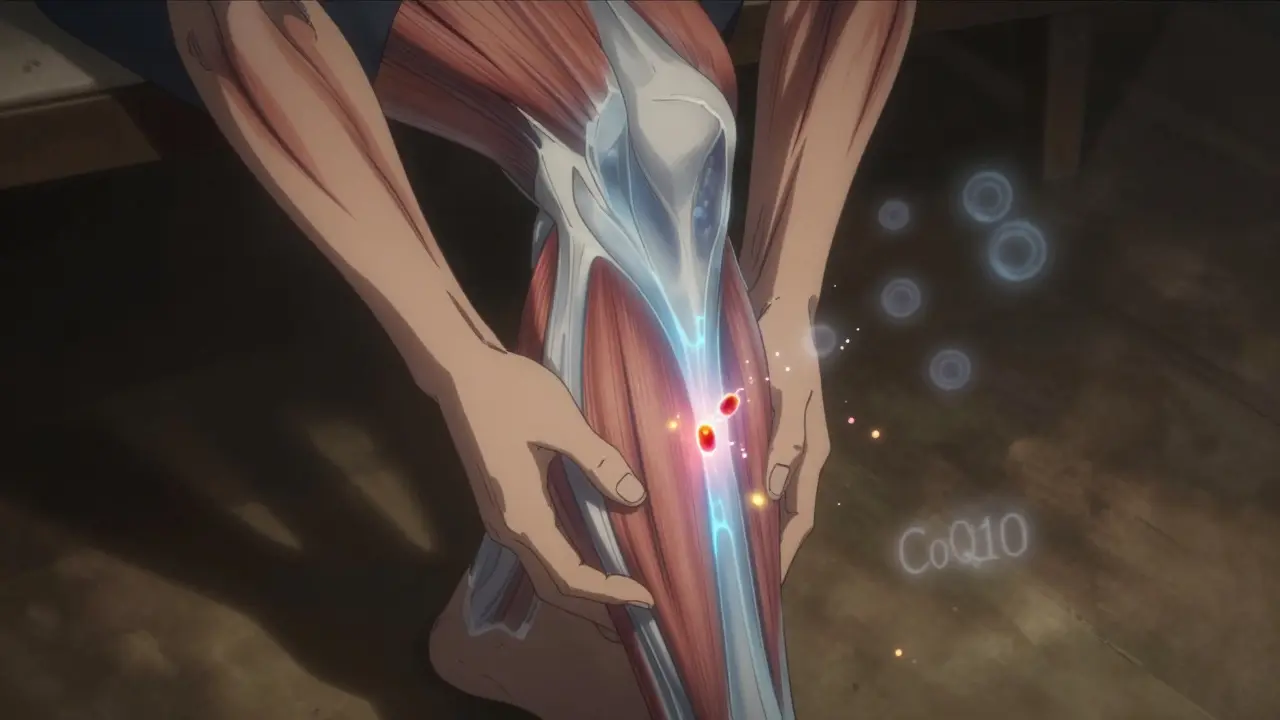
Statins work by blocking an enzyme called HMG-CoA reductase. That’s how they cut cholesterol. But that same enzyme is also needed to make other important stuff in your body - like coenzyme Q10 (CoQ10), which your muscles use to make energy. When statins knock CoQ10 down by as much as 40%, your muscle cells start running on empty. That’s one reason why you might feel weak, tired, or achy. But that’s not the whole story. Statins also mess with something called protein prenylation. This is a tiny chemical tag that helps control calcium levels inside muscle cells. When it’s disrupted, calcium leaks out of control. Too much calcium triggers enzymes that start chewing up muscle proteins. Think of it like your muscles slowly digesting themselves from the inside. And then there’s the immune angle. In about 2 to 3 out of every 100,000 people taking statins, the body starts making antibodies against HMG-CoA reductase - the very enzyme the drug targets. This is called statin-associated autoimmune myopathy (SAAM), or anti-HMGCR myopathy. It’s rare, but deadly serious. Your immune system doesn’t just notice the drug - it attacks your own muscle tissue.Myalgia vs Myositis: The Difference That Matters
Not all muscle pain from statins is the same. The most common form is myalgia. You feel soreness, cramps, or stiffness - usually in your thighs, shoulders, or lower back. But your blood tests? Normal. Creatine kinase (CK), the enzyme that leaks out when muscles break down, stays under 10 times the normal limit. This affects up to 30% of statin users. It’s annoying, but usually harmless. Symptoms often fade within a week or two after stopping the statin. Then there’s myositis. This is inflammation of the muscle itself. Your CK levels spike - between 10 and 40 times higher than normal. You don’t just feel sore. You feel weak. Lifting your arm, climbing stairs, even getting out of a chair becomes hard. This happens in about 0.5% of statin users. It’s not rare enough to ignore. The real red flag is when CK climbs above 40 times normal. That’s rhabdomyolysis - a medical emergency. Muscle tissue breaks down so badly that it floods your kidneys with myoglobin. This can cause kidney failure. It’s rare - only 0.01% to 0.1% of users - but it’s why doctors check CK levels if you report severe pain.The Silent Killer: Immune-Mediated Myopathy
Here’s where things get tricky. Some people stop their statin, wait a few weeks… and nothing changes. The pain gets worse. Their arms and legs get weaker. Their CK levels stay sky-high - often over 2,000 IU/L (normal is 30-200). That’s not typical statin myopathy. That’s SAAM. This isn’t just a side effect. It’s an autoimmune disease triggered by the drug. And it doesn’t care if you quit statins. Your immune system keeps attacking. A 2019 Neurology study found that half of SAAM patients still had symptoms 6 to 12 months after stopping the drug. Some need IVIG therapy - a treatment that resets the immune system. One Reddit user described 18 months of progressive weakness after atorvastatin. Only after six months of IVIG did he start to recover. What makes SAAM different? Muscle biopsies show muscle fibers dying - but almost no inflammation. That’s the opposite of what you’d expect. And if you have the HLA-DRB1*11:01 gene, your risk jumps. It’s not just bad luck - it’s biology.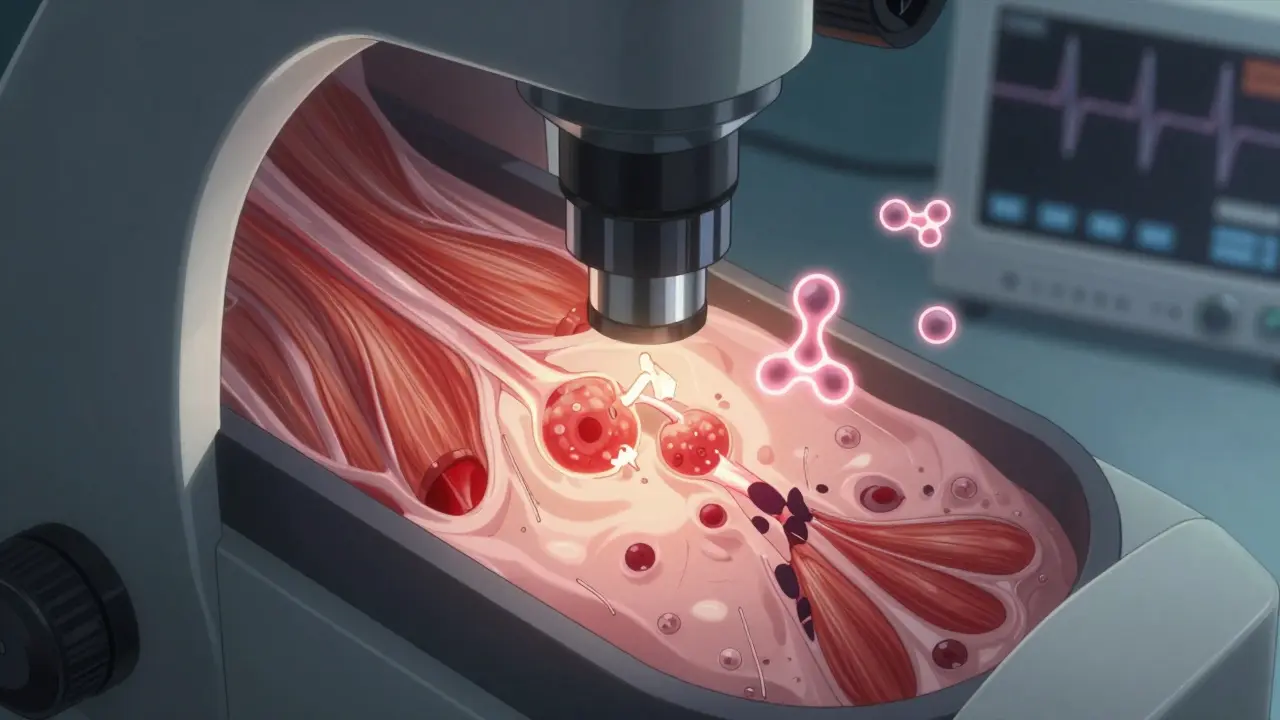
Why Some People Are at Higher Risk
Not everyone who takes statins gets muscle pain. Why? Genetics. African Americans have 1.8 times higher risk than Caucasians. Why? A gene called SLCO1B1 controls how your liver takes up statins. A common variant, rs4149056, makes your body hold onto more of the drug. For simvastatin users with this gene, the risk of muscle damage doubles - from 0.6% to 1.4%. Drug interactions matter too. If you’re on amiodarone (for heart rhythm), clarithromycin (an antibiotic), or even grapefruit juice, your statin levels can spike 300-500%. That’s like taking five times your dose. It’s why doctors ask about every medication you take - even over-the-counter stuff. Age plays a role. SAAM mostly hits people over 50. And women? They report muscle pain more often than men. Not because it’s more common - but because they’re more likely to notice it and speak up.What Doctors Do - and Don’t Do
Most GPs will tell you: stop the statin, wait a few weeks, see if it gets better. That works for regular myalgia. But for SAAM? That approach is too slow. By the time symptoms last three months, you’re already in danger. The European Atherosclerosis Society recommends a clear path: stop the statin. Check CK. Test for anti-HMGCR antibodies. If they’re positive? Refer to a neuromuscular specialist - fast. Delayed treatment means worse outcomes. Patients treated within six months of symptoms have a 65% chance of full recovery. If you wait over a year? Only 28% bounce back. Muscle MRI can show swelling in your thighs or shoulders. Electromyography (EMG) picks up abnormal muscle signals. And yes - a muscle biopsy is still the gold standard. It shows those dead muscle fibers without much inflammation. That’s the fingerprint of SAAM.Treatment: What Actually Works
For mild myalgia? Sometimes CoQ10 helps. But the evidence is weak. Only 3 out of 7 studies showed real benefit. A 2007 study found simvastatin cut CoQ10 by 40%. But giving it back doesn’t always fix the problem. The damage might already be done. For SAAM? You need immunosuppression. Prednisone - one milligram per kilogram of body weight - is the first step. Often paired with methotrexate or mycophenolate. This stops the immune system from attacking. Sixty to seventy percent of patients go into remission within a year. New hope? A 2022 pilot study tested ravulizumab - a drug that blocks part of the immune system - in tough SAAM cases. Seventy-five percent responded. It’s not FDA-approved yet, but it’s a sign we’re moving forward.
Can You Go Back on Statins?
Yes - sometimes. About 73% of people who couldn’t tolerate simvastatin tolerated rosuvastatin after switching. Why? Rosuvastatin doesn’t rely as much on the liver pathway that’s prone to genetic glitches. It’s less likely to build up in your muscles. Some doctors suggest intermittent dosing - like 40 mg of atorvastatin every other day. The IMPROVE-IT trial showed 40% of patients with myalgia could handle this. It’s not perfect, but it’s better than quitting statins entirely. And here’s the hard truth: stopping statins because of muscle pain increases your risk of heart attack or stroke by 25% over 10 years. That’s why finding a safe alternative matters more than ever.What You Can Do Right Now
If you’re on a statin and feel muscle pain:- Don’t ignore it. Write down when it started, where it hurts, and how bad it gets.
- Check if you’re on any other meds - antibiotics, antifungals, or heart drugs. These can make things worse.
- Get your CK levels tested. A normal result doesn’t rule out SAAM, but a high one demands action.
- Ask for an anti-HMGCR antibody test if symptoms last more than 3 months.
- Don’t wait. If you’re over 50, have weakness in your hips or shoulders, and your pain won’t go away - push for a neurologist referral.
The Bottom Line
Statin-induced muscle pain isn’t just "side effects." It’s a spectrum - from mild annoyance to life-altering autoimmune disease. Most people get through it with a switch to another statin. But for a small group, it’s a silent trigger for their own immune system to turn on their muscles. The key is early recognition. If your pain sticks around after stopping the drug, it’s not just a side effect. It’s a signal. And ignoring it could cost you months - or years - of strength.Can statin muscle pain go away on its own?
Yes - but only if it’s simple myalgia. For most people, muscle pain from statins fades within 1 to 2 weeks after stopping the drug. But if the pain persists beyond 3 months, especially with weakness in your hips or shoulders, it’s likely immune-mediated myopathy. That won’t resolve on its own and needs medical treatment.
Is CoQ10 supplementation effective for statin muscle pain?
The evidence is mixed. Some small studies show mild improvement, but 4 out of 7 randomized trials found no real benefit. While CoQ10 drops by 40% with statin use, supplementing it doesn’t reliably fix the muscle damage. It’s worth trying for mild symptoms, but don’t rely on it if you have severe or lasting pain.
Why do some people get statin myopathy and others don’t?
Genetics play a big role. A variant in the SLCO1B1 gene (rs4149056) makes it harder for your liver to clear certain statins like simvastatin, leading to higher levels in your muscles. African Americans have a higher risk due to this gene. Age, drug interactions, and the specific statin you take also matter. But the rare autoimmune form - anti-HMGCR myopathy - is tied to a specific immune response triggered by HLA-DRB1*11:01.
Can I switch to a different statin if I had muscle pain?
Yes - and many do. About 73% of people who couldn’t tolerate simvastatin tolerated rosuvastatin after switching. Pravastatin and fluvastatin are also less likely to cause muscle issues because they’re processed differently in the liver. But if you had true immune-mediated myopathy, switching statins won’t help - you’ll need immunosuppressive treatment instead.
How do doctors diagnose immune-mediated statin myopathy?
It starts with ruling out other causes - thyroid issues, vitamin D deficiency, other autoimmune diseases. Then they test for anti-HMGCR antibodies in the blood. If positive, and symptoms persist after stopping statins, they’ll order a muscle biopsy. The hallmark finding is muscle fiber death with almost no inflammation - which is unique to this condition. MRI and EMG help confirm muscle involvement.
What happens if I ignore statin-induced muscle weakness?
If it’s just myalgia, you might be fine. But if it’s immune-mediated myopathy, delaying treatment leads to permanent muscle damage. Studies show patients treated within 6 months of symptoms have a 65% chance of full recovery. If treatment is delayed beyond a year, that drops to 28%. Muscle weakness can become so severe that you lose the ability to walk or lift your arms - and recovery becomes much harder.
13 Comments
Gwen Vincent
25 February, 2026I’ve been on atorvastatin for 5 years and never had issues-until last winter. My thighs started aching like I’d run a marathon every day, even though I barely moved. I thought it was just aging, but then I read this post and realized: it wasn’t normal. I stopped it cold turkey, and within 10 days, the pain faded. Not saying everyone should quit, but if it’s persistent? Listen to your body. I’m switching to ezetimibe now. No muscle pain, and my LDL’s still under control.
Thanks for laying this out so clearly.
Nandini Wagh
25 February, 2026Oh wow, so statins don’t just lower cholesterol-they also lower your ability to walk up stairs? Cool. Next they’ll invent a drug that makes your legs fall off and call it ‘cardiovascular wellness.’
Holley T
27 February, 2026Let’s be real-the whole statin narrative is built on shaky epidemiology and pharma-funded trials. The fact that myalgia is so common suggests we’re treating symptoms instead of root causes. Why not address inflammation through diet? Or optimize vitamin D? Or fix insulin resistance? No, instead we shove a drug into millions of people that disrupts a fundamental metabolic pathway, then act shocked when their muscles start dying. This isn’t medicine. It’s biochemical negligence dressed up as prevention.
And don’t get me started on the anti-HMGCR antibody thing. That’s not a side effect-that’s a pharmacological trigger for autoimmunity. We’re basically giving people a biological booby trap and calling it ‘standard care.’
Ashley Johnson
27 February, 2026THEY KNOW. THEY KNOW WHAT THEY’RE DOING. Statins are a trap. CoQ10 is banned in Europe because it works too well. The FDA and AMA are in bed with Big Pharma. You think this is about heart health? No. It’s about keeping you dependent. They don’t want you to heal. They want you to take pills forever. I read a guy on YouTube who said his doctor refused to test for anti-HMGCR because ‘it’s too rare.’ RARE? That’s because they don’t test. THEY’RE HIDING IT.
Ask your doctor for the HLA-DRB1*11:01 test. If they say no, get a new doctor. This is genocide by prescription.
Maranda Najar
28 February, 2026I cried reading this. Not because I’m dramatic-though I am-but because I spent 18 months terrified, convinced I had ALS, only to find out my own immune system had turned on my muscles because of a cholesterol pill. I was 52. I couldn’t lift my coffee mug. I needed a walker. My husband had to bathe me.
They told me to ‘wait and see.’ Wait and see what? My muscles turning to dust? I was lucky. I found a neurologist who knew about SAAM. IVIG saved me. But not everyone does. Not everyone has insurance. Not everyone has the voice to demand testing.
This isn’t just medical info. It’s a lifeline. Thank you for writing this. I wish I’d read it two years ago.
Christopher Brown
28 February, 2026Statins are for weak Americans who eat too much sugar. In my day, we didn’t need pills-we needed discipline. If your legs hurt, walk more. Eat less. Stop whining. This post is just another excuse to be lazy.
Sanjaykumar Rabari
28 February, 2026China and Russia have banned statins. Why? Because they know. The West is poisoning its people with cholesterol drugs. The WHO is controlled by the Illuminati. Your doctor is paid to lie. My cousin in Pune took statins for 3 years and now can’t walk. They told him it was arthritis. It was the statin. I told him. He didn’t listen. Now he’s in a wheelchair. Don’t be like him.
Kenzie Goode
1 March, 2026I’m so glad someone finally wrote this. I’ve been silent about my SAAM for years because no one believed me. I thought I was just ‘overreacting.’ But this? This is validation. I’m not crazy. My body wasn’t failing me-it was being attacked by a drug I trusted.
To anyone reading this: if your pain doesn’t go away after stopping statins, don’t accept ‘it’s all in your head.’ Push. Hard. Get the antibody test. Get the biopsy. You deserve to feel strong again.
Dominic Punch
3 March, 2026As a cardiologist with 18 years in practice, I’ve seen this firsthand. Myalgia? Common. SAAM? Rare-but devastating. I’ve had patients who lost mobility because their GP said, ‘It’ll pass.’ It didn’t.
Here’s what I tell my patients: If you’re over 50, have weakness in your proximal muscles (hips/shoulders), and the pain lingers beyond 6 weeks-get tested. Now. Don’t wait for CK to spike. Don’t wait for your doctor to ‘think of it.’ Ask for anti-HMGCR. Ask for a muscle MRI. If your doc says ‘it’s not worth it,’ find one who gets it.
This isn’t alarmism. It’s clinical responsibility. And yes-switching statins works for most. But not if it’s autoimmune. Then you need steroids, not alternatives.
Khaya Street
4 March, 2026Interesting read. But honestly, I’ve been on statins for 7 years and feel fine. My CK is normal. I don’t feel weak. Maybe this is just a problem for people who don’t exercise? Or eat poorly? I mean, if you’re sedentary and eating pizza every day, of course your muscles are going to hurt. Blame the lifestyle, not the drug.
Christina VanOsdol
6 March, 2026Okay. So. Statins. CoQ10. HMGCR. SAAM. Anti-HMGCR antibodies. HLA-DRB1*11:01. CK levels. IVIG. Prednisone. Rosuvastatin. Simvastatin. Amiodarone. Clarithromycin. Grapefruit juice. Rhabdomyolysis. Muscle biopsy. EMG. MRI. 0.01% to 0.1%. 2-3 per 100,000. 65% recovery. 28% if delayed. 73% switch success. 40% on intermittent dosing. 40% CoQ10 drop. 1 mg/kg prednisone. 75% ravulizumab response. And yet… I still have no idea what to do. I’m overwhelmed. I need a flowchart. A spreadsheet. A therapist. A hug. And maybe a nap. 😵💫💔🫂
Brooke Exley
7 March, 2026You’re not alone. I was there. I thought I was just getting older, weaker, slower. Then I found a support group online. We shared stories, lab results, doctor horror stories. I started journaling my pain levels. I asked for the antibody test. I switched to pravastatin. And I started walking every morning-not because I had to, but because I wanted to feel my legs again.
You’ve got this. One step. One test. One conversation with your doctor. You’re not broken. You’re healing.
Alfred Noble
8 March, 2026My wife had this. Took 8 months to get diagnosed. She’s 62. Now on prednisone and feels 80% better. I wish we’d known sooner. This post? Saved us. Thanks for writing it. I’m sharing it with my dad-he’s on simvastatin. He’s gonna get tested next week.
Also, CoQ10 didn’t help her. But the steroid did. So… yeah. Don’t skip the biopsy. Seriously.