
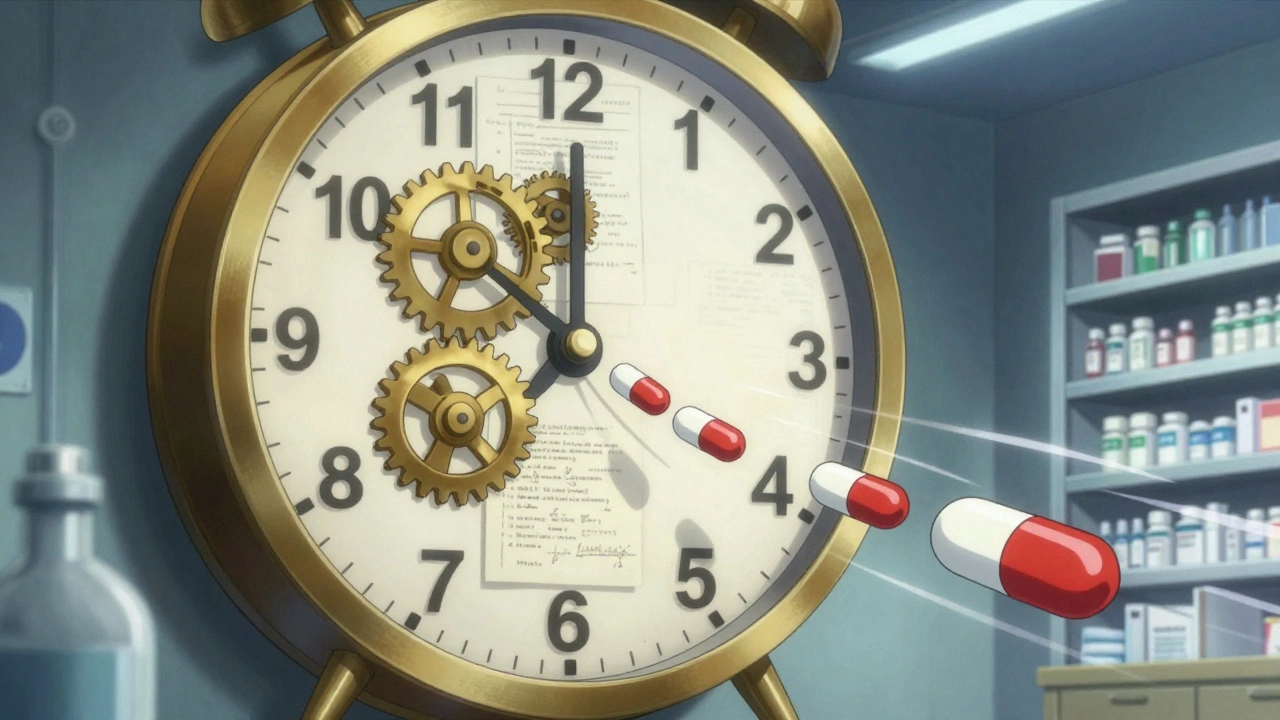
Most people assume that when a drug patent is granted, the company has 20 years to sell it without competition. But that’s not how it works in real life. The 20-year clock starts ticking the day the patent application is filed-often years before the drug even hits the market. By the time the FDA approves a new medication, as much as 10 years of that patent term may already be gone. That leaves just 7 to 12 years of actual market exclusivity before generics can enter. This gap between the legal patent term and the real-world exclusivity period is what drives the entire pharmaceutical industry’s strategy, pricing, and competition.
How the 20-Year Patent Clock Actually Works
The 20-year patent term comes from U.S. law (35 U.S.C. § 154(a)(2)), adopted in 1995 to match international standards. But this number is just the starting point. The patent is filed during early drug development, often in Phase I or II clinical trials. The average time from patent filing to FDA approval is 8 to 10 years. That means if a company files a patent in 2015, and the drug gets approved in 2025, the patent only has 5 years left to run. By the time the drug is on shelves, the clock is already halfway done.
That’s why the real value isn’t in the 20-year number-it’s in the extensions and adjustments that can add time. The U.S. Patent and Trademark Office (USPTO) offers Patent Term Adjustment (PTA) to make up for delays they cause. If the USPTO takes more than 14 months to issue the first office action, or more than three years to grant the patent, the patent gets extra days added. These aren’t automatic. Companies have to track every delay and request the adjustment. In some cases, PTA adds 2 to 5 years to the original term.
Patent Term Extension: The Hatch-Waxman Lifeline
The real game-changer is the Hatch-Waxman Act of 1984. It lets drugmakers apply for Patent Term Extension (PTE) to make up for time lost during FDA review. You can get up to 5 extra years, but there’s a catch: the total time a drug has market exclusivity-from FDA approval to patent expiration-can’t go beyond 14 years. So if a drug is approved in 2020 and the original patent expires in 2028, the maximum extension you can get is 6 years (2020 + 14 = 2034). But if the patent was set to expire in 2025, you’d only get 9 years of extension, which is impossible because the cap is 14 years total. The math is tight, and missing the 60-day deadline to file for PTE after FDA approval means you lose it forever.
Take the drug Spinraza (nusinersen), used for spinal muscular atrophy. Its main patent expired in 2023, but because of PTE and multiple other patents covering delivery methods and dosing, it’s protected until 2030. That’s not one patent lasting 20 years-it’s a stack of patents, each with its own clock, working together to delay generics.
More Than Just Patents: Regulatory Exclusivity
Even if a patent expires, that doesn’t mean generics can jump in right away. The FDA gives extra protection called regulatory exclusivity, which runs separately from patents. For new chemical entities (NCEs), that’s 5 years. During that time, the FDA can’t even accept a generic application. For orphan drugs-those treating rare diseases affecting fewer than 200,000 people-it’s 7 years. And if a company does extra pediatric studies requested by the FDA, they get 6 months added to whatever exclusivity they already have.
These rules create layers. A drug might have a patent expiring in 2026, but if it’s an NCE approved in 2021, generics still can’t enter until 2026. If it also got pediatric exclusivity, that pushes it to 2026.5. And if there’s a second patent on a new formulation that expires in 2028, that’s another barrier. Generic manufacturers can’t rely on just one date-they have to map out every single layer of protection.
The Patent Cliff: What Happens When Exclusivity Ends
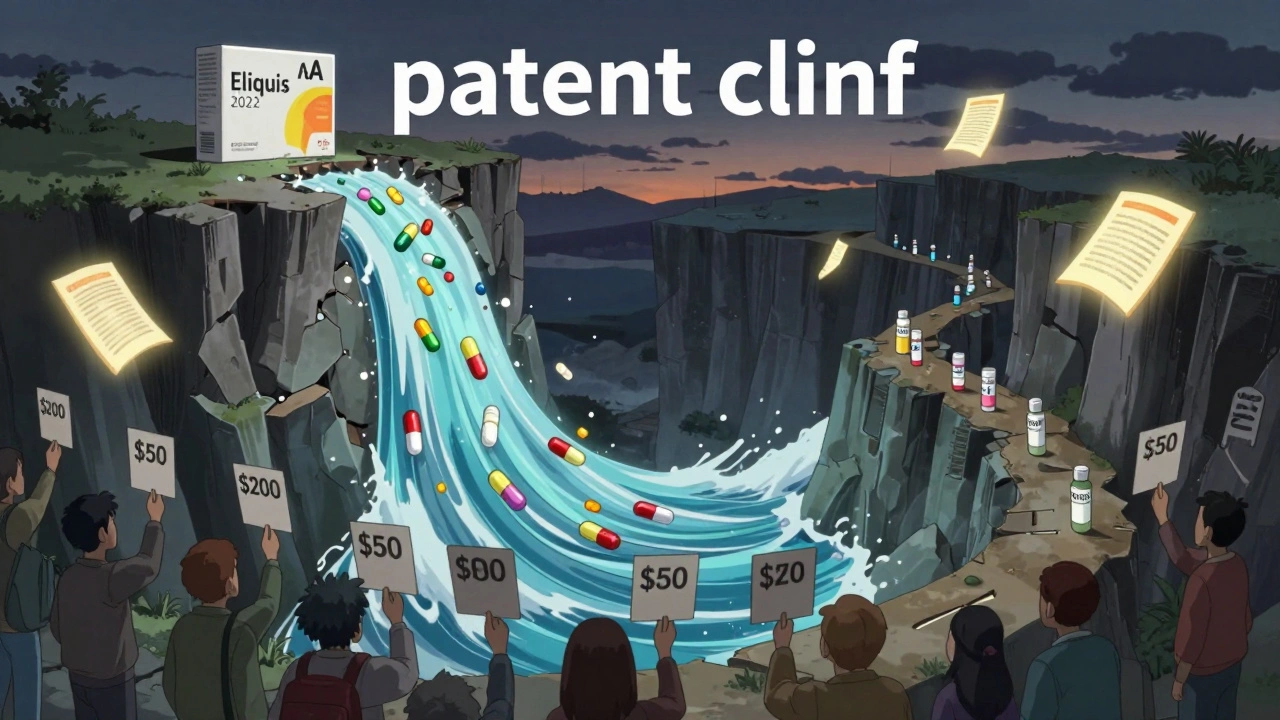
When all protections expire, the market shifts fast. This is called the patent cliff. For small molecule drugs, generic versions typically capture 90% of sales within 18 months. Prices drop by 60% to 80% in the first year. After Eliquis (apixaban) lost its patent in December 2022, generic versions grabbed 35% of the market in just six months. By the end of the first year, the average wholesale price fell 62%.
But it’s not the same for biologics. Drugs like Humira (adalimumab) are more complex. They’re made from living cells, not chemicals. So generics-called biosimilars-take longer to develop and get approved. They also face more legal hurdles. Even after Humira’s main patent expired in 2023, biosimilars didn’t hit the market in full force until 2024. And they’ve only captured about 50% of the market so far. That’s because doctors and insurers are slower to switch, and manufacturers have to prove they’re as safe and effective as the original.
How Companies Stretch Protection: Evergreening and Strategy
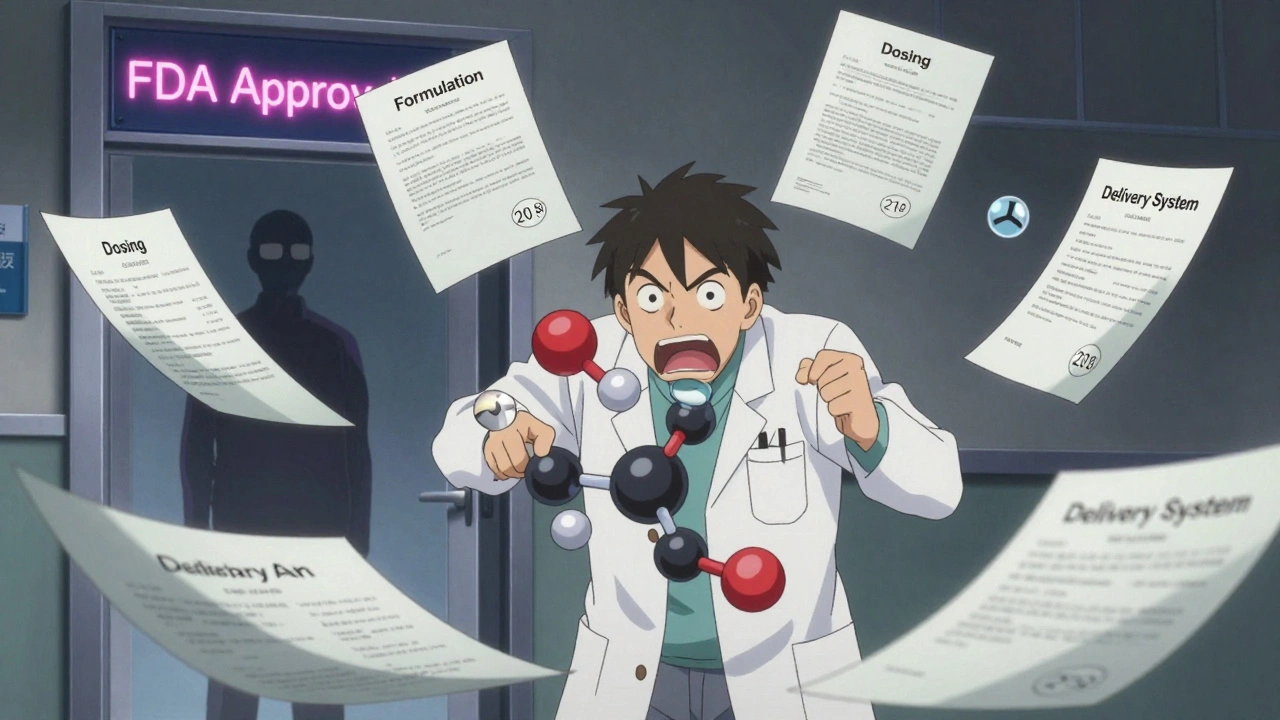
Drugmakers don’t wait for the patent to expire before planning their next move. They start building a patent portfolio during Phase II trials-about 7 to 8 years before approval. They file patents not just on the active ingredient, but on how it’s made, how it’s taken, what conditions it treats, even the color of the pill. Each of these gets its own 20-year term. This is called evergreening.
For example, AstraZeneca’s Tagrisso (osimertinib) had its core patent expire in 2026. But they filed patents on combination therapies, dosing schedules, and delivery systems that extend protection until 2033. The FTC has called some of these tactics abusive, especially when they’re filed just to block generics without adding real medical benefit. Still, it’s legal-and common. About 78% of drugs facing patent expiration use at least one lifecycle management strategy like this.
What’s Changing Now
Pressure is building to shorten patent terms. The World Health Organization recommends cutting pharmaceutical patents to 15 years to improve access to medicines. Meanwhile, Congress is debating the Restoring the America Invents Act, which could remove some patent term adjustments, potentially shaving off 6 to 9 months from the total protection time.
On the other side, pharmaceutical companies argue the current system is necessary. The average cost to bring a new drug to market is $2.3 billion. Without strong protection, they say, innovation would dry up. But the numbers tell another story: from 2023 to 2028, the industry expects to lose $268 billion in revenue from patent expirations. 2025 alone is projected to be the worst year, with $62 billion in losses.
Meanwhile, the FDA’s Orange Book-the official list of patents linked to drugs-now has over 98% of innovator companies submitting their patent info on time. And the USPTO is rolling out automated systems to speed up patent term calculations. All of this means the system is getting more precise, but also more complex.
What This Means for Patients and Payers
Patients often don’t realize that even after a patent expires, they might still pay high prices. Sometimes, insurance plans switch to a generic-but not the cheapest one. Or a new formulation with a patent extension gets promoted as "improved," even if it’s just a minor change. One patient reported their copay jumped from $50 to $200 during a 6-month pediatric exclusivity extension, even though the drug was already off-patent. That’s because the manufacturer had tweaked the dosing schedule and got an extra 6 months of protection.
For insurers and pharmacies, the patent cliff is a financial event they plan for years ahead. They know when key drugs are expiring and negotiate with manufacturers to lock in lower prices before generics arrive. But when multiple big drugs expire at once-like Humira, which had 137 patents across 7 families-the market gets chaotic. Prices drop faster than expected. Supply chains strain. Pharmacists scramble to switch patients.
How to Find When a Drug’s Patent Expires
If you want to know when a specific drug will go generic, check the FDA’s Orange Book. It lists every patent linked to a brand-name drug and its expiration date. You can search by drug name or active ingredient. But don’t just look at the main patent. Look for all listed patents-formulation, method of use, delivery device. The last one to expire is the real deadline.
For biologics, check the Purple Book instead. It tracks biologics and biosimilars. And remember: even if a patent expires, regulatory exclusivity might still block generics. Always check both.
There’s no public tool that gives you a single, simple answer. You have to do the legwork. But knowing the rules-patent term, PTE, regulatory exclusivity, pediatric extension-makes it easier to predict when prices will drop.
How long does a drug patent last in the U.S.?
A drug patent in the U.S. lasts 20 years from the date the patent application was filed. But because most drugs take 8 to 10 years to get FDA approval, the actual time a company has exclusive rights on the market is usually only 7 to 12 years. Extensions can add time, but total market exclusivity can’t exceed 14 years from FDA approval.
Can a drug patent be extended after it expires?
You can’t extend a patent after it expires, but you can apply for Patent Term Extension (PTE) before it expires to make up for time lost during FDA review. The application must be filed within 60 days of FDA approval. If you miss that deadline, you lose the chance. PTE can add up to 5 years, but the total time from FDA approval to patent expiration can’t go beyond 14 years.
What’s the difference between patent expiration and exclusivity?
A patent protects the invention itself. Exclusivity is a regulatory protection from the FDA that blocks generics from being approved-even if the patent has expired. For example, a new chemical drug gets 5 years of exclusivity, meaning the FDA won’t accept a generic application for that time. You can have both a patent and exclusivity running at the same time, and the longer of the two controls when generics can enter.
Why do some drugs have multiple patent expiration dates?
Drugmakers file multiple patents covering different aspects of the same drug: the active ingredient, how it’s made, how it’s taken, what conditions it treats, even the pill’s shape or coating. Each patent has its own 20-year term from its filing date. The last one to expire is the one that actually blocks generics. This is called a patent thicket, and it’s a common strategy to delay competition.
Do biosimilars follow the same rules as generic drugs?
No. Biosimilars are copies of biologic drugs, which are made from living cells. They face a longer approval process and more legal hurdles. While generic drugs can enter the market right after a patent expires, biosimilars often need to wait for additional exclusivity periods and must prove they’re highly similar to the original. Even after approval, they take longer to gain market share-typically reaching 40-60% within 2 years, compared to 90% for generics.
What’s Next for Drug Patents?
The next five years will see the biggest wave of patent expirations in history. Drugs like Humira, Eliquis, and Keytruda are all losing protection between 2024 and 2027. That’s over $60 billion in annual revenue at stake. Generic manufacturers are preparing. Insurance companies are locking in deals. Patients are watching for price drops.
At the same time, new laws, new technologies, and new pressures from public health groups are pushing the system to change. Whether the 20-year term stays, gets shortened, or gets more complex with more extensions, one thing is clear: the timeline for when a drug becomes affordable isn’t written in stone. It’s built layer by layer-by patents, by regulations, by lawsuits, and by corporate strategy. Knowing how those layers fit together is the only way to predict when the next big price drop will happen.
12 Comments
John Biesecker
2 December, 2025Wow this is wild 😮 I always thought patents = 20 years of monopoly, but turns out the clock starts ticking before the drug even exists. So basically Big Pharma is playing chess while we’re playing checkers 🤯
Genesis Rubi
3 December, 2025These pharma bros think they’re smart but they’re just gaming the system. Taxpayers fund the research then they get to charge $500k per dose. America is being ROBBED.
Doug Hawk
3 December, 2025The PTA and PTE mechanics are way more nuanced than most realize. The 60-day filing window for PTE is brutal - one missed deadline and you lose millions. And don’t even get me started on how the USPTO’s delay calculations work. It’s a legal minefield wrapped in a spreadsheet.
Michael Campbell
4 December, 2025They’re lying to us. Every single one of them. The ‘$2.3B cost’ is made up. They just print money and call it R&D. Watch this get buried.
Saravanan Sathyanandha
5 December, 2025In India, we’ve seen firsthand how patent cliffs can transform access. When Glivec’s patent expired, generics brought the price from $70k/year to $200. Lives saved. Not just profits. The world needs this balance, not corporate lock-in.
alaa ismail
5 December, 2025So it’s not just the drug, it’s the color of the pill? Wild. I thought patents were for inventions, not aesthetics.
ruiqing Jane
6 December, 2025This is why we need transparency. Patients shouldn’t have to become patent lawyers just to afford their medication. Kudos to you for breaking this down so clearly.
Fern Marder
7 December, 2025Evergreening is just corporate gaslighting 🤦♀️ They’re not innovating - they’re just rebranding. And we pay for it. Again.
Carolyn Woodard
8 December, 2025The regulatory exclusivity layer is often overlooked. Even if a patent expires, the FDA’s 5-year NCE exclusivity can delay generics by years. This isn’t just about IP - it’s administrative inertia baked into policy.
Allan maniero
9 December, 2025I’ve been following this for a while and honestly, the complexity is staggering. The Orange Book alone has over 200,000 patent entries across thousands of drugs. It’s not just a database - it’s a living, breathing legal ecosystem that only lawyers and pharma strategists truly understand. Most patients have no idea they’re navigating a labyrinth designed to keep prices high.
Anthony Breakspear
11 December, 2025Bro, imagine if we treated car patents like this. You buy a Tesla, then the company patents the color of the seats, the shape of the cup holder, and the sound the door makes when it closes. Then says you can’t buy a cheaper copy until 2035. We’d riot. But drugs? We just nod and pay.
Zoe Bray
13 December, 2025The systemic implications of patent term adjustments and regulatory exclusivity regimes necessitate a recalibration of public health policy frameworks. The current paradigm prioritizes proprietary interests over equitable access, thereby undermining the foundational principles of pharmaceutical ethics and distributive justice.