
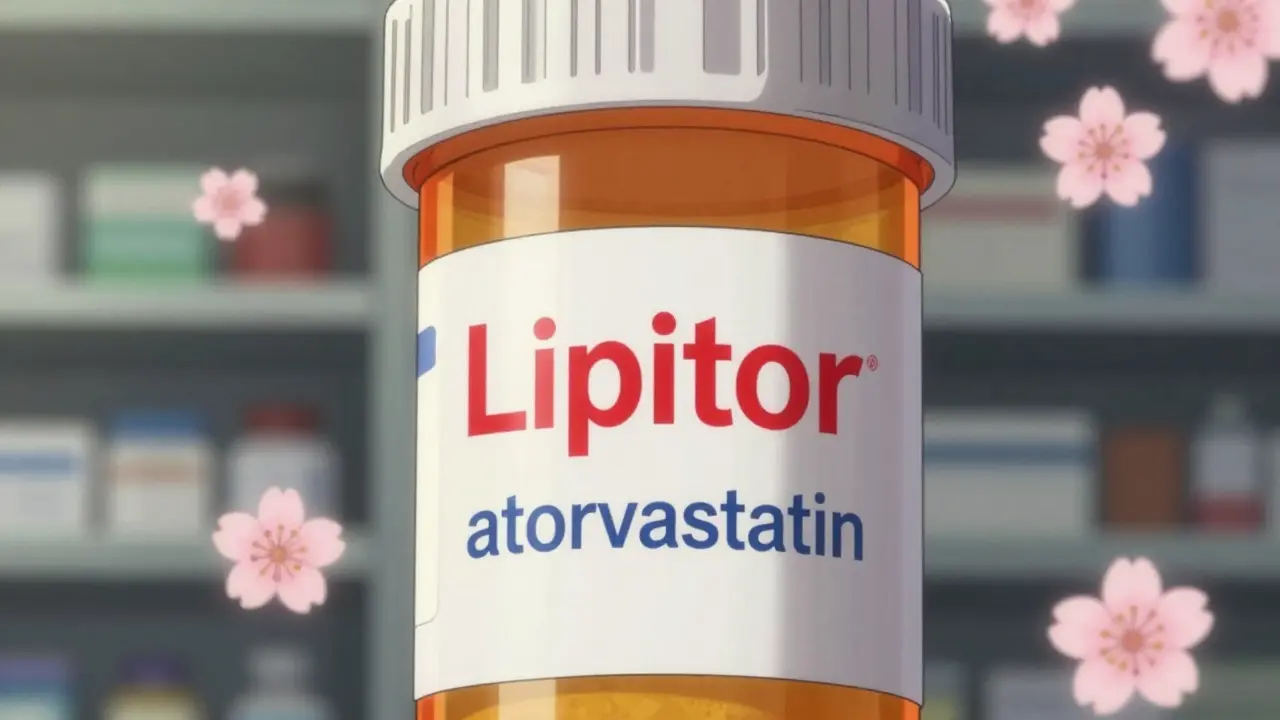
Ever looked at your prescription bottle and wondered why there are two names on it? One big, bold, and familiar - like Lipitor. The other smaller, harder to pronounce - like atorvastatin. You’re not alone. Most people don’t realize these two names refer to the exact same medicine. But understanding the difference between generic and brand names on your Rx label can save you money, prevent confusion, and even help avoid mistakes.
What’s Really in Your Pill?
The active ingredient is what makes a drug work. Whether it’s called atorvastatin or Lipitor, that molecule is identical. It’s the same chemical, the same dose, the same way it lowers cholesterol in your body. The U.S. Food and Drug Administration (FDA) requires generic drugs to match brand-name drugs in strength, dosage form, and how quickly they work. That means if your doctor prescribes Lipitor, and you get atorvastatin instead, it’s not a downgrade - it’s the same treatment, just cheaper.Why Two Names? The Story Behind the Label
Brand names are trademarks. They’re created by drug companies to stand out. Think of it like Coca-Cola vs. cola. Prilosec is a brand name. Omeprazole is the generic name - the actual drug inside. When a drug is first approved, the company that developed it gets exclusive rights to sell it under that brand name for a set number of years. Once that protection ends, other companies can make the same drug using the generic name. That’s why you’ll see both names on your label: the brand name (if it’s still protected or marketed that way) and the generic name right below it. Pharmacists are trained to list the generic name in smaller text under the brand name. In fact, 92% of prescription labels in the U.S. follow this format, according to the National Association of Boards of Pharmacy.Why Are Generics So Much Cheaper?
Brand-name drugs cost a lot because the company had to pay for years of research, clinical trials, and marketing. One study found the average cost to bring a new drug to market was about $2.6 billion. Generics skip all that. They don’t need to repeat expensive clinical trials - they just have to prove they work the same way. That’s called bioequivalence. The FDA requires that generics deliver the same amount of active ingredient into your bloodstream within a very tight range - 80% to 125% of the brand-name version. That’s not a guess. It’s science. The result? You pay 80-85% less. For example, Lipitor (atorvastatin) used to cost around $300 a month. The generic? About $4. From 2007 to 2016, generic drugs saved the U.S. healthcare system over $1.67 trillion. That’s not a rounding error. That’s real money in people’s pockets.Are Generics Just as Safe?
Yes. The FDA holds generic manufacturers to the same strict quality standards as brand-name makers. The same factories sometimes produce both. In fact, about half of all generic drugs are made by the same companies that make the brand versions - just under a different name. You might be surprised to learn that your “generic” atorvastatin could come from the same plant as your old Lipitor. Some people worry about side effects. A few report feeling different after switching. But studies show those feelings usually come from expectations, not the medicine itself. One exception is drugs with a narrow therapeutic index - like warfarin, lithium, or certain seizure meds. For these, even tiny changes in blood levels can matter. Some doctors still prefer to keep patients on the brand version, even though the FDA says generics are safe. Less than 1% of all medications fall into this category.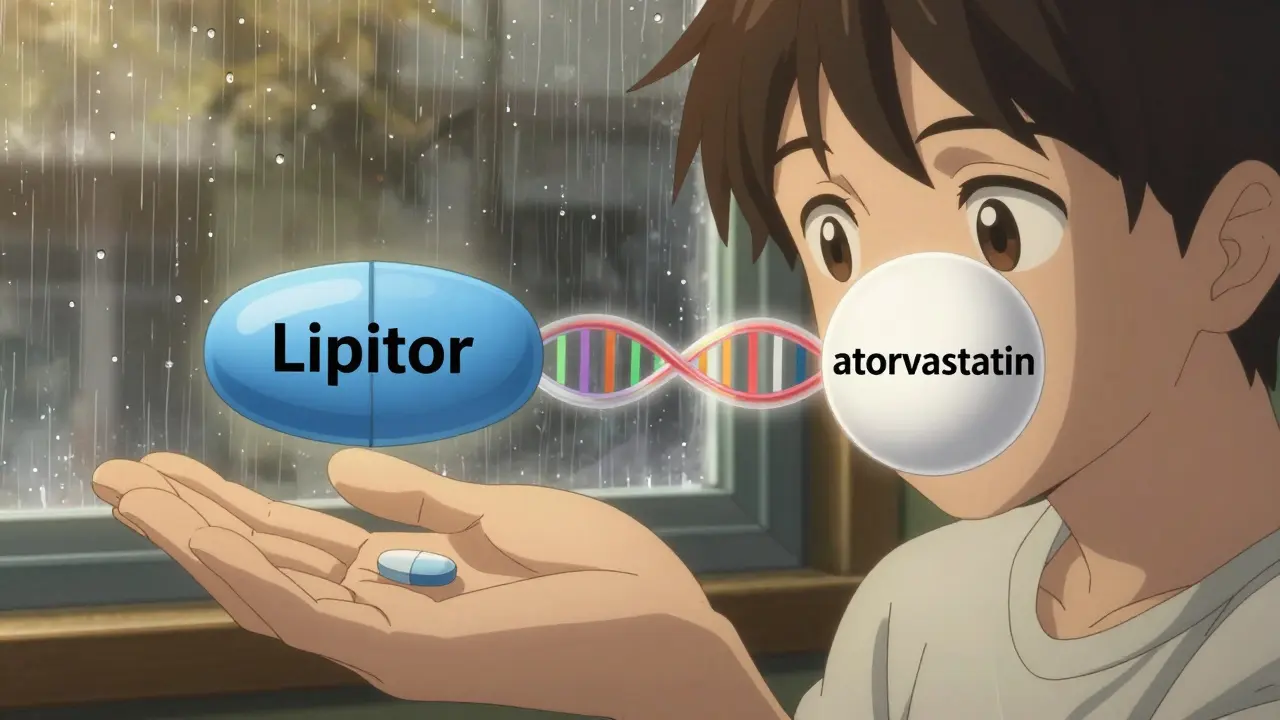
Why Do Generics Look Different?
If your pill changes color, shape, or markings when you refill, it’s not a mistake. U.S. trademark laws prevent generic drugs from looking exactly like the brand version. So a blue, oval Lipitor pill might become a white, round atorvastatin tablet. That’s legal. It’s also why 15% of medication errors happen - people mistake one pill for another because they look different. That’s why it’s critical to read the label every time. Don’t rely on how the pill looks. Look for the name. If you’re unsure, ask your pharmacist. They can tell you exactly what you’re getting.What Happens When You Get a Prescription?
When your doctor writes a prescription, they can choose whether to allow substitution. If they write “dispense as written” or “do not substitute,” the pharmacist must give you the brand name - even if a generic exists. But unless they say that, the pharmacist can legally switch you to the generic version. In 28 states, this substitution happens automatically. Most insurance plans require it too, because they want to keep costs down. You have the right to ask for the brand name. But you’ll likely pay more - sometimes a lot more. If your insurance doesn’t cover the brand, you might end up paying the full price out of pocket. That’s why many people stick with the generic unless there’s a medical reason not to.What About Biosimilars?
Newer drugs like insulin, rheumatoid arthritis treatments, and cancer therapies are made from living cells - not chemicals. These are called biologics. They’re too complex to copy exactly, so instead, we get “biosimilars.” These aren’t generics, but they’re close. They’re cheaper - usually 15-30% less than the brand - but not as dramatically discounted as regular generics. The FDA approves them using the same rigorous standards, and they’re becoming more common as older biologics lose patent protection.
What Should You Do?
1. Read your label every time. Look for the generic name. It’s usually below the brand name. Write it down if you need to. 2. Ask your pharmacist. If you’re confused about a change in pill appearance, ask them to confirm the generic name and why it looks different. 3. Don’t assume a difference means it’s weaker. Most people feel different after switching - but studies show it’s psychological, not chemical. 4. Speak up if something feels off. If you notice new side effects after switching to a generic, talk to your doctor or pharmacist. It could be an inactive ingredient (like dye or filler) causing a reaction - not the active drug. 5. Use cost-saving tools. Apps like GoodRx can show you the lowest price for both brand and generic versions at nearby pharmacies.What’s Changing in 2025?
The Inflation Reduction Act of 2022 capped out-of-pocket drug costs for Medicare Part D at $2,000 per year starting in 2025. That means more seniors will be encouraged to use generics to stay under the limit. The FDA is also speeding up generic approvals through its GDUFA III program, aiming for a 20% faster timeline by 2027. More generics mean more savings. Meanwhile, 78% of all prescriptions are expected to be generic by 2026, according to UCSF’s latest analysis. That’s up from 90% of prescriptions already being filled with generics today.Final Thought: It’s Not About Brand - It’s About the Medicine
You don’t need to pay more to get the same result. The FDA, pharmacists, and doctors all agree: generics work just as well. The only real difference is the price tag - and the label you read. So next time you pick up your prescription, take a second to look at the small print. That’s where the truth is.Are generic drugs really the same as brand-name drugs?
Yes. Generic drugs contain the exact same active ingredient, strength, dosage form, and route of administration as the brand-name version. The FDA requires them to be bioequivalent - meaning they work the same way in your body. The only differences are in inactive ingredients, color, shape, and price.
Why do generic pills look different from brand-name pills?
U.S. trademark laws prevent generic drugs from looking identical to brand-name versions. That means color, shape, size, and markings can differ - even though the medicine inside is the same. These changes are purely cosmetic and have no effect on how the drug works.
Can I ask my pharmacist to give me the brand-name drug instead of the generic?
Yes. You can request the brand-name version at the pharmacy. But your insurance may not cover it, and you’ll likely pay much more out of pocket. Your doctor can also write "dispense as written" on the prescription to block substitution.
Are there any drugs where I should avoid generics?
For most drugs, no. But for a small group called "narrow therapeutic index" (NTI) drugs - like warfarin, lithium, or certain seizure medications - even tiny differences in blood levels can matter. Some doctors prefer to keep patients on the brand version in these cases, even though the FDA approves generics as safe.
Why does my generic pill look different every time I refill?
Different manufacturers make generic drugs. Each one can produce a version with a different color, shape, or imprint. This is normal and legal. Always check the name on the label, not the appearance. If you’re unsure, ask your pharmacist to confirm the generic name matches your prescription.
Is it true that 90% of prescriptions are for generic drugs?
Yes. According to University Hospitals’ 2022 analysis, about 90% of prescriptions filled in the U.S. are for generic medications. They account for most of the volume but only about 23% of total drug spending because they’re so much cheaper.
How can I tell if my prescription is a generic or brand-name drug?
Look at the label. The brand name is usually larger and more prominent. The generic name (the active ingredient) is printed in smaller text directly below it. If you’re unsure, ask your pharmacist to point out both names. You’re entitled to know exactly what you’re taking.
10 Comments
Virginia Seitz
16 December, 2025I used to freak out when my pills changed color 😅 Now I just check the name. Generic atorvastatin saved me $296/month. My bank account thanks me 💸
amanda s
18 December, 2025This is why America is falling apart. Big Pharma is pushing these cheap knockoffs on us while they pocket billions. My grandpa died because they switched him to generic warfarin without telling him. This isn't medicine-it's corporate greed.
Peter Ronai
19 December, 2025You people are being manipulated. The FDA doesn't 'approve' generics-they rubber-stamp them. Did you know 70% of generic drug factories are in India and China? No inspections. No oversight. Your 'same drug' might be sitting in a warehouse with cockroaches for six months before it hits your bottle. And they call it 'bioequivalent'? LOL. Try telling that to your liver.
Nishant Desae
21 December, 2025I am from India and here we use generics every day and they work great. My uncle takes atorvastatin for 8 years now and his cholesterol is perfect. I think people in US worry too much about looks of pill. The medicine inside is same. I always tell my friends to read the name not the color. Also pharmacist here explain everything very nicely. Maybe we need more education here. Also i love that you mention GoodRx i use it all the time and save so much money. Thank you for sharing this info.
Jody Patrick
22 December, 2025If your doctor didn't say 'do not substitute', the pharmacist is legally allowed to give you the generic. It's not a trick. It's the law. And yes, it's the exact same medicine. Just cheaper. Stop overthinking it.
Radhika M
23 December, 2025I work in a pharmacy and people get so scared when their pill changes shape. I always show them the generic name on the label. Same active ingredient. Same dose. Same results. The color? Just trademark law. No magic. No scam. Just science and savings.
Philippa Skiadopoulou
23 December, 2025The FDA's bioequivalence requirements are stringent and well-documented. The 80-125% range is statistically validated. Any claim that generics are inferior lacks empirical support. Patients should be empowered with facts, not fear.
Pawan Chaudhary
24 December, 2025Hey! Just wanted to say this post made my day 🙌 I switched to generic metformin last year and my blood sugar is better than ever. Don't let the shape fool you - your health doesn't care what color the pill is. Keep sharing this kind of stuff - it helps so many people!
Jonathan Morris
26 December, 2025Let’s be real. The FDA is a captured agency. The same corporations that make brand-name drugs own the generic factories. The ‘bioequivalence’ standard is a joke - 80-125% means a 25% variation in blood concentration. That’s not a margin. That’s a gamble. And the 20% of people who report side effects after switching? They’re not ‘imagining it.’ They’re being poisoned by fillers. And no one’s auditing the talc.
Linda Caldwell
27 December, 2025You got this. Your health matters, not the logo on the bottle. If you're worried, ask your pharmacist. They're your ally. And if your pill looks different? Good. That means you're saving hundreds. Keep reading labels. Keep asking questions. You're doing better than you think.