

Every month, you drive to the pharmacy, wait in line, and pick up the same pills for your high blood pressure, diabetes, or cholesterol. It’s not just annoying-it’s a hidden barrier to staying healthy. If you’re on long-term meds, switching to a 90-day supply can cut your pharmacy trips by two-thirds, save you money, and actually help you take your meds on time. But most people never ask for it. Here’s how to make it happen-no guesswork, no jargon, just clear steps.
Know Which Meds Qualify
Not every prescription can be filled for 90 days. Only maintenance medications for chronic conditions qualify. That means drugs you take every day, for months or years. Think:- High blood pressure (like lisinopril, amlodipine)
- Diabetes (metformin, glimepiride)
- Cholesterol (atorvastatin, rosuvastatin)
- Thyroid (levothyroxine)
- Depression or anxiety (sertraline, escitalopram)
Short-term meds? No. Antibiotics, painkillers after surgery, or steroids for flare-ups? Those stay at 30 days. If you’re not sure, check your pill bottle or ask your pharmacist. If it’s something you’ve been taking for over three months, it’s likely eligible.
Check Your Insurance Plan
Your coverage determines if you can even get a 90-day supply-and how much it costs. Most private insurance plans, Medicare Part D, and many Medicare Advantage plans now include this option. But not all plans are the same.Call your insurer or log into your online account. Look for terms like:
- “90-day supply”
- “Mail-order pharmacy”
- “Extended-day supply”
Some plans, like Cigna’s 90 NowSM, require you to use specific pharmacies. Others, like Express Scripts or CVS Caremark, let you choose mail delivery. Walmart offers 90-day generic fills for $10-but only at their stores, not by mail. If you’re on Medicare Advantage, you might even get 100-day supplies. Don’t assume-ask.
Get a New Prescription from Your Doctor
Your current script is probably written for 30 days. You need a new one that says “90-day supply” or “3-month supply.” This isn’t optional. Pharmacists can’t legally fill a 30-day script for 90 days without a new order.When you see your doctor, say this:
“I’d like to switch to a 90-day supply for my [medication name]. It would help me stick to my treatment and cut down on trips to the pharmacy. Is that possible?”
Most doctors are happy to agree. Studies show patients on 90-day supplies are 27% more likely to take their meds as prescribed. That’s better health-and less risk of hospital visits. If your doctor says no, ask why. Sometimes they’re just used to writing 30-day scripts. Give them a printed sheet from your insurer’s website if needed. Many plans, like Express Scripts, have ready-made forms doctors can sign.
Choose How You Want to Get It
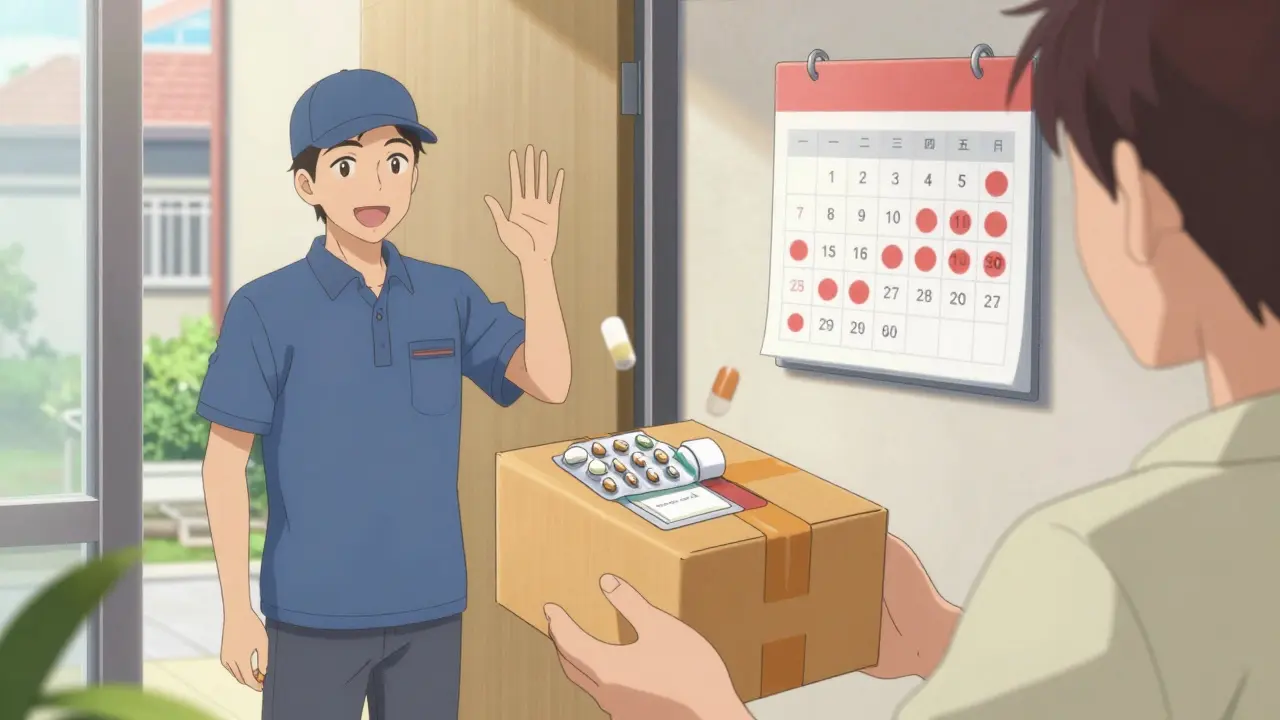
Once your doctor approves it, you have two main ways to get your 90-day supply:Option 1: Mail Order (Best for Convenience)
Most insurers partner with mail-order pharmacies like CVS Caremark, Express Scripts, or Cigna. You sign up online, and your meds are shipped to your door every three months. Delivery usually takes 7-10 business days. Some plans even include free delivery, refill reminders, and safety checks to avoid drug interactions.
Pros:
- No driving, no waiting
- Automatic refills
- Often cheaper copays
Cons:
- Not instant-if you run out, you’re stuck
- Some states (like California and Texas) don’t allow mail-order for certain plans
Option 2: Retail Pharmacy (Best for Control)
Some pharmacies, like Walmart, CVS, and Walgreens, offer 90-day fills right at the counter-for generic meds only. At Walmart, common generics cost $10 for 90 days. No mail needed. You just ask.
Pros:
- Get it the same day
- No shipping delays
- Easy to switch if you need to
Cons:
- Only for generics
- Not all locations offer it
- You still have to go in person
Pro tip: Call your local pharmacy first. Ask: “Do you offer 90-day fills for [medication name]?” Don’t assume-they’re not required to offer it.
Watch Out for the Traps
There are a few things that can block your 90-day supply, even if you’ve done everything right.- Specialty drugs: Insulin pens, injectables, or cancer meds often require 30-day fills until you’ve had three successful refills. Then you can switch.
- Tier 5 drugs: These are the most expensive brand-name meds. Most plans restrict them to 30 days only.
- State rules: California, Minnesota, New Hampshire, Texas, and Washington have restrictions on mail-order for some plans. Check your insurer’s website for your state.
- Initial fills: If you’re new to the medication, you may need to start with 30 days before switching.
If you hit a wall, call your insurer’s customer service line. Ask: “Why can’t I get a 90-day supply for [medication]? What do I need to do to qualify?” Keep a note of who you spoke to and what they said.
Save Money and Stay Consistent
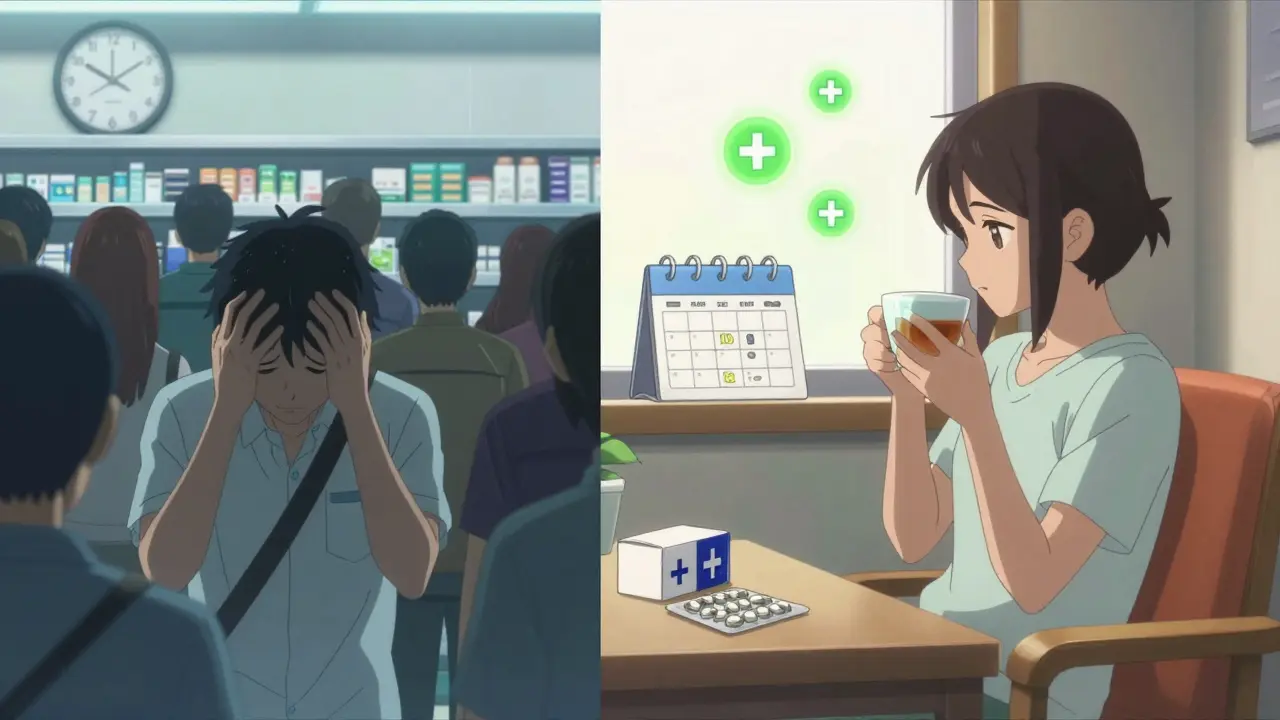
Switching to 90-day supplies isn’t just about convenience. It’s about saving money and staying healthy.Studies show:
- People on 90-day supplies spend $2.35 less per month on out-of-pocket costs
- They refill their prescriptions 29% more often
- They take their meds 27% more consistently
That’s not small. For someone on three maintenance meds, that’s over $80 a year saved-and a much lower chance of a heart attack, stroke, or hospitalization. When you stop missing doses, your body stays stable. That’s the real win.
Set It and Forget It
Once you’ve got your 90-day supply set up, make it automatic.- Sign up for refill reminders via text or email
- Use your insurer’s app (like myCigna or Caremark.com) to track orders
- Set a calendar alert for when your next refill is due
Don’t wait until you’re out. If you’re on mail order, your pharmacy should auto-ship before you run out. But if you’re using a retail pharmacy, mark your calendar. Two weeks before your 90 days end, call or go in. That’s how you avoid gaps.
What If It Doesn’t Work?
Sometimes, your plan won’t allow it. Your doctor says no. The pharmacy says they can’t. Don’t give up. Try this:- Ask your doctor for a written note explaining why a 90-day supply is medically appropriate for your condition.
- Call your insurer’s appeals line. Say: “I’m requesting a coverage exception for a 90-day supply of [medication] under my plan’s extended-day supply benefit.”
- If you’re on Medicare, ask if you can switch to a different Part D plan that offers 90-day fills. Open enrollment runs October-December each year.
There’s always a way. You just need to ask clearly, persistently, and with the right info.
Can I get a 90-day supply for my diabetes medication?
Yes, most diabetes medications like metformin, glimepiride, or insulin (after initial fills) qualify for 90-day supplies. Check with your insurer to confirm your specific drug is covered under their extended supply program. Mail-order or select retail pharmacies like Walmart often offer these at lower costs.
Is a 90-day supply cheaper than three 30-day fills?
Usually, yes. Most insurance plans have lower copays for 90-day supplies. For example, a 30-day generic might cost $10, so three fills would be $30. A 90-day supply often costs $10-$20 total. Even with brand-name drugs, coinsurance is typically lower for 90-day fills. You also save on gas, time, and missed work.
What if I travel a lot? Can I still use mail order?
Yes. Most mail-order pharmacies let you change your shipping address online. If you’re traveling for a few months, update your address in advance. Some even offer temporary delivery to a family member’s home or a P.O. box. Just make sure your plan allows shipping to your destination-some states have restrictions.
Can I switch back to 30-day fills later?
Absolutely. There’s no penalty for switching back. If you find mail order inconvenient, or your medication changes, you can always go back to your local pharmacy. Just ask your doctor to write a new 30-day script, and your insurer will process it like any other refill.
Why won’t my pharmacy fill my 90-day script?
There are a few reasons: your drug might not be eligible (like a specialty medication), your plan might require mail order only, or your doctor’s script may not specify “90-day supply.” Call your insurer to confirm your plan’s rules. If your pharmacy says no, ask them to check with your PBM (pharmacy benefit manager)-sometimes they’re just misinformed.
If you’re on maintenance meds, a 90-day supply isn’t a luxury-it’s a smarter way to manage your health. It takes one conversation with your doctor and one call to your insurer. The rest? It just works. Less stress. Less driving. More consistency. And that’s how you stay healthy, long term.
19 Comments
Aliyu Sani
22 December, 2025man i been takin my lisinopril for 5 years and never thought to ask for 90-day. i mean, why do we still treat meds like they’re a weekly grocery run? it’s not like my BP is gonna take a coffee break. pharma’s built this whole system to keep us running back and forth-convenience is a myth. if you’re on maintenance drugs, you’re not ‘getting’ meds, you’re sustaining a biological equilibrium. and yet we act like it’s a subscription box we can skip. dumb.
Sam Black
24 December, 2025as someone who’s lived with type 2 for a decade, this hit different. i used to dread pharmacy trips-especially after work, in the rain, with my diabetic feet aching. switched to mail-order through my Medicare plan and now i get my metformin and atorvastatin delivered like Amazon Prime. no lines, no stress. i even got a free glucose monitor as a ‘welcome gift’. sometimes the system works. who knew?
Jeremy Hendriks
25 December, 2025you think this is revolutionary? this is basic. this is 2024. we automate everything else-coffee, clothes, cat food-but we still make people drive to a building to get pills they’ve taken for 7 years? capitalism didn’t invent convenience, it just monetized the illusion of it. the real question isn’t how to get 90-day supplies-it’s why the entire healthcare system still operates like a 1987 pharmacy manual.
Gabriella da Silva Mendes
26 December, 2025OMG YES I’VE BEEN WAITING FOR THIS POST 😭 I’M ON 3 MEDS AND I HATE THE PHARMACY SO MUCH I STARTED CRYING LAST TIME I HAD TO WAIT 45 MINUTES. WENT TO WALMART AND GOT MY METFORMIN FOR $10 FOR 90 DAYS??? I FELT LIKE I WON THE LOTTERY. I EVEN TOOK A SELFIE WITH MY PILLS AND PUT IT ON INSTA. MY FRIENDS THOUGHT I WAS A DRUG DEALER. BUT I DIDN’T CARE. I SAVED $150 A YEAR AND MY BACK DOESN’T HURT FROM LUGGING A BAG OF PILLS. #PHARMACYTERROR #WALMARTISMYHERO 🙌💊
Kiranjit Kaur
26 December, 2025my mom in India takes 5 pills daily and I just helped her switch to 90-day mail order through her insurer. she’s 72, can’t drive, lives alone. now she gets her meds delivered every 3 months. she cried when she got the first box. said she felt like someone finally saw her. i’m not crying, you are. but seriously, this is one of those tiny changes that rebuild dignity. thank you for writing this.
Sai Keerthan Reddy Proddatoori
27 December, 2025you know who’s behind this? Big Pharma. They want you to keep going to the pharmacy so they can track your habits. Every time you swipe your card, they log it. They know when you miss a dose. They know if you’re running low. This 90-day thing? It’s a trap. They’re making you think you’re saving time, but really they’re just reducing your contact points so they can upsell you on supplements and blood tests. Trust no one. Check your insurance fine print. Always.
Kathryn Weymouth
29 December, 2025This is an exceptionally well-structured guide. I appreciate the distinction between maintenance and acute medications, the specific insurer terminology, and the state-by-state mail-order restrictions. I’ve worked in primary care for 12 years and consistently recommend this to patients with adherence challenges. The 27% improvement in medication possession ratio is statistically significant and clinically meaningful. Thank you for translating medical logistics into actionable steps without condescension.
Nader Bsyouni
30 December, 202590-day supply? please. if you’re so dependent on pills you can’t live without them then maybe you should’ve eaten better or lifted weights or stopped drinking soda. this isn’t empowerment, it’s pharmaceutical dependency with a side of convenience. they’ll sell you a 90-day supply of statins and then charge you $300 for a cholesterol test next month. it’s a loop. you’re not fixing anything, you’re just outsourcing your health to a corporation with a better delivery schedule
Julie Chavassieux
30 December, 2025...i just... i don’t know... i’m so tired... i’ve been on sertraline for 8 years... and last week i forgot to refill... and i had a panic attack... and i cried in the pharmacy parking lot... and the guy behind the counter said ‘you need to be more organized’... and i just... i don’t know... i just want to feel normal... please tell me i’m not the only one who feels like this...
Herman Rousseau
1 January, 2026Just did this last month-switched my amlodipine and metformin to mail order through Express Scripts. Copay went from $22 to $10. Got a refill reminder text. They even called to confirm I didn’t have any new meds or allergies. Felt like they actually cared. And I didn’t have to drag my 75-year-old mom to the pharmacy anymore. If you’re on maintenance meds, do this. It’s not a luxury. It’s self-care with a side of common sense. Seriously. Do it.
Vikrant Sura
2 January, 202690-day supply? 90% of people who ask for this are just lazy. they don’t want to leave the house. they don’t want to interact with a pharmacist. they don’t want to be held accountable. this isn’t healthcare innovation-it’s societal decay wrapped in a CVS bag. next they’ll want their insulin delivered by drone while they nap on the couch. we’re not fixing adherence, we’re enabling avoidance.
Candy Cotton
3 January, 2026It is imperative to note that the federal regulations governing extended-day supply prescriptions are codified under 42 CFR § 423.120 and must be interpreted in conjunction with the Medicare Modernization Act of 2003. Furthermore, pharmacy benefit managers are contractually obligated to provide extended supply options under the terms of the Part D formulary. Failure to comply constitutes a breach of fiduciary duty. I urge all subscribers to request written documentation from their PBM prior to initiating any mail-order enrollment.
Ajay Brahmandam
3 January, 2026bro i just asked my doc for 90-day glimepiride and he said sure, no problem. walked into walmart, paid $10, got 90 pills. no big deal. i dont even remember what pharmacy i used to go to. life’s too short to stand in line for pills. if you’re on meds for life, make it easy. you deserve that.
jenny guachamboza
5 January, 2026wait so you’re telling me the government and big pharma are secretly teaming up to give us cheaper meds? that’s a lie. they’re just trying to get us hooked on mail order so they can implant tracking chips in the pill bottles. i saw a video on TikTok where a guy’s pill bottle glowed green after 30 days. i’m not taking any more meds until i get a full audit. also my cousin’s neighbor’s dog got sick after eating a 90-day supply. it’s a conspiracy. 🤫💊👁️
Jeremy Hendriks
6 January, 2026you know what’s worse than not asking for 90-day supplies? people who think this is some kind of personal victory. it’s not. it’s the bare minimum. if your health system requires you to jump through hoops just to get the medicine you need to stay alive, then the system is broken. and you’re not a hero for using it-you’re just surviving it. stop patting yourself on the back. fix the damn system.
Gabriella da Silva Mendes
8 January, 2026but Jeremy… I DID feel like a hero. I cried. I posted it. I told my sister. I told my boss. I told the cashier. I felt like I won. And maybe the system is broken. But for one day, I got to feel like I beat it. And that matters. 😭💖
Herman Rousseau
8 January, 2026And that’s exactly why this works. It’s not about the system being fixed-it’s about people reclaiming small moments of control. I used to hate my meds. Now I see them as tools. And sometimes, tools that come to your door feel like kindness. That’s not weakness. That’s human.
Sam Black
10 January, 2026One sentence: I got my 90-day supply and I didn’t have to leave my house. Best day in years.
Ajay Brahmandam
12 January, 2026and now i just set up auto-refill. next thing i know, i’m getting a text: ‘your meds are on the way’. i don’t even think about it anymore. that’s the goal. not to be a hero. just to not forget.