
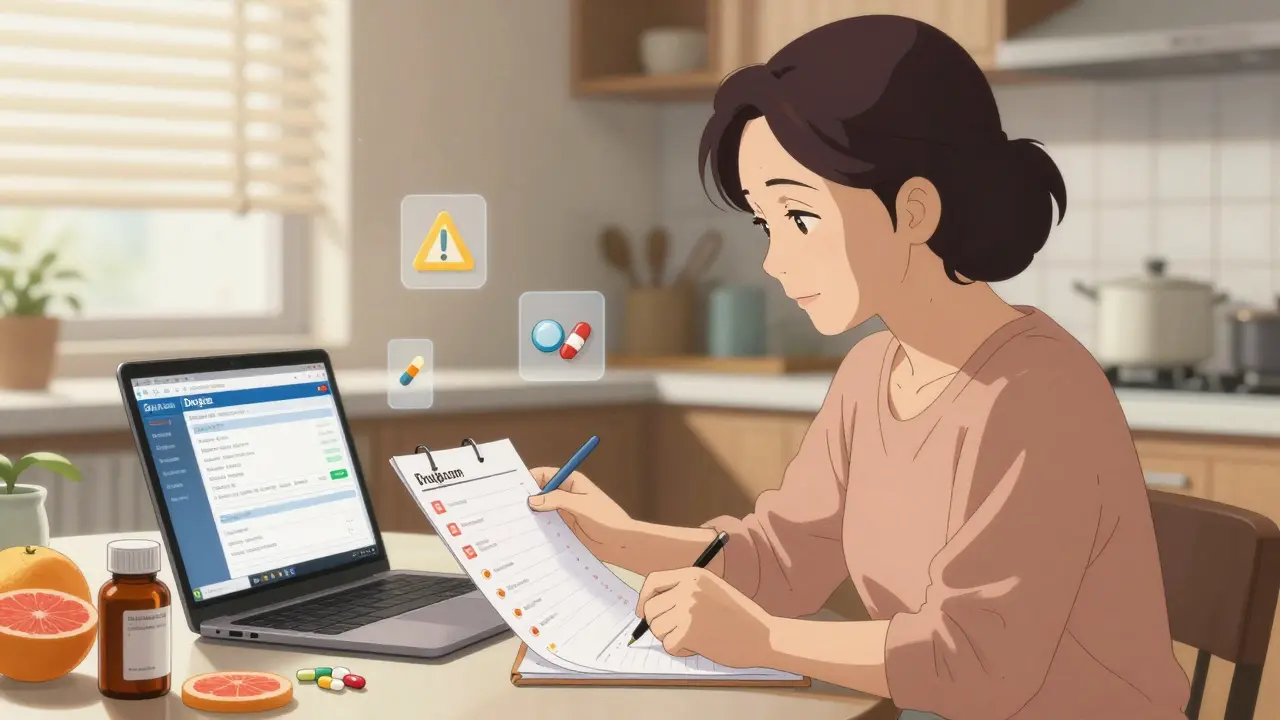
Every year, over a million people in the U.S. end up in the emergency room because of dangerous drug interactions. Many of these cases could have been avoided with a simple check at home - if you know how to do it right. It’s not about replacing your doctor or pharmacist. It’s about giving yourself a safety net before you take that new pill, supplement, or even over-the-counter painkiller.
Why Drug Interactions Matter More Than You Think
You might think, "I only take a few meds. It’s probably fine." But here’s the reality: 40% of Americans over 65 take five or more medications. Even younger adults are stacking prescriptions, OTC pain relievers, vitamins, and herbal supplements without realizing how they might clash. A common example? Taking ibuprofen with blood thinners like warfarin. That combo can cause dangerous bleeding - and it’s not rare. In fact, drug-drug interactions make up 61% of all flagged issues in interaction checkers. Drug-food and drug-condition interactions are just as sneaky. Grapefruit juice can turn a routine cholesterol pill into a heart risk. Calcium supplements can make your thyroid medication useless. These aren’t theoretical risks. They’re everyday dangers.What Exactly Is a Drug Interaction Checker?
A drug interaction checker is a free online tool that compares the medications you’re taking against a database of known harmful combinations. These tools don’t guess. They use data from clinical studies, FDA reports, and pharmacy databases that track over 80,000 possible interactions. The most reliable ones - like Drugs.com and WebMD - update daily. They scan for three types of risks:- Drug-drug: Two or more medications reacting badly (like sertraline and St. John’s Wort causing serotonin syndrome)
- Drug-food/drink: Grapefruit, alcohol, or even high-calcium foods interfering with absorption
- Drug-condition: Your existing health issue making a drug riskier (like taking decongestants if you have high blood pressure)
Results are ranked by severity: major (call your doctor right away), moderate (monitor or adjust dose), and minor (usually harmless but watch for side effects). Tools like Drugs.com flag 12% more moderate interactions than competitors. That extra layer matters.
How to Use a Drug Interaction Checker - Step by Step
Using these tools isn’t complicated, but skipping steps can make them useless. Here’s how to do it properly:- Write down every single thing you take. Not just prescriptions. Include all OTC meds (like NyQuil, Tums, or Aleve), vitamins (especially iron or magnesium), herbal supplements (like turmeric, ginkgo, or echinacea), and even CBD oil. Many people forget these - and that’s where the biggest risks hide.
- Use the exact names. Don’t write "aspirin." Write "81 mg enteric-coated aspirin." Brand names (like Advil) and generic names (ibuprofen) are both fine - but be consistent. Interaction checkers recognize both, but mixing them up can cause errors.
- Enter them one by one. Most tools let you add up to 10 medications at once. Don’t rush. Double-check spelling. If you’re unsure what’s in a supplement, look up the bottle or ask your pharmacist. Some apps, like Medisafe, can scan the barcode on your pill bottle to auto-fill the info.
- Review every flagged interaction. Don’t just look at the red alerts. Read the moderate ones too. A "moderate" interaction between your blood pressure med and a common antacid might mean you need to take them two hours apart. That’s easy to fix.
- Print or save the report. Bring it to your next doctor or pharmacist visit. Don’t rely on memory. This is your evidence.
It takes about five minutes for five medications. Do it every 30 days - or anytime you start, stop, or change a dose.
Top 3 Free Tools - And Which One to Choose
Not all checkers are equal. Here’s how the big three compare:| Tool | Database Size | Best For | Downsides |
|---|---|---|---|
| Drugs.com | 80,000+ interactions | Most comprehensive, detailed reports | Technical language; can overwhelm seniors |
| WebMD | 18,000+ prescription drugs | Simple, visual explanations | Higher false positives; misses some supplements |
| GoodRx | Same as Drugs.com | Shows cheaper, safer alternatives when risks are found | Focuses on cost; less detail on mechanisms |
If you’re taking a lot of supplements or have a complex regimen, go with Drugs.com. If you want plain English and quick answers, WebMD works. If you’re cost-conscious and want alternatives, GoodRx is your best bet. All three are free and work on any phone or browser.
What These Tools Can’t Do - And When to Call Your Pharmacist
These tools are powerful, but they’re not magic. Here’s what they miss:- False alarms: About 18% of flagged interactions aren’t actually dangerous. A minor interaction might be flagged as moderate because of outdated data.
- Rare or new interactions: If a drug was approved last month, it likely isn’t in the database yet.
- Personal factors: Your liver function, kidney health, age, or genetics can change how a drug behaves - and checkers don’t know that.
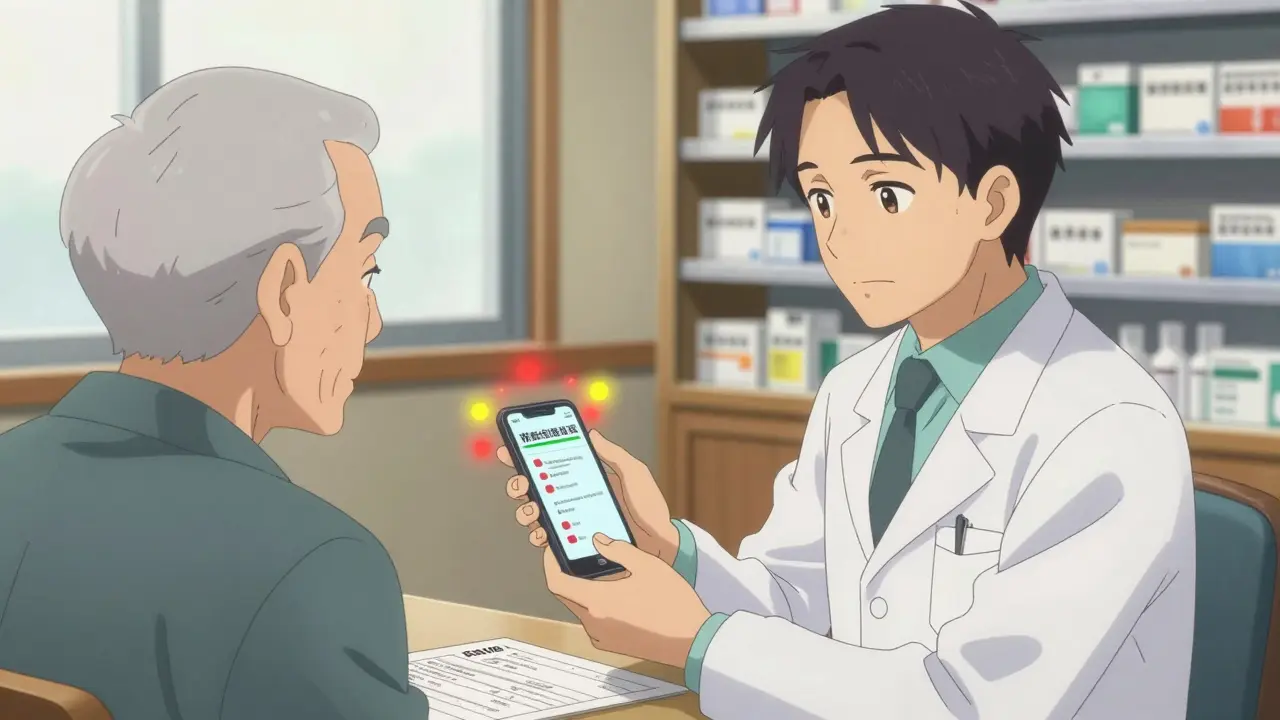
That’s why experts say: Use the tool to start a conversation, not end one. Dr. Michael Cohen from the Institute for Safe Medication Practices says these tools catch only 70-80% of dangerous interactions without professional review. A 2023 study showed that combining digital checkers with a pharmacist consultation reduced hospitalizations by 42% in seniors.
Call your pharmacist if:
- You’re taking five or more medications
- Any interaction is flagged as "major"
- You’re unsure how to interpret the results
- You’ve had side effects like dizziness, nausea, rapid heartbeat, or unusual bleeding
Pharmacists can adjust timing, suggest alternatives, or even contact your doctor on your behalf. Many offer free consultations - even if you didn’t fill the prescription there.
Real Stories: What Happens When People Use These Tools
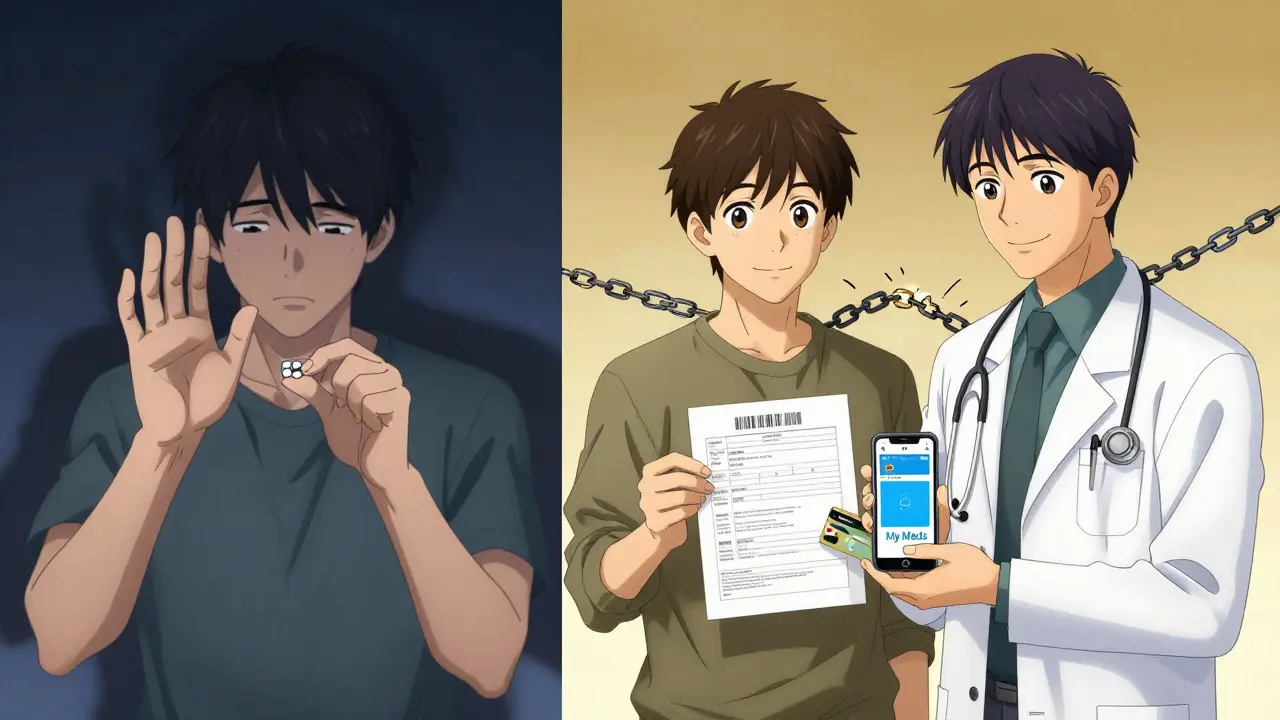
In 2022, a 68-year-old woman in Ohio was taking sertraline for depression and daily St. John’s Wort for "natural mood support." She didn’t tell her doctor about the supplement. A drug interaction checker flagged a major serotonin syndrome risk. She brought the report to her pharmacist, who helped her taper off the herb safely. She avoided seizures, confusion, and hospitalization. On Reddit, a nurse named u/MedSafetyNurse shared how a checker caught a dangerous interaction between warfarin and ibuprofen that her own doctor had missed. She switched to acetaminophen - and her INR levels stabilized. But there are failures too. A 2023 case report described a patient on a new cancer drug that wasn’t in any consumer database. No checker flagged it. That’s why these tools are backups - not replacements.How to Avoid Common Mistakes
Most people mess up in these ways:- Forgetting OTC meds: Cold pills, antacids, sleep aids - they all interact. NyQuil alone contains 4 active ingredients.
- Using outdated lists: If you haven’t updated your list in 3 months, you’re flying blind.
- Ignoring severity levels: A "moderate" warning isn’t a suggestion. It’s a warning.
- Stopping meds without talking to someone: The FDA warns that 15% of people stop essential meds after a false alert - which can be deadly.
Fix these by:
- Keeping one pharmacy for all your prescriptions (reduces interaction risk by 31%)
- Using apps that scan barcodes (Medisafe, MyTherapy)
- Writing down your meds on a card you carry in your wallet
What’s Coming Next
By mid-2024, Medicare beneficiaries in the U.S. will be able to link their interaction checkers directly to their MyMedicare accounts. In late 2024, 23andMe and GoodRx will start offering genetic-based interaction alerts - meaning your DNA could tell you if you’re at higher risk for reactions to common drugs. These advances are promising. But they won’t replace human judgment.At the end of the day, checking for drug interactions at home is like wearing a seatbelt. It doesn’t guarantee you won’t crash - but it gives you a fighting chance. Use the tools. Be thorough. Then, talk to your pharmacist. That’s how you stay safe.
Can I trust free drug interaction checkers?
Yes - but only if you use reputable ones like Drugs.com, WebMD, or GoodRx. These are backed by clinical databases and updated daily. Avoid apps you downloaded from an unknown source. The FDA warned about 17 fraudulent interaction checkers in 2022. Stick to well-known medical sites.
Do I need to check interactions if I only take one prescription?
Yes. Even one prescription can interact with OTC meds, supplements, or food. For example, statins (cholesterol drugs) can react dangerously with grapefruit juice. Antibiotics can lose effectiveness with calcium supplements. You don’t need to be on five meds to be at risk.
What if the checker says there’s an interaction but my doctor says it’s fine?
Always bring the checker’s report to your doctor or pharmacist. Sometimes, the interaction is manageable - maybe with a dose change or timing adjustment. Your doctor might know your history and have already accounted for it. But don’t assume. Ask: "Why is this safe for me?" Get it in writing.
Are herbal supplements really risky?
Absolutely. St. John’s Wort can reduce the effect of birth control, antidepressants, and even some cancer drugs. Garlic and ginkgo can thin your blood - dangerous if you’re on warfarin or about to have surgery. Many people think "natural" means safe, but that’s not true. Supplements aren’t tested like prescription drugs.
How often should I check for interactions?
Check every 30 days - or anytime you start, stop, or change the dose of any medication, supplement, or OTC product. Even adding a new vitamin or switching from ibuprofen to naproxen counts. Your body’s response changes over time, and new interactions can appear.
Can I use these tools if I live in Australia?
Yes. While the databases are U.S.-focused, most drugs have the same active ingredients worldwide. As long as you enter the generic name (like "omeprazole" instead of "Losec"), the checker will still identify interactions. Australian pharmacists use the same clinical guidelines, so the results are still reliable.
15 Comments
Jose Mecanico
11 January, 2026Been using Drugs.com for years. Simple, no ads, and it caught a bad combo between my blood pressure med and a common sleep aid I didn't even think was a drug. Saved me a trip to the ER.
Sonal Guha
13 January, 2026Why are we even talking about this like it's new? People die from this every day and no one does anything. The system is broken. You're supposed to trust your doctor but they're overworked and don't know half of what you take. This post is just a bandaid on a gunshot wound.
Alice Elanora Shepherd
14 January, 2026Important note: Always check your supplements with your pharmacist, not just an app. I had a patient who took magnesium daily and didn't realize it was canceling out her thyroid med-until her TSH spiked. The checker flagged it as 'minor.' It wasn't. A human caught it.
Daniel Pate
15 January, 2026There's a philosophical layer here that no one talks about: we've outsourced our bodily awareness to apps. We used to learn from experience, from elders, from trial and error. Now we scan a barcode and let an algorithm decide if we're safe. It's efficient, yes-but it also erodes personal responsibility. The real risk isn't the interaction-it's the belief that a tool can replace wisdom.
Windie Wilson
16 January, 2026Oh great, another 'use this app' post. Next you'll tell us to check our blood pressure with a Fitbit and call it a day. I'm sure the guy who died from serotonin syndrome after taking St. John's Wort with Zoloft just didn't scan his pills right.
Cecelia Alta
16 January, 2026Let me guess-you're one of those people who thinks 'natural' means 'safe' and then goes on a turmeric binge while on warfarin. I saw a woman in the pharmacy last week crying because her checker flagged her ginkgo and her blood thinner, but she refused to stop it because 'it's good for memory.' Honey, if your memory's that bad, maybe you shouldn't be managing your own meds. This isn't yoga. This is your life.
Eileen Reilly
18 January, 2026ok so i just checked my med list on drugs.com and it flagged my vitamin d and my antihypertensive as moderate?? but my doc said its fine?? what do i do?? also i think the site glitched because it said i was taking 3 different types of ibuprofen?? i only take one??
Darryl Perry
18 January, 2026Why is this even a thing? If you can't read a medication label or remember what you're taking, you shouldn't be allowed to self-administer. This isn't a safety net-it's a crutch for people who can't manage basic responsibility.
Lawrence Jung
20 January, 2026Drugs.com is great but it doesn't know your kidney function or your genetic variants. I'm a biochemist and I've seen cases where the tool says 'safe' but the patient has a CYP2D6 poor metabolizer variant-so the drug builds up to toxic levels. Tech can't replace science. Or common sense.
Faith Wright
21 January, 2026So you're telling me to trust a website more than my doctor? That's cute. My grandma took three different meds for 20 years and never checked anything. She's 92 and still gardening. Maybe the real problem is overmedicating.
Abner San Diego
22 January, 2026Ugh. Another one of these posts. I swear half these interaction checkers are just trying to sell you their premium version. I checked my meds and got 14 'moderate' flags. Half were for stuff I don't even take. They're just fishing for clicks.
Audu ikhlas
24 January, 2026Why do Americans need an app to know not to mix drugs? In Nigeria we just ask the village elder or the pharmacist who knows your family for 30 years. This obsession with tech is a sign of cultural decay. You don't need a barcode scanner to know grapefruit is dangerous with statins. You just need to listen.
gary ysturiz
26 January, 2026This is so helpful. I used to forget my supplements until I started using Medisafe. Now I get a daily reminder and it checks for interactions too. My blood pressure is better and I feel way more in control. Small steps matter.
TiM Vince
27 January, 2026Just wanted to say thank you. I'm from a rural town with no pharmacy nearby. I use Drugs.com every time I get a new prescription. I print the report and bring it to the clinic. They didn't know I was taking ashwagandha until I showed them. That report saved me from a bad reaction.
Konika Choudhury
28 January, 2026India has better drug safety than the US. We don't need apps. We have pharmacists who know your family history. You Americans overcomplicate everything with technology. Just talk to your doctor.