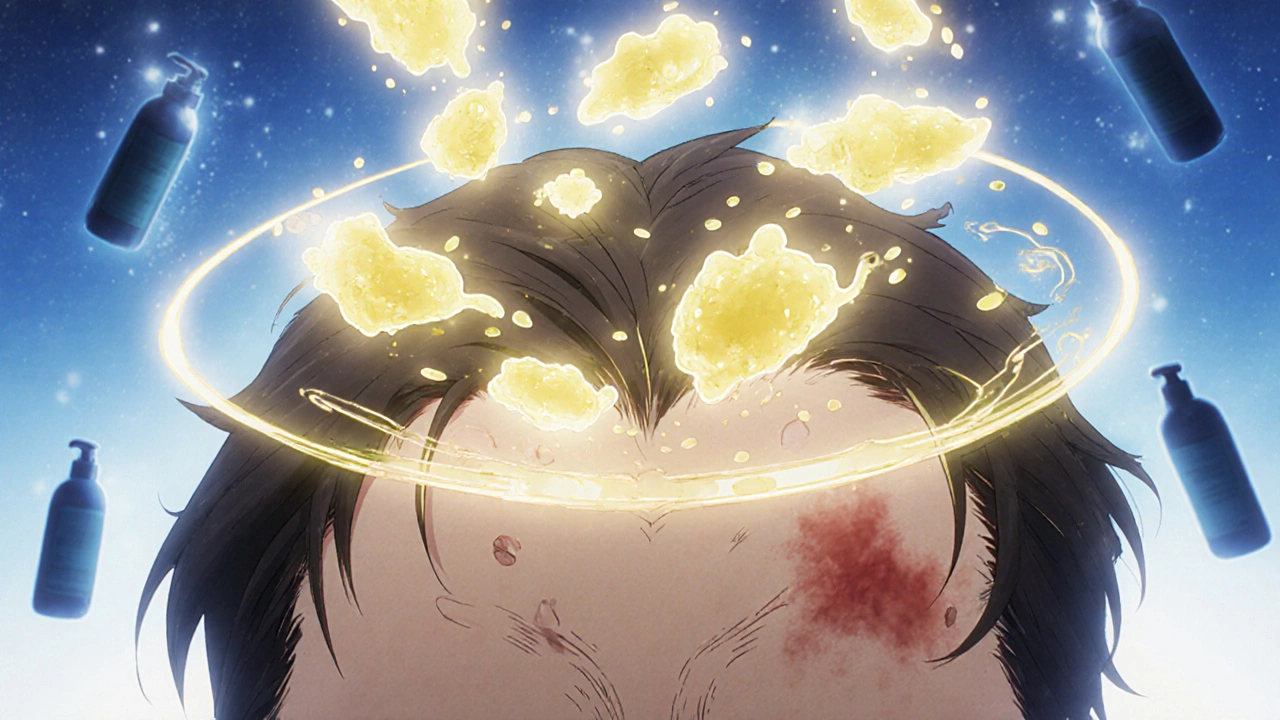
Malassezia Yeast: Causes, Symptoms, and How It Affects Your Skin
When your skin gets itchy, flaky, or red in patches, it might not be dryness or an allergy—it could be Malassezia yeast, a type of fungus that naturally lives on human skin but can overgrow and cause irritation. Also known as Pityrosporum orbiculare, this yeast thrives in oily areas like the scalp, face, and chest, and is behind many common skin conditions you might not even realize are fungal.
Malassezia yeast doesn’t cause problems for most people, but when your skin’s oil production changes—due to hormones, stress, humidity, or even certain medications—it can multiply fast. That’s when you get seborrheic dermatitis, a chronic inflammatory skin condition marked by greasy, scaly patches, or dandruff, the flaky scalp version of the same issue. It’s also linked to pityriasis versicolor, which leaves light or dark patches on the skin, and can worsen eczema in some people. Unlike bacteria, this yeast doesn’t respond to antibiotics, which is why some rashes just won’t clear up with standard treatments.
What’s interesting is how often Malassezia yeast shows up in the same conversations as other health topics you’re already reading about. For example, if you’re taking systemic antifungals like azoles for another infection, those drugs can affect how your body processes other medications—like statins or immunosuppressants—creating new risks. Or if you’re using herbal supplements for skin health, some might actually feed the yeast instead of calming it. Even stress and sleep habits, which influence your immune system, can tip the balance and let this yeast take over. You won’t find a magic cure, but understanding how it works helps you ask the right questions: Is my shampoo too harsh? Am I using too much moisturizer? Could my meds be making this worse?
Below, you’ll find real-world guides that connect Malassezia yeast to everyday health choices—from how certain drugs interact with skin fungi, to what lifestyle changes might help keep it in check. No fluff. Just clear, practical info that helps you figure out what’s really going on with your skin—and what to do next.